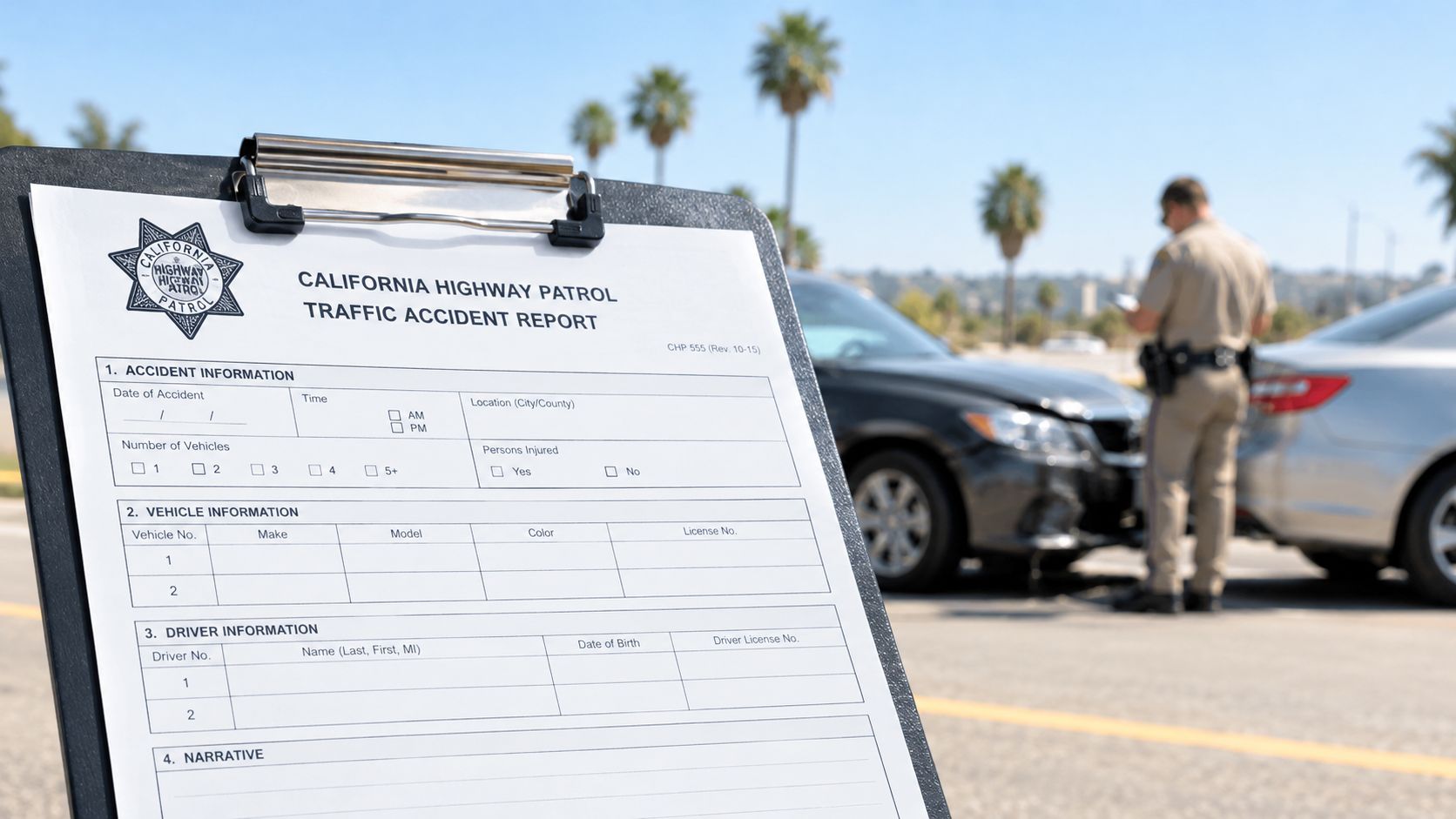
You've just had a crash, the adrenaline is dropping, and now you're staring at the part nobody prepares you for, the paperwork. The smart move in California is to treat the police report and the SR-1 as two separate jobs. One creates the investigative record, the other satisfies a separate state reporting duty, and you need both if the crash involved injury or qualifying damage.
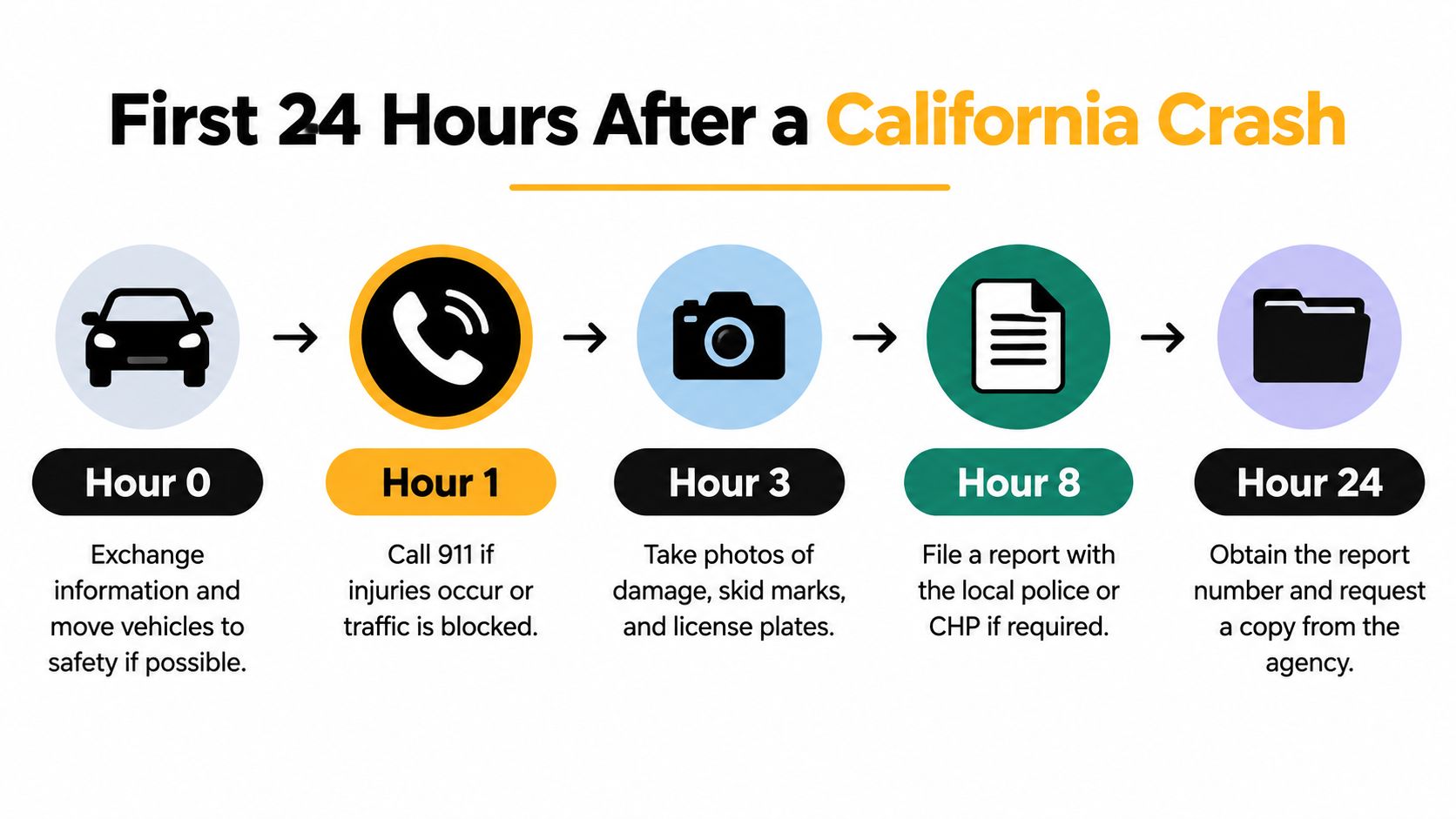
Under California law, a driver involved in a crash causing any injury or death must make, or arrange for, a written report to the CHP within 24 hours, and if the crash happens inside a city, that report can go to the city police department or CHP. Separately, each driver must file the DMV's SR-1 within 10 days when anyone is injured or killed, even if the injury seems minor, or when property damage exceeds $1,000. That means a police call or officer contact does not replace the DMV filing, and a missed SR-1 can create problems with financial-responsibility compliance later. California DMV accident reporting rules
If you want a practical next step, start with the reporting duty that applies to your crash, then move to the record request. If you need a quick overview of what to do after the scene settles, this guide on after-accident steps is a useful companion while you gather the facts.
Practical rule: Don't wait for an insurer to tell you what matters. The state filing and the collision report serve different purposes, and both can matter later.
What Happens in the First 24 Hours After a California Crash
The first day after a crash is chaotic. People are rattled, cars may be gone, and the officer may or may not show up. Handle the paperwork first, because the police report and the state filing serve different jobs.
Separate the police record from the DMV filing
A California car accident police report is the law-enforcement record of what happened. The SR-1 is a separate DMV filing, and you still need it even if an officer already came to the scene. Treat the report as evidence, not as the whole case. Get the report number, the officer's name, and the agency before you leave the scene or before your memory starts to blur.
If the officer never arrives, call the local agency that would normally handle the crash and ask how to make a counter report at the station. Keep your own written notes with the date, time, location, vehicle information, and names of witnesses. Those details help you compare what you remember against what ends up in the official file.
For the state filing deadline and the situations that trigger it, use the DMV's reporting rules page. California DMV accident reporting rules
Don't treat a police call as the end of the job
A police response gives you a starting point. It does not guarantee a complete report, and it does not fix mistakes in the version that gets written. If the scene was rushed, the officer missed a detail, or no officer came at all, you need to follow up fast. Start by confirming which agency is holding the collision record, then ask for the next step to correct or supplement it.
Keep the report number in your phone, along with the crash date and the officer's badge or name if you have it. If you need help sorting out the next practical step after the scene clears, this guide on after-accident steps keeps the process simple.
A report number in your notes is worth more than a vague promise that “the officer will handle it.”
Who Actually Writes the Report and Which One You Need
Not every California crash ends up in the same records drawer. The agency that responds usually depends on where the collision happened, and that matters because you need to ask the right office for the right document. If you guess wrong, you waste time and the report keeps sitting out of reach.
CHP, city police, and sheriff all play different roles
If the crash happened on a highway or another area handled by the California Highway Patrol, CHP is often the agency holding the collision investigation. If it happened inside a city, a city police department may handle it. In some counties, a sheriff's department may be the responding agency, especially where local policing is contracted or the incident is outside city limits.
A quick response at the scene doesn't always mean a full written collision report will exist. Some incidents produce only a brief record at first, or the agency may generate a report later after the facts are reviewed. A small parking-lot impact or low-speed collision may leave you with less paperwork than you expected.
Use location to decide where to ask
The safest approach is to identify the crash location first, then ask the agency most likely to have investigated it. If you were on a state highway, CHP is the first place to check. If you were in a city street collision, start with the local police records process. If a sheriff handled the scene, use that office instead of chasing the wrong department.
| Crash location | Agency that holds the report | Typical request channel |
|---|---|---|
| State highway or CHP-managed roadway | CHP | CHP Crash Portal or CHP Form 190 |
| City street | City police department | Local records request process |
| County area or unincorporated location | Sheriff's department | Sheriff records office or portal |
If you're still trying to sort out the right agency, ask for the incident report can be a useful reference for understanding how request channels vary by department. Keep your focus on the agency that investigated the collision, not the one you happen to call first.
What a California Police Report Contains
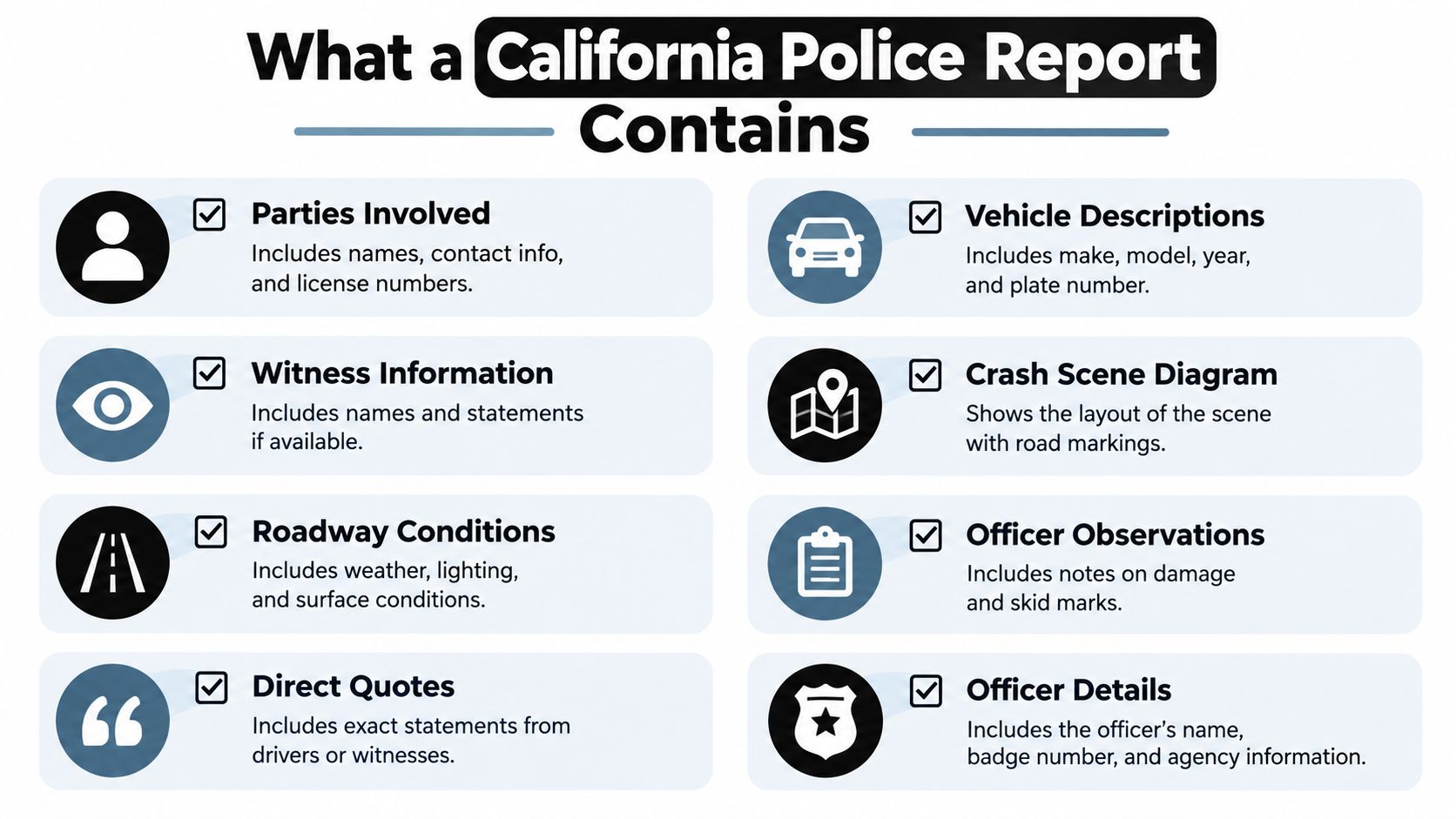
A crash report is evidence, not paperwork to file and forget. It can preserve the names, scene details, and statements that help you test an insurance company's version of the crash and line up the report with your SR-1 filing. California Vehicle Code Section 20012 is the statute that controls what an eligible requester can obtain. California Vehicle Code Section 20012
The parts that matter most
A report can list the names and addresses of the people involved, injured parties, and witnesses. It can also include vehicle registration numbers, vehicle descriptions, the crash date, time, and location, diagrams, driver or occupant statements, and witness statements. Those details matter because they capture the scene while memory is still fresh.
Read the report closely. Small mistakes in names, locations, vehicle descriptions, or statements can hurt your claim later if you leave them unchallenged.
Who can get it
California does not release these reports to the general public. The law allows access for people with a proper interest, including involved drivers, named injured people, owners of damaged vehicles or property, people who may face civil liability, and attorneys who certify they represent one of those parties. The statute also treats the reports as confidential for DMV and CHP purposes, and copies may carry a fee limited to the actual cost of providing the copy.
Important point: Use the report as evidence, then verify it against your own notes, photos, and medical records.
That is the right way to handle it. A police report can support your account, but it does not decide fault by itself. Insurance companies and courts can still compare it with photos, vehicle damage, traffic rules, witness accounts, and medical records.
How to Request Your Report Online and In Person
A crash report is only useful if you get the right version from the right agency. For CHP collisions, start with the agency's request process and use the online Crash Portal or CHP Form 190 if you qualify as a driver, passenger, vehicle or property owner, parent or guardian of a minor, legal representative, or qualifying insurer. CHP treats the report as part of its collision investigation records, and access is limited to proper parties of interest. Fees may apply. CHP collision report request guidance
If the crash was handled by CHP, gather the crash date, location, and the name of the driver or owner before you submit anything. Use the identification or authorization the agency asks for, and keep your request short and specific. A direct request works best: “I am requesting the collision report for a crash on [date] at [location]. I was involved in the collision and can provide identifying information.”
For a local report, go to the agency that wrote it. City police departments use their own records process, and sheriff's departments use theirs. Do not send a CHP request form to a city desk and expect anyone to sort it out for you.
The fastest way to avoid delays is to match the request to the agency and the crash location. If you are not sure which office has the file, use the incident number if you have it, then ask the records unit to confirm the correct process.
For CHP crashes, the online portal usually asks for the collision date, location, names of involved parties, report or incident number if available, and proof that you are entitled to the record. If the report is ready, the portal is the cleanest route. If it is still being processed, expect a wait while the investigation file is completed.
If you need a paper path instead, ask for the incident report through the correct records office and keep copies of everything you submit. That includes your request, any confirmation number, and any response you receive. Use those records later when you compare the police report with your photos, medical notes, and SR-1 filing.
How to Review the Report and Fix Errors That Matter
A report can be helpful and still be wrong in important ways. I've seen drivers focus on the agency name and ignore the actual contents, which is the mistake that costs them later. The smarter move is to read it like someone building a claim, not like someone skimming office paperwork.
Compare the report against the real-world evidence
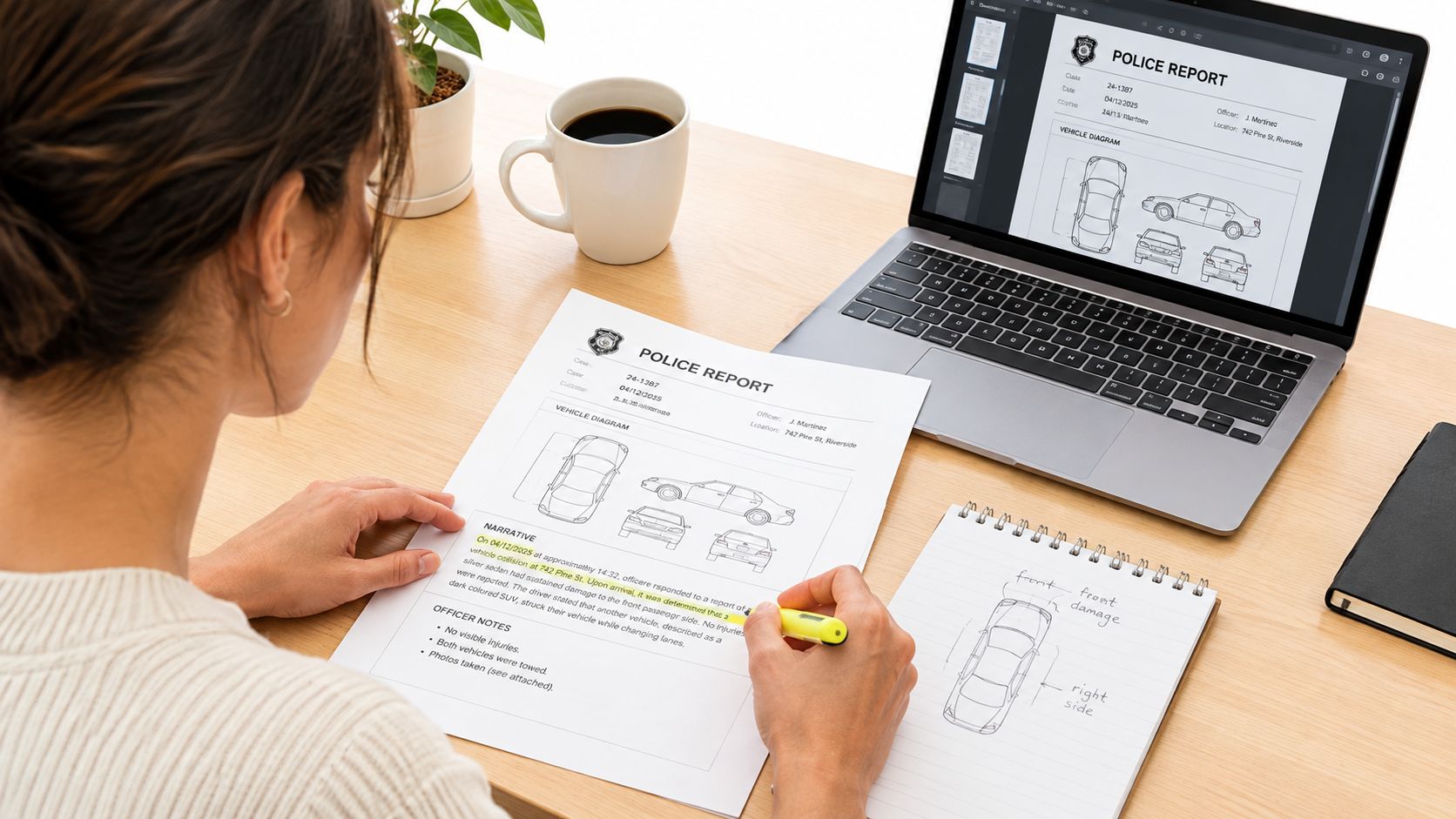
Start with the basics, parties, vehicles, diagram, and collision location. Compare those items against your photos, tow paperwork, and any independent record you have. Then check whether witness names, statements, roadway conditions, citations, and injury complaints were captured accurately.
Don't confuse the officer's observations with every statement made at the scene. Those are different things, and they carry different weight.
A realistic example helps. Say you were rear-ended, felt stiff that night, and the report says “no injury claimed.” If your medical visit the next morning shows neck pain and a shoulder complaint, that mismatch matters. Keep the report, medical record, repair estimate, and insurer emails together so you can show the paper trail from the crash to the claim.
Ask for correction the right way
If something important is wrong, use CHP Form 190 or the local amendment process to ask for a correction. Bring supporting material, not just frustration. Photos, dashcam footage, medical records, and witness contact information are the kind of documents that help when you ask for an update or clarification.
Agencies won't rewrite the facts because you dislike the outcome. They may correct omissions, clarify identity details, or update information when you can support the change. The faster you flag a real problem, the better your chance of getting the record aligned with the evidence.
Using the Report With Insurance and an Injury Claim
Insurance companies do not treat the police report as the whole case. They read it alongside the photos, vehicle damage, medical records, and your claim timeline. Use the report as evidence, then make sure it matches the rest of your file.
How insurers read the report
If the report supports your version, the adjuster may still look for a way to minimize it. They may argue that a witness got it wrong, that the officer worked from incomplete facts, or that your injury was not documented soon enough. Keep your treatment records close to the crash date and keep every insurer message in one place.
Property damage and injury are separate parts of the claim, even though they come from the same crash. Repair estimates show the car damage. Medical records show the harm to you. If the carrier pushes back, the report works best when it lines up with both sets of records.
Use the report to press a specific claim
Do not send a vague demand. Tie your letter to the report line items that help you, such as the listed collision location, the named driver, the witness statement, or any cited violation. If the report says you were rear-ended and the insurer later blames you, say that directly and attach the pages that support your position.
If the adjuster misquotes the fault narrative, correct it in writing. Quote the exact language they got wrong, then point to the page, diagram, or statement that fixes it. Keep the tone firm and plain. You are not asking for a favor, you are correcting the file.
Keep the report from carrying the claim alone
The report helps, but it does not prove everything by itself. If the insurer disputes fault, questions injury timing, or undervalues the claim, pair the report with medical visits, repair records, and the crash photos. That is the file an adjuster has to answer.
If you are putting the claim together now, use this insurance-claim filing guide to keep the paperwork organized. Put the report, medical notes, repair estimate, and insurer correspondence in the same folder so you can respond fast when the carrier starts asking questions.
When It Makes Sense to Bring in a Personal Injury Attorney
Some crashes are simple. Many aren't. If the other driver disputes fault, if the report has gaps, if injuries showed up after the scene, or if the insurer is dragging its feet, get help sooner rather than later. That's especially true when the SR-1 deadline is still hanging over you or medical billing is starting to pile up.
The triggers I'd take seriously
Bring in a lawyer when the report doesn't match the other driver's story, when a hit-and-run or late report makes the facts harder to pin down, or when the insurer is denying the claim based on a thin version of events. A personal injury attorney will usually start by reading the report, checking the photos, reviewing your medical records, and looking at the insurer's written position. That first review tells you quickly whether the file is strong enough to negotiate or whether it needs more work.
If you're still deciding whether to get help, AskLegally's legal advice page for car accidents is one place people use to understand their options before hiring counsel. The useful part is not theory, it's figuring out whether the report, your injuries, and the insurance response line up.
Save this 30-day checklist
- Confirm the report path: Make sure the crash was reported to the correct agency and that your SR-1 obligation is being handled.
- Gather the file: Keep the report, photos, repair estimates, medical notes, and insurer communications together.
- Check for mistakes: Compare the report against what happened and flag errors that affect fault or injury.
- Watch the insurer: Do not let a weak report summary become the whole claim story.
- Get a review: If fault is disputed or the claim feels stuck, ask for legal help before the file hardens.
If you're still sorting out a California car accident police report, AskLegally helps injured drivers understand what to request, what to keep, and when the paperwork stops being enough on its own. Visit AskLegally if you want practical guidance on the report, the SR-1, and the next step in an injury claim.