When a nursing home fails to provide the basic, expected standard of care and a resident is harmed as a result, a nursing home neglect attorney is the advocate you need. Their entire focus is on holding that facility accountable and fighting for compensation to cover the victim's pain, medical expenses, and other damages.
If you suspect something is wrong, trust your gut. That initial instinct is often the most important signal you'll get, and seeking legal advice is the right next move.
Recognizing the Warning Signs of Neglect
It usually starts with a nagging feeling—a sense that your loved one just isn't themselves or that something is amiss at their facility. While a visible injury is an undeniable red flag, neglect often shows up in much quieter, more subtle ways that are easy to second-guess or dismiss. Learning to spot these signs is the first and most critical step in protecting them.
Neglect is rarely a single, isolated incident. More often, it's a slow burn—a consistent pattern of failed care. This could be something like staff forgetting to reposition a resident, which can lead to agonizing bedsores, or failing to ensure they're getting enough to eat and drink.
Physical and Environmental Indicators
Start by paying close attention to your loved one’s physical health and the state of their living space. This is where you'll often find the most concrete evidence of neglect.
- Sudden or Unexplained Weight Loss: This is a classic sign of potential malnutrition or dehydration.
- Poor Personal Hygiene: Are their clothes dirty? Is their hair unkempt or their body odor strong? This often means they aren't getting the basic help they need.
- Untreated Bedsores: Also called pressure ulcers, these are a major indicator of medical neglect and are almost always preventable.
- Unsanitary Living Conditions: A persistently dirty room, soiled bedding, or the presence of pests points to a dangerously unhygienic environment.
Of course, clear physical signs of mistreatment, like mysterious bruises or direct reports of patients being restrained or bullied, are immediate alarms that demand action.
Behavioral and Emotional Changes
The emotional damage from neglect can be just as profound as any physical injury. A resident who feels ignored, unsafe, or unheard will often show drastic changes in their personality.
Be on the lookout for a loved one who suddenly becomes withdrawn, fearful, or agitated, especially in the presence of specific caregivers. If someone who was once outgoing and chatty is now quiet and listless, that’s a serious cause for concern. These emotional shifts can tell you as much as a physical wound.
It’s a harsh reality, but nursing home neglect is a massive, underreported crisis. While about 44% of residents have said they've been abused, a staggering 95% report that they have personally experienced neglect or have seen another resident being neglected. You can find more of these troubling nursing home abuse statistics on SokoloveLaw.com.
To make sense of what you're seeing, it helps to connect the dots. This table can help you translate your observations into a clearer picture of potential neglect.
Connecting Signs of Neglect to Potential Issues
| Observable Sign | Potential Type of Neglect | What to Document |
|---|---|---|
| Bedsores (Pressure Ulcers) | Medical Neglect | Photos of the sore, date first noticed, conversations with staff about it. |
| Sudden Depression or Withdrawal | Emotional/Social Neglect | Note changes in mood, date started, any specific staff member they fear. |
| Constant Thirst, Dry Mouth | Basic Needs Neglect | Log requests for water, check for full water pitchers left out of reach. |
| Unkempt Appearance, Body Odor | Personal Hygiene Neglect | Take photos of dirty clothes/bedding, note how often they are bathed. |
| Unsanitary Room or Bathroom | Environmental Neglect | Document spills, pests, or soiled linens with dates and photos. |
Documenting every single thing you notice is absolutely essential. Keep a running log with dates, times, specific observations, and who you spoke to about your concerns. This detailed record is not just a personal file; it's powerful evidence.
If your notes start to reveal a disturbing pattern, you'll be in a much stronger position. At that point, you can learn more about how to report nursing home neglect to the appropriate state agencies. Taking action not only helps safeguard your loved one but also builds the foundation for a solid legal case.
How to Find and Research Potential Attorneys

Once you’ve documented the signs of neglect, your next move is finding the right legal partner to fight for your loved one. This is a critical step. A general search for a "personal injury lawyer" simply won't cut it. You need a specialist.
A dedicated nursing home neglect attorney brings a very specific skill set to the table. They live and breathe the unique laws, complex regulations, and medical nuances that define these sensitive cases. They know the system inside and out.
Your search should start with trusted, specialized sources—not just a quick Google search. The top results often belong to firms with the biggest marketing budgets, not necessarily the most experience in this niche.
Instead, I always advise clients to seek recommendations from more reliable channels:
- Local Elder Care Ombudsman: Think of these individuals as state-certified advocates for residents' rights. They are often well-connected and can point you toward reputable local attorneys who handle these specific cases.
- Trusted Medical Professionals: A geriatric doctor, nurse, or social worker has likely seen these heartbreaking situations before and may have professional referrals to lawyers they trust.
- Bar Association Referral Services: Most state and local bar associations offer referral services. They can connect you with pre-screened attorneys who have verified experience in elder law or nursing home litigation.
With a few names in hand, it’s time to do some homework. The attorney's website is your first stop for getting a feel for their qualifications and how they operate.
Evaluating an Attorney's Online Presence
A law firm’s website is more than just a digital brochure; it's a window into their expertise and focus. You're looking for concrete proof that they don’t just dabble in these cases but are deeply committed to them.
Drill down into their website and look for a section specifically dedicated to nursing home abuse or neglect. This is non-negotiable.
This part of their site should clearly showcase:
- Specific Case Results: Are they listing verdicts and settlements for nursing home cases, or just generic car accidents and slip-and-falls? The difference matters.
- Client Testimonials: Read what past clients have to say. Do their stories resonate? Look for mentions of compassion, clear communication, and a genuine commitment to their family’s fight.
- Attorney Bios: Check out the lawyers’ backgrounds. Are they members of elder law organizations? Have they written articles or given talks on the topic? This shows a deeper level of engagement.
One final check I always recommend: visit your state's bar association website. You can verify that each attorney on your list is in good standing and has no history of disciplinary actions. This simple step can provide invaluable peace of mind.
This initial research will help you narrow the field and build a strong shortlist. Of course, understanding the general process of selecting any lawyer is helpful. For broader advice, you can learn more about how to choose a personal injury lawyer. For a really deep dive into the whole process, you can also explore our guide on https://asklegally.com/how-to-find-lawyer-ultimate-guide-choosing-legal-partner/.
What to Ask During Your Initial Consultation

That first meeting with a lawyer is critical. It’s so much more than just telling your story; it's your chance to interview them and get a real feel for whether they're the right person to fight for your family.
You need to walk in prepared. Having the right questions ready helps you cut through the legal-speak and gauge their actual expertise and how they'll approach your case. Think of it this way: you’re vetting them just as much as they're evaluating your claim. Your goal is to leave that meeting feeling confident and clear about what comes next.
Questions About Their Experience and Game Plan
Not every personal injury lawyer truly understands the complexities of nursing home cases. These situations are unique, and you need someone who's been in the trenches before. Your questions should get right to the heart of their specific background.
- How many nursing home neglect cases have you personally handled? You're looking for an attorney with deep, hands-on experience, not a firm that just lists this as one of twenty different practice areas.
- What's your background with cases involving [your specific concern, e.g., severe bedsores, repeated falls, medication errors]? This tells you if they're familiar with the specific medical evidence that will be central to your case.
- What's your philosophy on settling versus going to trial? A seasoned nursing home neglect attorney prepares every single case as if it's heading for a courtroom. That level of preparation is precisely what forces facilities to make better settlement offers.
- Do you have trusted medical experts who can review my family member's records? A compelling case almost always leans on expert testimony. An attorney without a solid network of qualified professionals is starting at a disadvantage.
The reality is, mistreatment in these facilities takes many forms, from obvious physical harm to subtle emotional distress. That's why you need a specialist. The evidence can be difficult to piece together. In fact, while we often think of physical neglect, psychological abuse is the most commonly reported form at 11.6%, followed by financial abuse (6.8%) and physical neglect (4.2%). An experienced lawyer knows how to build a strong case around these different types of harm, which you can read more about in these U.S. nursing home abuse statistics.
Understanding How Your Case Will Be Handled
Beyond their legal strategy, you need to understand the day-to-day logistics. How will they communicate with you? Who will you be talking to? Getting clear answers upfront is the key to a good working relationship and can save you a lot of frustration down the road.
Don't be shy about asking direct questions about fees and communication. A transparent, confident attorney will have no problem giving you straightforward answers. If you sense any hesitation or ambiguity on these points, that’s a major red flag.
Make sure you get clarity on these practical details:
- How do your fees work? The vast majority of these lawyers work on a contingency fee basis, which means they don’t get paid unless you recover money. Make sure you understand the exact percentage and ask if case-related costs are taken out before or after their fee is calculated. It makes a difference.
- Who will be my day-to-day contact? Will you be speaking directly with the lawyer you hired, or will your main contact be a paralegal or case manager? There's no right or wrong answer, but you need to know what to expect.
- How often will I hear from you? It’s important to set expectations for communication. Will you get a call every month? An email after any significant development? Knowing this provides invaluable peace of mind during a stressful process.
Building Your Case: How to Gather the Right Evidence
Winning a nursing home neglect claim isn't just about being right; it's about proving it. While your attorney will handle the legal heavy lifting, you're in a unique position to gather the kind of proof that can make or break a case. Getting started on this early can give you a powerful head start.
The best evidence often paints a clear picture of a resident's decline over time. Your job is to document that story with hard facts, creating an undeniable record that shows a clear pattern of negligence.
Start with the Paper Trail: Medical and Financial Records
Official documents are the backbone of any legal action. While your lawyer will formally request everything, knowing what's there and what to look for is a huge advantage.
Here are the most critical documents:
- The Full Medical Chart: This is more than just a summary. It contains the day-to-day notes, diagnoses, medication logs, and treatment plans. This is where you can find glaring inconsistencies or proof that care wasn't being provided.
- Physician’s Orders: These are the specific instructions from the doctor about the care your loved one was supposed to get. When you compare these orders to the actual care provided (or not provided), you can often pinpoint exactly where the facility failed.
- Hospital Records: If the neglect resulted in a fall, infection, or another emergency that required a hospital stay, those admission records are gold. They provide a third-party, unbiased medical assessment of your loved one's condition.
Don't overlook financial records, either. Sometimes, strange charges or billing for services that were never actually performed can hint at bigger operational problems or even fraud.
Create Your Own Evidence
Official records tell one part of the story, but your own documentation provides the human element that makes a case compelling. What you've witnessed firsthand is incredibly important.
Start a journal today. I can't stress this enough. This isn't just a place to vent; it's a running log of everything you've observed. Document every single concern, even if it seems minor at the time.
From my experience, a detailed personal journal is one of the most powerful tools a family can have. It turns vague feelings of unease into a concrete timeline of events, conversations, and observations that an attorney can use to prove a pattern of neglect.
Make sure your journal includes:
- Specific Incidents: Log the date, time, and a detailed description of any fall, injury, or other concerning event.
- Staff Conversations: Who did you talk to? What was their response? Did they promise to do anything? Write it all down.
- Photos and Videos: A picture is worth a thousand words, especially in court. Take clear photos of things like untreated bedsores, bruises, poor hygiene, or unsanitary room conditions. Make sure the date and time stamp feature is turned on in your phone's camera settings.
Line Up Your Witnesses
You might feel like you're the only one who sees what's happening, but that's rarely the case. Testimony from others can be incredibly powerful. Your attorney will eventually take formal depositions, but giving them a list of potential witnesses from the get-go is a massive help.
Think about who else might have seen signs of neglect. It could be family members of other residents you see during your visits. It might even be a caring nurse or aide who seemed concerned but was hesitant to speak out.
For now, just jot down names and any contact information you have. This simple step can provide your nursing home neglect attorney with invaluable leads to follow up on, ensuring they can hit the ground running with a strong file of evidence from day one.
What a Lawsuit Actually Looks Like, From Start to Finish

The legal system can feel like a foreign country with its own language and confusing customs. Knowing the basic roadmap of a nursing home neglect case ahead of time can make the whole experience less intimidating and help you work better with your attorney.
Once you’ve hired a lawyer, the real work begins. The first official move is filing a formal complaint. This is the legal document that spells out exactly what happened and why you are suing the nursing home. It kicks off the lawsuit and lets the facility know you’re serious.
After that, the case moves into a crucial, and often lengthy, stage called discovery. This is the fact-finding mission where both sides trade information and evidence. The goal is to get all the cards on the table so there are no major surprises if the case ends up in a courtroom.
Diving Deep During the Discovery Phase
Discovery is where the story of what happened really comes together. It’s an intensive investigation, and your attorney will use a few key tools to get to the bottom of the facility's failures.
- Interrogatories (Written Questions): Your lawyer will send the nursing home a list of formal questions they have to answer under oath. These questions often dig into things like staffing numbers, care protocols, and specific incident reports related to your loved one.
- Requests for Documents: This is exactly what it sounds like. We’re talking about getting our hands on the most important paperwork—your family member's complete medical records, staff schedules, training manuals, and internal investigation notes.
- Depositions: Think of these as formal interviews, but under oath and recorded by a court reporter. Your attorney will question the nursing home's staff, and their lawyers will likely question you and other key witnesses. It's a critical chance to hear their side of the story and lock in their testimony.
This is often when the true cause of the neglect surfaces. For example, we frequently find that chronic understaffing is at the heart of the problem. A shocking 84% of nursing homes have reported staffing shortages, a factor directly linked to more falls and medication errors. Digging into this is crucial, especially when you learn that 66% of staff have admitted to some form of elder mistreatment in a single year, as noted in these nursing home statistics on TheSeniorList.com.
Getting to a Resolution: Negotiation and Trial
Once the discovery phase wraps up, both sides have a much clearer picture of the evidence. This is usually when serious settlement negotiations start. It’s important to know that the vast majority of these cases don't end in a dramatic trial.
A settlement is simply a formal agreement. The nursing home's insurance provider agrees to pay a certain amount of compensation, and in return, you agree to end the lawsuit. Your attorney's entire focus here is to fight for the maximum settlement possible to cover medical bills, pain and suffering, and other damages.
If the facility's insurance company refuses to offer a fair settlement, then your lawyer will prepare to take your case to trial. This means presenting all the evidence and expert testimony to a judge and jury. While a trial can be stressful, sometimes it's the only path to getting the justice your loved one deserves.
No matter which path your case takes, your nursing home neglect attorney is your advocate every step of the way. Understanding the basic elements of a nursing home negligence lawsuit will help you feel more in control as you move forward.
Your Top Questions About Nursing Home Neglect Answered
When you're facing the possibility of legal action against a nursing home, it’s natural to have a million questions swirling in your head. The process can feel overwhelming, but getting clear answers is the first step toward taking control of the situation. I've found that most families share the same core concerns.
This chart can help you see when a situation crosses the line from something to monitor into something that requires a lawyer's immediate attention.
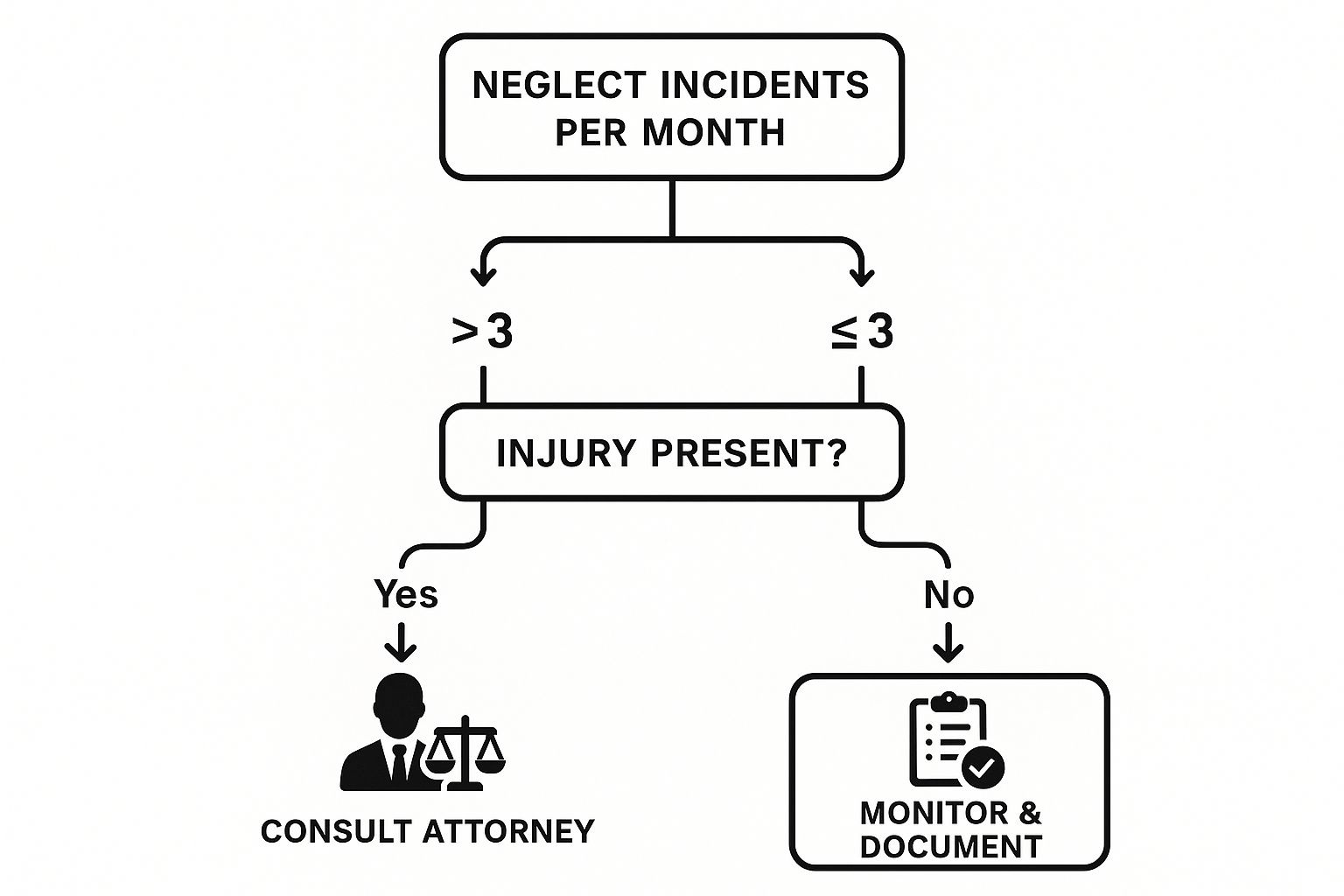
As you can see, repeated problems are a huge red flag. But if your loved one has suffered any kind of injury, that’s an immediate signal to seek professional legal advice.
What Does It Cost to Hire a Lawyer for This?
This is usually the first question on everyone's mind, and it's a major source of stress for families. The good news is that almost every experienced nursing home neglect lawyer works on a contingency fee basis.
What does that mean for you? It means you pay zero upfront costs. The attorney's fee is simply a percentage of the financial recovery they win for you, whether that's from a settlement or a court verdict. If they don't win your case, you owe them nothing for their time. This system levels the playing field, making sure every family can afford excellent legal help.
How Much Time Do I Have to File a Lawsuit?
You have to act fast. Every state has a strict deadline called the statute of limitations for filing a lawsuit. This legal window can be incredibly short—in some places, it’s just one year from when the neglect happened or when you discovered it.
Missing this deadline is devastating. If you try to file a claim even one day too late, the court will almost certainly dismiss your case for good. You’ll lose the right to pursue justice and compensation forever. This is why it’s so critical to talk to an attorney as soon as you suspect neglect.
What Kind of Compensation Can My Family Get?
When an attorney talks about compensation, they use the term "damages." This isn't just about covering medical bills; it's about holding the facility accountable for the total harm caused to your loved one and your family.
A successful case can help you recover money for a range of losses:
- Economic Damages: This is for all the direct financial costs. Think hospital bills for treating injuries, the cost of physical therapy, and any other money you had to spend because of the neglect.
- Non-Economic Damages: This addresses the human cost. It provides compensation for the resident’s physical pain, emotional trauma, suffering, and the simple loss of their ability to enjoy life.
- Wrongful Death Damages: In the tragic event that the neglect leads to a resident's death, the family can seek damages to cover funeral costs, loss of companionship, and other profound losses.
In rare cases where a facility's actions were exceptionally reckless or intentional, a court may award punitive damages. These are meant to punish the nursing home and send a clear message to prevent it from happening to another family. A good attorney will explore every category to ensure you get the maximum compensation possible.
If you're worried that a loved one is being neglected, please don't wait. AskLegally is a resource that can connect you with a skilled nursing home neglect attorney to review your case and explain your options. You can find the help you need today by visiting https://asklegally.com.