Find the Right Nursing Home Neglect Lawyer
When you walk into a nursing home to visit a loved one, you often get a feeling. Something just seems… off. It might not be one big, obvious thing, but a series of small, unsettling details. Trust that feeling. It's your most important tool.
While you can find checklists all over the internet, the real-world signs of neglect are often much more subtle. You're the one who notices the slow changes over time—the bedsores that don’t heal, the sudden drop in weight, or how your loved one flinches or goes quiet when a certain staff member enters the room. These are the red flags that matter.
What Are the Signs of Nursing Home Neglect

Neglect is rarely a single, dramatic event. It's more like a slow, creeping decay in the quality of care. It shows up in physical ways, emotional shifts, and even the general state of the facility. Your observations are absolutely crucial because they form the foundation of any potential case if you decide to contact a lawyer. The trick is learning to connect the dots.
For instance, a bedsore isn't just a skin problem; it's a huge warning sign. These painful ulcers, also called pressure sores, almost always develop because a resident isn't being repositioned regularly. That’s a fundamental failure of care. The same goes for seeing your mom looking gaunt and dehydrated—it could mean no one is taking the time to help her eat or drink.
Physical and Emotional Indicators to Watch For
The physical signs of neglect can be stark, but the emotional damage can be just as devastating. You have to keep a close eye on both.
Here are some of the most common things I tell families to look for:
- Unexplained Injuries: If you see bruises, cuts, or even fractures and the staff’s story doesn't add up or keeps changing, that’s a major problem.
- Poor Personal Hygiene: This is a big one. Uncombed hair, dirty fingernails, persistent body odor, or stained clothing are clear signs that basic daily care is being completely ignored.
- Sudden Behavioral Changes: Has your usually social father become withdrawn and quiet? Does your aunt seem agitated or fearful? This could be a reaction to emotional neglect or even verbal abuse from staff.
- Malnutrition or Dehydration: Pay attention to physical clues like a dry, sticky mouth, sunken eyes, and clothes that suddenly seem way too loose. These point to a serious lack of nutritional support.
Trust your gut. If a staff member blows off your concerns or you consistently leave a visit feeling uneasy, don't ignore it. Your intuition is powerful for a reason.
Environmental Red Flags in the Facility
The building itself can tell you a story. An unsafe or dirty environment is rarely just about poor housekeeping; it's a symptom of a much larger, systemic problem with management and staffing.
And this isn't a rare occurrence. Some data suggests that as many as 95% of nursing home residents have either personally been neglected or have seen it happen to someone else.
During your next visit, really look around. Are call lights blinking for ages without anyone responding? Does your loved one’s room or the common area have a lingering, foul odor? These aren't small things. They’re direct signs of an understaffed or poorly run facility. Learning how to properly document these issues is a critical first step if you're considering a nursing home negligence lawsuit.
What to Do the Moment You Suspect Neglect
When you first suspect your loved one is being neglected, it feels like a punch to the gut. It's easy to feel panicked or angry, but what you do in these first few hours and days is absolutely critical. Your priority is their safety, of course, but you also need to start building a case. The clock is officially ticking.
Think of yourself as an objective fact-finder. Your goal is to create an undeniable record of what’s happening, and your smartphone is the best tool you have.
Start taking pictures. A lot of them. Capture any visible signs of neglect—bedsores, mysterious bruises, cuts, or signs of dehydration. Don't just get a close-up; take wider shots to provide context for where the injury is. Also, photograph the environment. Is the room dirty? Is bedding soiled? Are trash cans overflowing? Check your phone's settings to make sure every photo is stamped with the date and time. This detail is crucial.
Start a Detailed Log—Immediately
Your memory will fail you, but a written record won't. Grab a notebook or open a new document on your computer and start a log. This isn't just a diary; it's a factual timeline that will become the foundation of your case.
- Log every single visit and call. Note the date and the exact time.
- Write down everything you see. Be specific about your loved one’s physical condition, their hygiene, and even their mood.
- Document staff interactions. Who did you talk to? What did you ask? What was their exact response? Don't generalize.
- Record every complaint you make. Note who you spoke with, the date, and how (or if) they responded.
A vague memory of "staff not being responsive" is weak. A dated entry that reads, "March 15th, 4:30 PM: Mom's call light was on for 20 minutes before anyone came. I spoke to Nurse Jane, who told me they were short-staffed again," is rock-solid evidence.
Knowing Who to Tell and When
With your initial documentation in hand, it's time to report your concerns. Don't just vent to the first nurse you see. Go up the chain of command.
Start by speaking with the Director of Nursing or the facility administrator. Follow up every verbal conversation with a calm, professional email summarizing what you discussed. This creates a paper trail they can't ignore or deny.
At the same time, you need to file a formal complaint with your state's official oversight agency. This might be the Department of Health or Adult Protective Services. Understanding exactly how to report nursing home abuse is a vital step that triggers an independent, official investigation.
This period can be incredibly stressful as you might also be exploring other care options. It's worth looking into every resource available, which can include understanding the specifics of things like Medicare coverage for family caregivers. By taking these methodical steps, you're not just reacting—you're building the strong foundation a good lawyer will need to fight for you.
How to Find a Specialized Neglect Lawyer

Once you suspect neglect, the instinct is to immediately look for legal help. But just typing "lawyer near me" into Google isn't going to cut it. You’ll get a flood of personal injury attorneys, but very few will have the specific, nuanced experience needed to win a case against a powerful nursing home corporation.
These cases are a tough mix of medical malpractice and personal injury law, wrapped in a confusing tangle of regulations. You need a specialist—a true nursing home neglect lawyer—who deals with these unique challenges every single day. A general practice attorney, even a good one, simply won't have the deep knowledge required to go up against the legal teams that long-term care facilities keep on retainer.
Go Beyond a Simple Google Search
An online search is a decent place to start, but it's only the first step. The best lawyers in this field often get their cases from a solid reputation and word-of-mouth referrals, not just flashy search ads.
To find truly qualified candidates, you have to be more strategic.
- State Bar Association Referrals: Your state’s official bar association is an excellent resource. They often have lawyer referral services that can point you to attorneys who specifically list elder law or nursing home litigation as their primary focus.
- Elder Advocacy Networks: Groups like the National Consumer Voice for Quality Long-Term Care are treasure troves of information. Local advocacy organizations also keep lists of trusted attorneys who are known for their dedication to protecting seniors' rights.
- Peer Recommendations: If you know any lawyers, even if they practice a different type of law, ask them for a recommendation. The legal community is small, and attorneys usually know who the heavy hitters are in specialized fields like this one.
A huge mistake I see families make is hiring the first attorney who seems sympathetic and returns their call quickly. You absolutely must focus on finding a lawyer or firm with a proven, verifiable track record in nursing home cases, not just general injury claims.
The Specialist vs. The Generalist
It's critical to understand what separates a dedicated specialist from a general personal injury lawyer. One handles a wide variety of accident cases, while the other has spent years laser-focused on one complex type of opponent. It’s like needing heart surgery—you wouldn’t go to your family doctor; you’d find the best cardiologist you could.
Let's break down why this distinction matters so much.
Comparing Lawyer Specializations
It’s easy to assume all personal injury lawyers are the same, but their expertise can vary dramatically. This table clarifies why a specialist is essential for a nursing home neglect claim.
| Lawyer Type | Relevance to Neglect Cases | Key Strengths |
|---|---|---|
| Nursing Home Specialist | High | Deep knowledge of healthcare regulations, experience with facility tactics, and access to medical experts. |
| General Personal Injury | Moderate | Understands negligence and liability but may lack specific experience with nursing home corporate structures. |
| General Practitioner | Low | Handles various legal issues but is not equipped for the complexities of a specialized neglect lawsuit. |
As you can see, a specialist brings a focused skill set that a generalist just can't match. They already know the common excuses and defense tactics that nursing homes use to deny responsibility and are prepared to dismantle them with hard evidence.
Choosing the right legal partner is the single most important decision you will make in this entire process. For an even more comprehensive breakdown, our ultimate guide to choosing a legal partner offers more tips on vetting and selecting the right advocate for your family.
What to Ask a Nursing Home Neglect Lawyer
Walking into that first consultation can feel overwhelming. But remember, you’re in the driver's seat. This meeting isn't just for the lawyer to hear your story; it's your chance to interview them and see if they have what it takes to fight for your family.
You have to get past the polished sales pitch and understand their actual experience, their game plan, and how committed they truly are. The right questions will quickly separate a genuine specialist from a general practitioner looking to take on any case that walks through the door. Having a list of sharp, specific questions ready is the best way to walk out of that meeting feeling confident in your choice.
This infographic highlights some of the critical numbers you should keep in mind when looking for the right legal team.
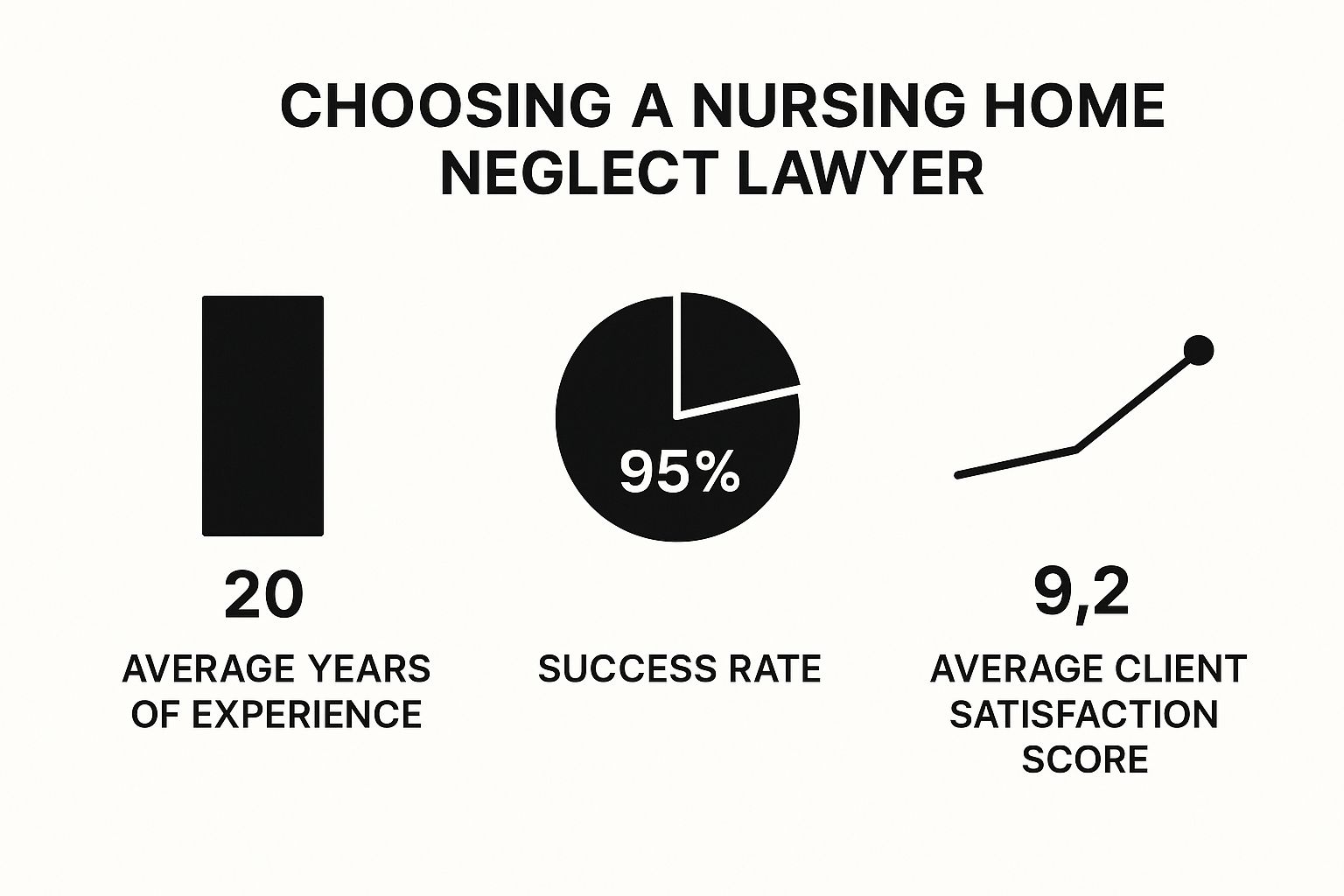
The data makes it plain: specialized experience and a strong track record are directly tied to better outcomes for clients. These aren't just nice-to-haves; they're essential.
Digging into Their Real-World Experience
Vague questions like "Are you experienced?" won't cut it. You need to get specific about their history with cases just like yours. A true nursing home neglect lawyer lives and breathes these kinds of cases and should be able to talk about them in detail.
Try starting with these direct questions:
- "What percentage of your cases are specifically about nursing home neglect?" You’re looking for a high number here. This tells you that your case isn't just another file on their desk—it’s their main focus.
- "Could you walk me through a case you handled that has similarities to ours?" Pay close attention to the details. Are they talking about their strategy, the evidence they gathered, and the hurdles they cleared? If their answer is vague, that’s a red flag.
- "Who at the firm will be my day-to-day contact?" It's a classic bait-and-switch. You meet with the experienced senior partner, but once you sign, your case gets handed off to a junior lawyer. You need to know exactly who will be handling your family’s case.
BEWARE: If a lawyer guarantees a specific dollar amount or promises a quick victory, walk away. An ethical, seasoned attorney knows these cases are incredibly complex and never predictable. They should give you a realistic, honest assessment, not a guarantee.
Understanding Their Strategy and Resources
Taking on a nursing home corporation is no small feat. These are often large companies with very deep pockets and teams of aggressive lawyers on retainer. A solo attorney or a small firm might not have the financial muscle to hire the top-tier medical experts needed or to last through a long, drawn-out legal fight.
The scale of this issue is heartbreaking. One recent study was particularly shocking, finding that 64.2% of nursing home staff admitted to some form of abuse or neglect in the past year. This shows just how systemic the problem is. You need a lawyer who is ready to tackle that reality head-on. You can explore the full findings on nursing home abuse statistics to learn more about this disturbing data.
To see if they have the necessary firepower, ask about their approach:
- What kind of resources does your firm have for a fight like this? This is about more than just money. Do they have an established network of medical experts and private investigators? Are they financially stable enough to fund a complex case from start to finish?
- What’s your approach to settling versus going to trial? The ideal lawyer is a sharp negotiator who aims for a fair settlement but is also fully prepared—and willing—to take your case to a jury if the facility refuses to be reasonable.
- How will we stay in touch? Ask how often you can expect updates and what their policy is for returning calls and emails. Clear, consistent communication is absolutely crucial and will save you a lot of stress and anxiety down the road.
Navigating the Legal Process and Timeline

The thought of a lawsuit can feel overwhelming, but knowing the typical roadmap can make the whole process a lot less intimidating. A nursing home neglect case isn't just one single event. It's a series of deliberate steps, each one building on the last to move you closer to a resolution.
Once you’ve hired an attorney, their first move is to kick off an in-depth investigation. This isn't just a quick review of the evidence you already have. Your legal team will dig deep, formally requesting everything from medical records and staffing logs to the facility’s internal incident reports. They’ll also track down and interview witnesses—other residents, their families, and sometimes even former staff members who have firsthand knowledge of what was happening.
From Filing the Claim to Gathering Evidence
When the investigation confirms you have a strong case, your lawyer will draft and file a formal complaint with the court. Think of this as the official starting pistol for the lawsuit. It lays out the specific allegations against the nursing home and formally puts them on notice.
This kicks off a crucial phase called discovery. During discovery, both sides are legally required to exchange information and evidence. This is where a great lawyer really earns their keep. They'll use legal tools like depositions (sworn testimony taken outside of court), interrogatories (written questions), and formal document requests to unearth the proof needed to show a pattern of failure.
This evidence is the foundation of your entire case. In 2023, U.S. nursing homes were hit with 94,499 health citations, and a startling 8.1% of those were for abuse or neglect. An experienced attorney knows exactly how to find a facility’s history of these violations, which can paint a very clear picture of ongoing misconduct.
Negotiations, Settlements, and The Possibility of Trial
The vast majority of nursing home neglect cases—well over 90%—actually get resolved through a settlement and never see the inside of a courtroom. As your lawyer builds a mountain of evidence during discovery, the nursing home’s legal team often sees the writing on the wall. They become much more willing to negotiate a fair financial settlement to cover medical costs, pain and suffering, and other damages.
It’s important to manage your expectations on the timeline. A straightforward case might settle in under a year, but more complex cases can take two years or longer to resolve, especially if a trial becomes necessary.
If the facility digs in its heels and refuses to offer a fair settlement, your attorney will start preparing for trial. Knowing how to prepare for court can be incredibly helpful if your case heads in that direction. While trials are rare, having an attorney who is a respected and proven litigator is a massive advantage. It signals to the other side that you won't back down from a fight to get the justice your loved one deserves.
Answering Your Questions About Nursing Home Lawsuits
It’s completely normal to feel overwhelmed when you’re thinking about taking legal action against a nursing home. You've got questions, and you need clear, honest answers before you can decide what's best for your family. Let’s walk through some of the most common concerns we hear from families in your shoes.
How Much Does a Nursing Home Neglect Lawyer Cost?
This is usually the first question on everyone's mind, and thankfully, the answer should bring some relief. Nearly every nursing home neglect lawyer worth their salt works on a contingency fee basis.
So, what does that mean for you? It means you pay nothing out of your own pocket. There are no upfront retainers or hourly bills. The lawyer's fee is simply a pre-agreed-upon percentage of the money they recover for you, whether that's through a settlement or a jury verdict.
If the lawyer doesn’t win your case, you owe them no fee. Period. This system levels the playing field, making sure that anyone can stand up for their rights, not just those who can afford to write a big check.
What’s the Deadline for Filing a Neglect Lawsuit?
Every state has a legal stopwatch on these cases, known as the statute of limitations. This is the hard deadline for filing a lawsuit, and it can be much shorter than you think—in some places, as little as one year from when the neglect was discovered (or reasonably should have been).
Don't underestimate how serious this is. If you miss that deadline, your case is likely over before it even begins, no matter how strong your evidence is. The court can—and will—dismiss it permanently. This is why it’s so critical to talk to an attorney the moment you suspect something is wrong.
Key Takeaway: The clock is always ticking. Speaking with a lawyer immediately is the single most important step you can take to protect your family’s right to seek justice.
What Kind of Compensation Can We Expect?
When a lawsuit is successful, the compensation awarded—legally referred to as "damages"—is meant to cover the full spectrum of harm your loved one experienced. While every case is different, the goal is to address the financial, physical, and emotional toll of the neglect.
Generally, you can seek recovery for things like:
- Medical Bills: This covers everything from hospital stays and doctor visits to therapy and medication needed to treat the injuries from the neglect.
- Pain and Suffering: This is compensation for the actual physical pain, emotional distress, and loss of enjoyment of life your family member endured.
- Punitive Damages: In the most shocking cases where the facility's conduct was particularly awful or intentional, courts may award these damages. They aren't meant to compensate the victim but to punish the nursing home and send a clear message that this behavior won't be tolerated.
Can We Still Sue if Our Loved One Has Dementia?
Yes. One hundred percent. It’s a sad reality that many victims of nursing home abuse and neglect have cognitive conditions like dementia or Alzheimer's and cannot speak for themselves. This does not stop you from holding the facility accountable.
A seasoned nursing home lawyer knows exactly how to build a case without the victim's direct testimony. They have other ways to prove what happened.
They’ll gather powerful evidence, such as:
- Medical records that tell the story of a decline in health.
- Expert medical opinions connecting injuries to neglect.
- Photos and videos documenting injuries or unsafe conditions.
- Testimony from family, friends, or even other residents.
- Statements from current or former staff members who know what really happened.
Your loved one’s inability to testify isn't a roadblock; it's a reason to fight even harder on their behalf.
You don't have to face this alone. AskLegally is here to connect you with the resources you need to move forward with confidence. We can help you find an experienced nursing home neglect lawyer for a free, no-obligation case evaluation. Find the support your family deserves at https://asklegally.com.
Article created using Outrank