It often starts with a nagging feeling. That quiet but persistent sense that something just isn't right with the care a loved one is receiving. When you suspect neglect or abuse in a care facility, a nursing home injury lawyer is the specific expert you need to get to the bottom of it and fight for justice.
Knowing When It's Time to Call a Lawyer
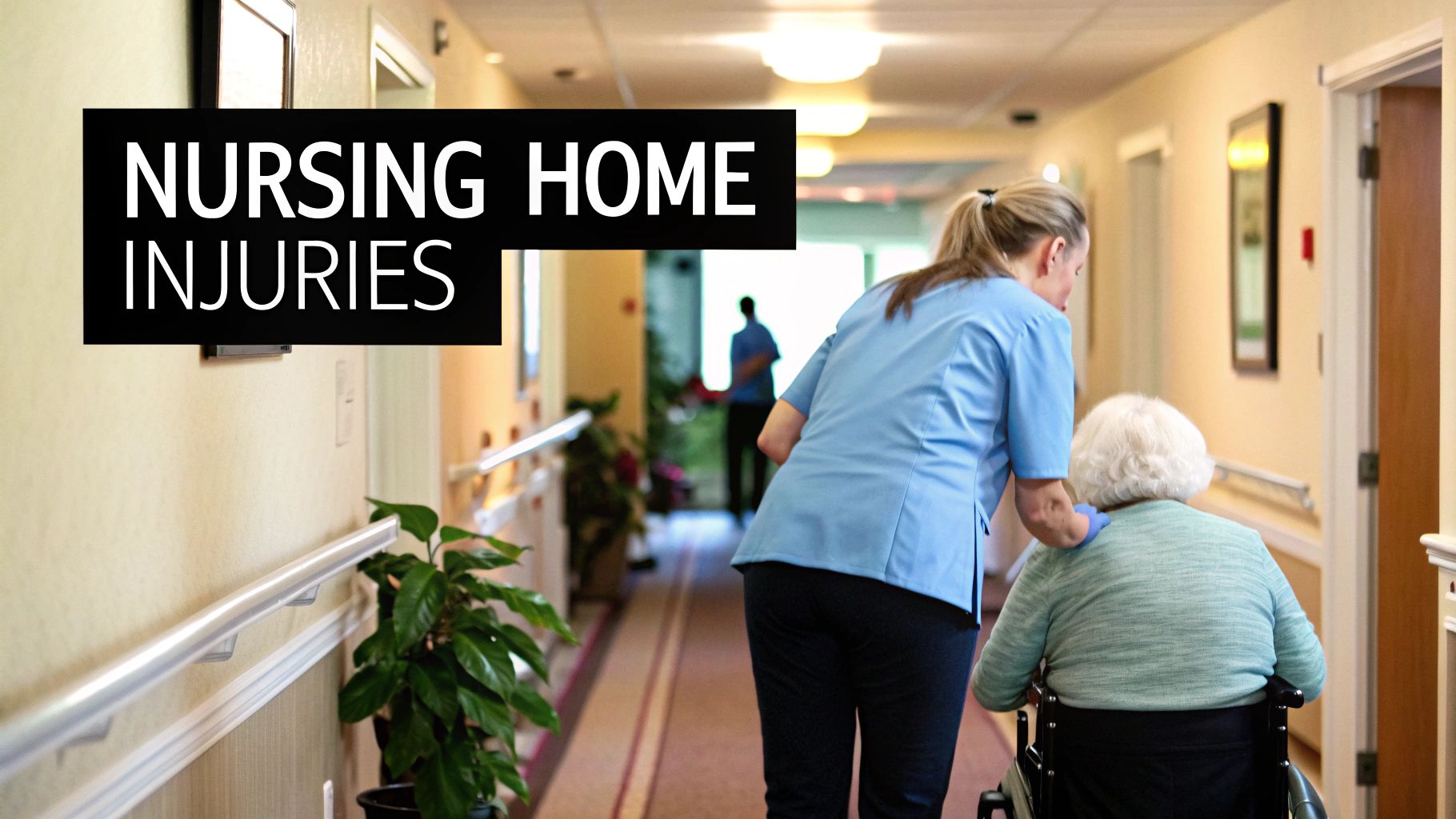
Trust your gut. That’s the most important first step. A single, isolated incident might have a reasonable explanation, but a pattern of strange events or injuries often points to a much bigger problem—like systemic neglect that demands legal action. An experienced lawyer in this field knows these injuries are rarely just "accidents."
Recognizing the Patterns of Neglect
You have to look beyond the obvious physical signs. The strongest cases are often built on recurring issues that the nursing home staff tries to dismiss or explain away with flimsy excuses.
Keep a close watch for these red flags:
- Recurring Falls: One fall can happen. More than one in a short time frame? That could point to a lack of supervision or an unsafe environment.
- Unexplained Mood Shifts: If your loved one suddenly becomes withdrawn, fearful, or anxious, especially around certain staff, it could be a sign of emotional or physical abuse.
- Rapid Weight Loss or Dehydration: These are classic, tell-tale signs of nutritional neglect. It's a serious problem, especially in facilities that are short-staffed.
- Poor Hygiene or Bedsores: Bedsores, also known as pressure ulcers, are almost always preventable with proper, attentive care. Their presence is a powerful indicator of neglect.
A single bruise might have an explanation, but a pattern of bruises, falls, and staff excuses is a clear signal that something is seriously wrong and it's time to seek legal advice.
The statistics on this are truly heartbreaking. Studies have found that 44% of residents have reported being abused, while a staggering 95% have either been neglected themselves or have seen another resident being neglected. What's worse, it's estimated that only 1 in 24 cases of elder abuse ever gets reported to the authorities, which means very few facilities are ever held accountable.
This is why documenting everything is your most powerful tool. After every visit, take dated notes. Photograph any visible injuries. Keep a log of every conversation you have with staff. This detailed record will become invaluable when you finally sit down with an attorney. For more immediate steps, you might find our guide on how to report nursing home abuse helpful.
How to Research and Vet Potential Attorneys

Alright, you've made the tough decision to get legal help. Now comes the most important part: finding the right advocate for your family. A quick Google search is a decent place to start, but you have to go much deeper than that to find a real specialist.
What you're looking for is someone whose practice is centered on fighting for the elderly—not a general personal injury lawyer who just happens to take a nursing home case every now and then.
First, check their credentials. Your state's bar association website is the best place to confirm an attorney is licensed and in good standing. From there, I always recommend looking at specialized directories like the National Academy of Elder Law Attorneys (NAELA). These organizations are filled with lawyers who have specifically chosen this area of law.
Evaluating a Lawyer's Website and Experience
When you find a potential lawyer's website, your job is to play detective. Look past the generic promises like "we'll fight for you." You need hard evidence that they actually understand the unique and often complex world of nursing home litigation.
So, what does that evidence look like?
- Case Results: Are their success stories filled with nursing home abuse and neglect verdicts? A long list of car accident settlements doesn't help you. You need to see wins in cases like yours.
- Client Testimonials: Look for reviews from other families they've represented in similar situations. Reading about their actual experiences can tell you more than any marketing slogan.
- Dedicated Content: Does the website have a robust library of articles, blog posts, and guides about nursing home injuries? This is a huge sign of their commitment and deep knowledge.
A top-tier nursing home injury lawyer will be proud of their track record in this specific niche. If you have to dig around to find any mention of nursing home cases, it's a major red flag. This isn't the time to hire a jack-of-all-trades; you need a master of one.
Your goal is to find an attorney who already knows the playbook used by nursing home defense teams and has a proven history of defeating them.
Key Questions for Your Initial Consultation
Think of the initial consultation as your interview—you're the one doing the hiring. Most attorneys offer this first meeting for free, so take full advantage of it. Go in armed with a list of direct questions to get a feel for their experience, their process, and how they communicate.
Here are a few questions I’d suggest you start with:
- How many nursing home neglect cases have you personally handled in the last year?
- What percentage of your firm's total caseload is focused on nursing home litigation?
- Do you work on a contingency fee basis? What is the percentage you charge?
- If I hire you, who will be my main point of contact? How often should I expect to get updates?
The way they answer these questions tells you everything. A confident, experienced lawyer will welcome this kind of scrutiny and give you clear, honest answers. You should walk away feeling informed and respected, not confused or pressured.
3 Essential Qualities of a Top-Tier Nursing Home Lawyer
When you’re standing up for a family member, not just any lawyer will cut it. The world of elder care law is a maze of specific regulations, and a general personal injury attorney, while skilled in their own right, often just doesn't have the niche experience you need to go up against a large care facility. A true nursing home injury lawyer brings a powerful mix of deep expertise and real compassion to your fight.
This specialization isn't just a "nice-to-have"—it's everything. These attorneys are immersed in the complex web of state and federal regulations that nursing homes must follow. They know the ins and outs of proper staffing ratios, the protocols for preventing horrific bedsores, and can often spot suspicious entries or altered medical charts from a mile away.
Specialized Knowledge and a Battle-Tested Record
A seasoned nursing home abuse lawyer has spent years building a network of credible medical experts. These aren't just any doctors; they're specialists who can clearly explain to a jury how an injury was caused by negligence—not just "old age," which is a common defense tactic. This distinction is often the pivot point of the entire case.
They also have something you can't learn from a book: experience taking on the massive insurance companies and corporate legal teams that defend these facilities. They know the tricks, the delay tactics, and how to counter them effectively.
The right lawyer becomes more than just your legal representative. They become a fierce advocate who truly gets the profound emotional weight your family is carrying. They’re fighting for your loved one's dignity, not just a fast payout.
This image breaks down some of the typical settlement figures for different types of injuries, which really underscores what’s at stake.
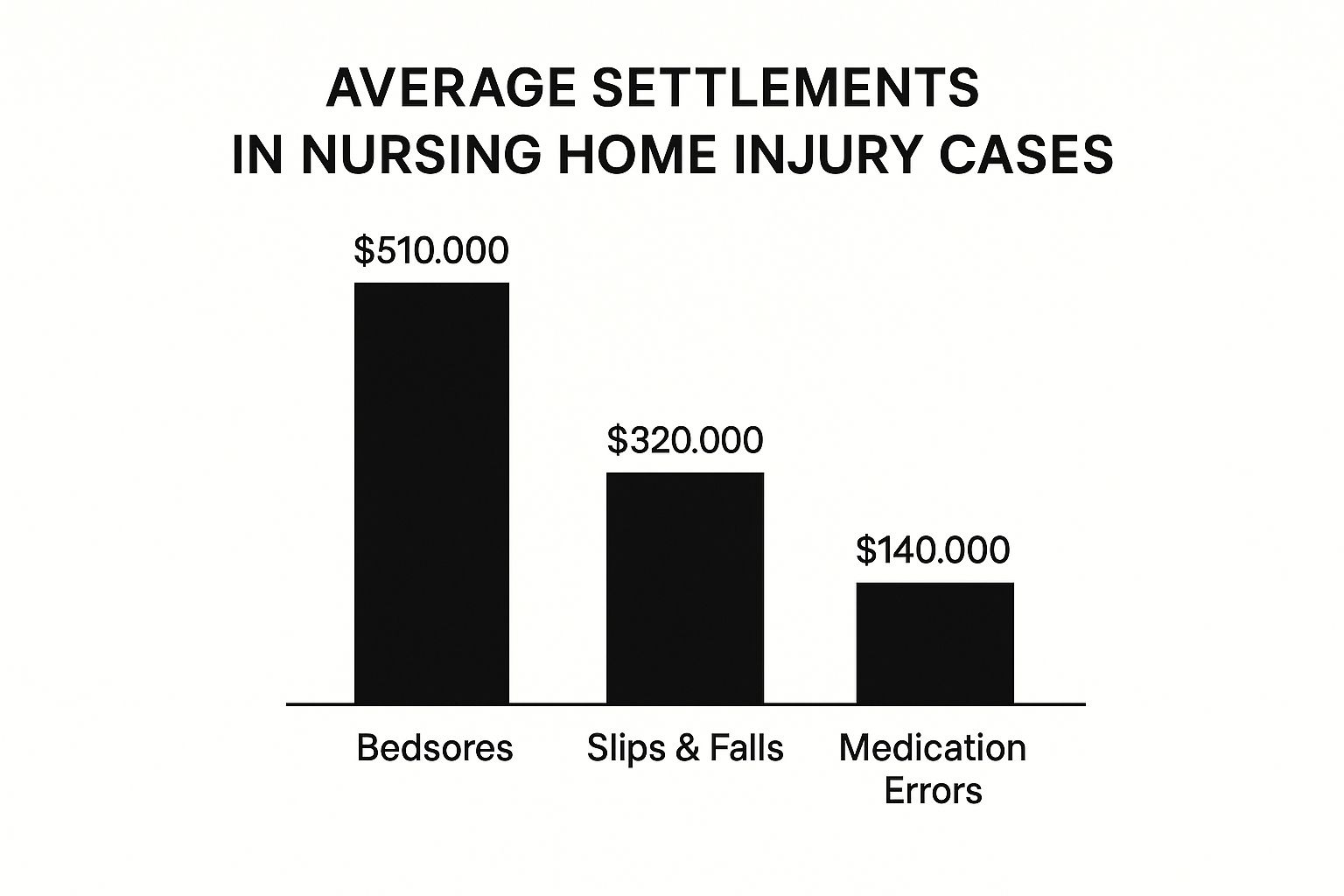
As you can see, the compensation can swing wildly depending on the injury's severity. This is exactly why you need an expert who knows how to properly value every aspect of your claim and fight for its full worth.
Why a Specialist Matters
You might be wondering if your trusted local PI attorney can handle the case. While they may be great at car accident claims, nursing home law is a different beast entirely. Here's a quick look at why a specialist is so crucial.
General PI Lawyer vs Nursing Home Specialist
| Attribute | General Personal Injury Lawyer | Nursing Home Injury Lawyer |
|---|---|---|
| Regulatory Knowledge | Basic understanding of negligence laws. | Deep expertise in state and federal nursing home regulations (OBRA, etc.). |
| Medical Understanding | Familiar with common accident injuries (e.g., whiplash, broken bones). | Specialized knowledge of geriatric issues like bedsores, malnutrition, and fall risks. |
| Expert Network | General medical experts, accident reconstructionists. | Geriatric specialists, wound care nurses, and nursing home administration experts. |
| Opponent Experience | Fights various insurance companies. | Routinely battles the specific corporate law firms hired by large nursing home chains. |
| Evidence Gathering | Police reports, witness statements, accident photos. | Knows how to analyze staffing records, care plans, and complex medical charts for signs of neglect. |
Choosing a lawyer who lives and breathes this area of law gives you a significant advantage from day one.
Compassion Isn’t a Soft Skill—It’s a Requirement
Beyond the legal strategy and courtroom prowess, the best lawyers in this field operate with a deep sense of empathy. They understand that these cases are intensely personal and that your family is likely going through a painful, stressful time.
A good lawyer is a patient communicator. They should be able to break down complicated legal jargon into plain English and give you consistent updates without you constantly having to chase them for information.
During your initial consultations, pay close attention to how they interact with you:
- Do they ask thoughtful questions about your loved one as a person, beyond just their injuries?
- Do they seem genuinely concerned about the emotional toll this has taken on your family?
- Is their focus on achieving justice and holding the facility accountable, not just on the potential settlement figure?
This blend of legal toughness and genuine human understanding is what separates a good lawyer from a great one.
What to Expect After You Hire an Attorney

Once you've selected your nursing home injury lawyer, the real work begins. The legal road ahead can feel overwhelming, but a good attorney will walk you through every step, starting with building the foundation of your case.
The first move is always to secure the evidence. Your lawyer will immediately send legal notices to the nursing home, legally obligating them to preserve everything from incident reports and staffing schedules to internal emails. At the same time, they'll be gathering medical records, photos you’ve taken, and statements from anyone who witnessed what happened.
Falls, for example, are tragically common. A typical 100-bed facility might report 100 to 200 falls a year, and research shows up to 27% of those are due to preventable hazards. Your lawyer’s job is to use the collected evidence to show the fall wasn’t just an accident, but a direct result of the facility’s negligence.
From Filing a Complaint to Uncovering the Truth
With the initial evidence in hand, your attorney will draft and file a formal complaint with the court. This is the document that officially starts the lawsuit. It lays out exactly what the nursing home did wrong and the harm it caused your loved one.
This filing triggers the discovery phase, which is essentially a structured information exchange between both sides. Your lawyer will likely take depositions—formal, sworn interviews—with the nurses, aides, and administrators involved. This is often where the truth comes out about systemic problems like understaffing or a failure to follow safety rules.
The discovery process is the longest and most intensive part of any case. It’s where your lawyer digs for the proof needed to show a pattern of neglect and build an undeniable argument for accountability.
Keep in mind, every state has a strict deadline for filing this kind of lawsuit. It’s critical to act quickly. You can learn more about these timelines in our guide to the statute of limitations.
While most of these cases end in a settlement, your attorney should prepare every step of the way as if you’re going to trial. That aggressive preparation is what gives you the best chance of getting a fair resolution, whether it's in a negotiation room or a courtroom.
Connecting Staffing Problems to Resident Injuries
When a loved one is hurt in a nursing home, it's rarely just a simple, isolated "accident." More often than not, it's a predictable outcome of deeper, systemic problems. An experienced nursing home injury lawyer knows that the real story is often buried in the facility's staffing records.
High staff turnover, inadequate training, and unsafe working conditions aren't just HR issues—they directly impact the person you entrusted to the facility's care.
Think about it: when caregivers are stretched thin, constantly overworked, or new to the job, the risk of neglect and serious errors goes through the roof. This is where we see mistakes like missed medications, ignored fall prevention plans, and slow responses to call lights. To draw this line clearly, we often have to dig deep into medical documentation. Tools like an AI for medical record analysis can be incredibly helpful in pinpointing the evidence needed.
A Pattern of Systemic Failure
The link between a dangerous environment for staff and a dangerous one for residents is undeniable. In fact, the healthcare sector has one of the highest injury rates of any private industry, with over 806,000 workplace injuries recorded in nursing homes in a single recent year.
These poor conditions create a revolving door of employees. High turnover means the continuity of care is constantly broken, and the quality of that care inevitably suffers. For more on how these staffing issues impact resident care, it's a topic worth exploring further.
A good lawyer’s job is to show that your loved one's injury wasn't just a random, unfortunate event. It was the direct consequence of a facility making a business decision—a choice to cut corners on staffing and training, prioritizing their bottom line over the safety of their residents.
Framing the case this way elevates it from a simple injury claim to a powerful argument for institutional negligence. Proving this pattern is the key to holding the facility truly accountable for the harm they've caused. For more on this, you might find our guide on preventing falls in nursing homes helpful.
Common Questions About Nursing Home Injury Cases
When you're reeling from a loved one's injury in a nursing home, your mind is probably racing with questions. It's completely normal. Getting clear answers is the first step toward figuring out what to do next and finding the right lawyer to help you through it.
Let's tackle some of the most common concerns I hear from families in this devastating situation.
A huge worry for most people is the cost. How can you possibly afford a lawyer when you're already dealing with medical bills and emotional stress? Thankfully, this is one area where you can breathe a little easier.
Most experienced nursing home injury lawyers operate on a contingency fee basis. In plain English, this means you pay zero out of pocket. Their fee is simply a percentage of the settlement or verdict they secure for you. If they don't win, you don't pay.
This system is designed to give families a fair shot at justice, allowing you to take on large, corporate-owned facilities without any upfront financial risk.
What Is the Deadline for Filing a Lawsuit?
This is, without a doubt, one of the most critical questions you can ask. Every state has a strict deadline for filing a lawsuit, which is known in the legal world as the statute of limitations.
This window of time can be shockingly short—sometimes as little as one year from when the injury occurred or was discovered. If you miss that deadline, your case is almost certainly over before it begins. The court will bar you from ever seeking compensation. That’s why it’s so important to speak with an attorney as soon as you suspect something is wrong.
How Can We Prove Neglect if Our Loved One Has Dementia?
This is a heartbreaking and incredibly common question. When a resident can't clearly communicate what happened, families feel helpless. But from a legal perspective, their inability to testify doesn't close the door on a case. Not by a long shot.
An experienced lawyer knows how to build a powerful case using other forms of evidence. It's all about piecing the story together. We often rely on:
- Deep Dives into Medical Records: An attorney will meticulously review all charts, looking for red flags like gaps in care, conflicting notes, or signs that an injury was ignored.
- Expert Medical Opinions: We bring in medical professionals who can testify that an injury, like an advanced bedsore or a severe fall, simply wouldn't happen if the facility was providing proper care.
- Statements from Witnesses: Other people saw things. We talk to staff members (current and former), other residents, and visiting family members to establish patterns of neglectful behavior.
If you believe a loved one was harmed due to neglect, the worst thing you can do is wait. AskLegally can help you find a qualified nursing home abuse lawyer to investigate your situation and fight for the justice your family deserves. You can visit us online to get started.