Traffic Collision Report Online: The Ultimate Filing Guide
Navigating the World of Traffic Collision Reports

After a traffic collision, dealing with paperwork can be a daunting task. Understanding the purpose and components of a traffic collision report online is vital for protecting your rights. These reports are crucial documents for various purposes, including insurance claims, legal proceedings, and overall traffic safety enhancements. Knowing how to navigate these reports can significantly impact the outcome of your situation.
Understanding the Importance of Traffic Collision Reports
Traffic collision reports create an official record of the incident, documenting essential details that allow for the reconstruction of the event. This record is crucial for insurance companies in determining liability and processing claims.
These reports are also essential in legal negotiations. They provide evidence to support your case and help ensure you receive fair compensation.
Furthermore, collision reports are valuable tools for improving road safety. Data collected from numerous reports can identify high-risk intersections or recurring accident causes.
This data can lead to infrastructure improvements or targeted safety campaigns, ultimately contributing to safer roads for everyone.
Key Components of a Traffic Collision Report
Several key components comprise a comprehensive traffic collision report. Accurate driver information, including contact details and insurance information, is fundamental for identifying all parties involved.
A detailed description of the accident circumstances is also necessary. This helps reconstruct the sequence of events, providing a clear picture for insurance adjusters and legal professionals.
Essential information includes:
- Date, time, and location of the collision
- Road and weather conditions
- Vehicle damage descriptions
- Witness statements (if any)
This detailed information allows for a complete understanding of the incident. For example, the precise point of impact can be crucial in determining fault.
Police Reports vs. Self-Reports
Two main types of traffic collision reports exist: police reports and self-reports. A police report is created by law enforcement officers responding to the accident scene. These reports hold significant weight due to their official and impartial nature.
In some cases, such as minor accidents without injuries, a self-report filed online might be sufficient. This offers efficient documentation when police involvement isn't necessary. Knowing which type of report is appropriate for your situation is essential for accurate and efficient processing.
For example, comprehensive databases like the Statewide Integrated Traffic Records System (SWITRS) in California collect and analyze collision data. This allows for analysis of traffic safety trends and the planning of safety interventions.
This type of data analysis contributes to overall traffic safety and can help prevent future accidents. Understanding the nuances of traffic collision reports empowers individuals to navigate post-accident procedures effectively and contribute to a safer driving environment.
Why Online Collision Reporting Is Changing the Game

Filing traffic collision reports online has significantly changed the post-accident process. Moving away from traditional, in-person reporting offers several advantages, making the entire experience smoother for everyone involved. This translates to faster processing times, fewer errors, and improved accessibility. Let's explore how online reporting is modernizing accident documentation and its effect on the future of road safety.
Streamlined Efficiency and Reduced Processing Times
One of the biggest benefits of online collision reporting is the significant decrease in processing time. While paper-based systems could take weeks, online platforms often handle reports in just a few days. This speed helps insurance companies process claims more quickly, allowing individuals to receive compensation sooner.
Some systems even offer instant confirmation and tracking updates. These features keep everyone informed throughout the process, lessening anxiety and uncertainty. This increased efficiency also reduces the workload for police departments, freeing up important resources.
Enhanced Accuracy and Error Prevention
Online reporting systems often include built-in validation features. These features reduce errors by guiding users through the required information and flagging any inconsistencies. This represents a significant improvement over handwritten reports, which can be difficult to read or contain inaccurate data.
Such errors can delay claim processing and may even prevent someone from receiving rightful compensation. The digital format also ensures that reports are easy to search for and retrieve, simplifying access for authorized parties.
For example, the Burbank Police Department offers online access to traffic collision reports and provides regular traffic statistics summaries. This valuable data helps track accident patterns, increasing public awareness and informing strategic planning.
Increased Accessibility and Democratization of Reporting
Online traffic collision reports make reporting more convenient, especially for those in difficult situations. Consider being involved in an accident late at night or in a remote area. Filing a report online removes the need to travel to a police station or wait for an officer.
This is especially important for people with mobility issues or those who live in areas with limited police presence. This accessibility makes the reporting process more equitable, ensuring everyone involved in an accident has an equal chance to document their account.
This shift toward online reporting also promotes eco-friendly practices by reducing paper usage and supporting a more sustainable approach to accident documentation. This digitization contributes to a more efficient, accurate, and inclusive system for everyone involved in traffic incidents.
From Crash to Completion: Your Online Filing Blueprint
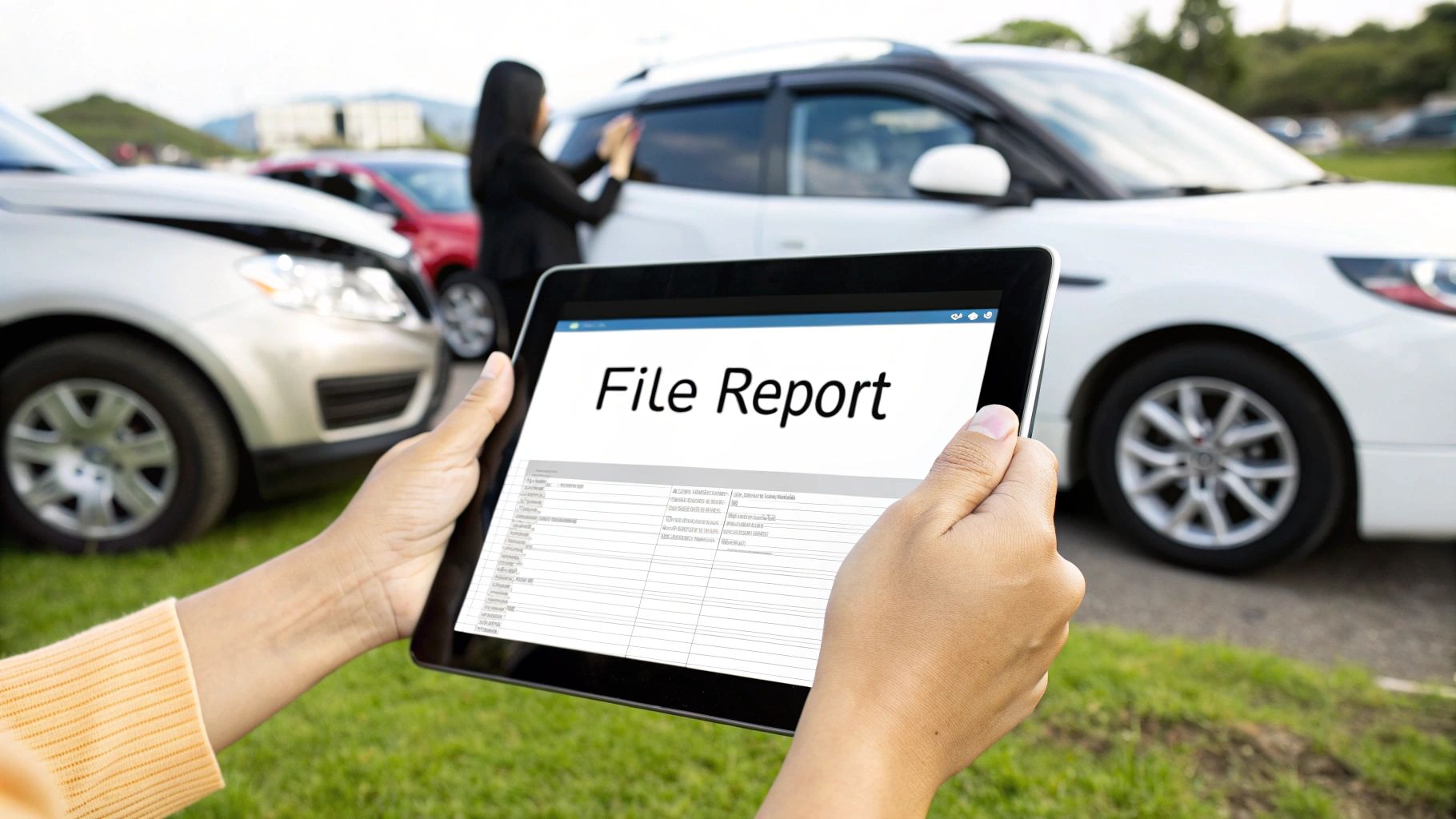
Knowing the right steps after a car accident can significantly reduce stress. This section offers a guide for filing a traffic collision report online, covering everything from documenting the scene to submitting your report and following up. This blueprint will help you navigate the process with confidence.
Documenting the Scene: Crucial First Steps
After ensuring everyone is safe, gathering evidence is paramount. Take clear photos of vehicle damage and the surrounding area. For instance, pictures of vehicle positions and skid marks can help reconstruct the accident.
Witness information is also crucial. Get their names, contact information, and a short account of what they witnessed. This information can support your account of the events and strengthen your online collision report.
Navigating Online Reporting Platforms
When you're ready to file, you'll find various online platforms depending on your location. Many jurisdictions offer user-friendly portals for online collision reports. These platforms usually guide you through each step, requesting specific information about the incident.
Creating an account often simplifies future access to your report. This is helpful for insurance claims or legal matters, making retrieving your report easy.
Providing Accurate and Complete Information
Accuracy is essential when completing the online report. Ensure all details match your on-scene documentation and driver's license. Incorrect information can cause delays and complicate claim processing.
Carefully describe the events leading up to the collision. Clear, concise language improves understanding and processing. This helps ensure efficient processing and avoids misunderstandings.
Understanding Required Information
Knowing the required information beforehand can prevent delays. Most online platforms require similar information. To help you prepare, we've compiled the following table:
A comprehensive checklist is essential for a smooth online filing process. The table below details the typical information needed for online traffic collision reports.
| Information Category | Required Details | Tips for Accuracy |
|---|---|---|
| Involved Parties | Driver's license information, insurance details, vehicle information | Double-check all entered information against your physical documents. |
| Accident Details | Date, time, location, description of events | Be as specific as possible when describing the events leading up to the collision. |
| Witness Information | Names, contact details, statements | If possible, collect brief written statements from witnesses at the scene. |
| Damages | Description of vehicle damage, other property damage | Take clear photographs of all damages. |
This table summarizes the key information required, making the process easier to navigate. Being prepared with these details ensures a more efficient reporting experience.
Submission and Follow-Up
After submitting your online report, it's important to know what happens next. Most platforms provide a confirmation and a reference number. Keep this information safe, as you’ll need it for future access.
If you don't receive confirmation, follow up with the relevant authorities. Contact the agency that handles online reports in your area. They can provide updates on your report's status and help with any issues.
This walkthrough helps you handle online reporting effectively, from initial documentation to final confirmation. Accurate documentation is key for a smooth and efficient claims process.
How Your Collision Report Shapes Safer Roads

Filing a traffic collision report online isn't just about your insurance claim. It's a vital contribution to a broader effort: making our roads safer. Every report provides a valuable data point. Combined, these data points help identify trends and inform changes that can save lives. Let's explore how this seemingly simple act makes a difference.
Identifying Dangerous Intersections and Road Designs
Aggregated collision reports are essential for pinpointing hazardous locations. For instance, multiple reports about accidents at a particular intersection highlight a potential problem. This can trigger an investigation by traffic engineers. These investigations often uncover issues like poor visibility or inadequate signage.
Similarly, recurring accidents on a specific road segment might reveal flaws in the road design itself. Perhaps a curve is too sharp for the posted speed limit, or the lane markings are confusing. This data-driven approach helps focus improvements where they are most needed.
Spotlighting Emerging Traffic Safety Concerns
Online collision reports also help identify new safety concerns before they become major problems. Imagine a sudden increase in reports involving cyclists in a particular area. This could signal the need for better bike lanes or public awareness campaigns.
This proactive approach lets authorities address potential hazards quickly, preventing them from escalating. Early intervention is critical for mitigating risks and protecting vulnerable road users, like cyclists and pedestrians.
Real-World Examples of Data-Driven Improvements
The impact of online collision reports is evident in real-world situations. In one city, analysis of online reports revealed a high number of accidents at a specific intersection. After investigation and redesign, the intersection saw a 75% reduction in accidents. This is a powerful testament to the value of data-driven decision-making.
In another instance, traffic signal timing adjustments, based on online report data, significantly decreased pedestrian accidents. These examples demonstrate how seemingly minor collision details can lead to substantial safety improvements. The use of data in traffic safety analysis continues to grow in sophistication, with tools like the Transportation Injury Mapping System (TIMS) providing geo-coded crash data. TIMS allows for mapping and analysis of crashes, helping identify hotspots and patterns that might not be obvious from raw data alone. You can find detailed statistics here.
Modern Visualization and Policy Change
Modern visualization tools transform raw accident data into easily understood visuals. These visualizations make it easier for policymakers and transportation officials to grasp key trends and patterns. This can be much more effective than simply presenting numbers.
Compelling visuals can drive action and motivate change. This leads to better-informed decisions about road safety improvements. By using data effectively, we can create safer roads for everyone.
Retrieving Your Collision Report Without the Hassle
After a traffic collision, getting the official report is often a crucial next step. Whether it's for insurance claims, legal proceedings, or personal records, accessing this document shouldn't add to the stress of an already difficult situation. This section will guide you through the process of obtaining your traffic collision report online, highlighting key aspects and potential challenges.
Understanding Access and Verification
Most jurisdictions now offer online portals for retrieving traffic collision reports. These systems are designed for efficiency, allowing quick access to important documentation. However, they also incorporate verification measures to protect sensitive information.
These requirements can vary, but often include the driver's license number, the date of the collision, and the report number. These details ensure only authorized individuals can access specific reports, balancing accessibility with data privacy.
Realistic Waiting Periods and Tracking
While online systems aim for speed, there's still a realistic waiting period. Reports aren't always instantly available. Processing and uploading can take a few days to several weeks, depending on the jurisdiction and the complexity of the accident.
Fortunately, many online systems offer tracking features, allowing you to monitor your report's status and get updates on its progress. This transparency helps manage expectations and reduces anxiety while waiting.
Navigating Privacy Protections and Access Roadblocks
Privacy protections for collision reports differ across states. Some states have stricter rules about who can access a report than others. It's important to be aware of the specific regulations in your location.
Occasionally, you might hit roadblocks while trying to access your report online. Perhaps the system is down, or you're having trouble with verification. In these cases, contacting the records department directly is often the best solution. They can help troubleshoot and offer guidance. Some jurisdictions, like Los Angeles, have specific procedures for accidents involving arrests, fatalities, or juveniles, often requiring in-person requests.
Platform-Specific Search Strategies and Insider Tips
Even with a streamlined online system, finding your specific report can sometimes be tricky. Understanding platform-specific search strategies is invaluable. Some platforms allow searching by various criteria, such as location or involved parties' names. Using these features can significantly narrow your search.
A few insider tips can also make the process smoother. Always double-check the information you enter, as minor typos can hinder your search. If you're having trouble, try contacting the records department. They often have internal search tools that can help locate your report even when public searches fail.
Understanding the broader impact of these reports can be insightful. The National Highway Traffic Safety Administration (NHTSA)’s Fatality Analysis Reporting System (FARS) collects detailed data on fatal crashes nationwide, contributing to national safety strategies. You can find more detailed statistics here. Knowing how to access and use collision reports empowers individuals to efficiently navigate the post-accident process and contribute to safer driving.
The Evolution of Collision Reporting Across America
The landscape of traffic collision reporting is undergoing a significant transformation. Across the United States, jurisdictions are moving away from traditional paper-based methods and embracing online platforms. This shift is bringing about improvements in efficiency, accuracy, and accessibility for everyone involved, from drivers to law enforcement agencies.
Mobile Technology and Automated Reporting
One key advancement is the increasing use of mobile apps by law enforcement. These apps empower officers to meticulously document accidents directly at the scene. Integrated GPS automatically pinpoints the exact location, minimizing errors and ensuring accurate data collection.
Additionally, vehicle telematics are becoming increasingly important. These systems can automatically detect a collision and notify authorities, even if the driver is unable to do so. This feature is particularly crucial in single-vehicle accidents or when drivers are incapacitated.
Data Analysis and Predictive Policing
The shift to online traffic collision reports allows for powerful data analysis. Using Artificial Intelligence (AI) Artificial intelligence and Machine Learning (ML), authorities can uncover hidden patterns within accident data. This information is instrumental in enhancing traffic safety on a broader scale.
By analyzing this data, patterns related to weather conditions, time of day, or even road design flaws can be identified and addressed proactively. Identifying high-risk locations allows for targeted interventions, potentially preventing accidents before they occur. The collection and analysis of traffic data, such as annual average daily traffic (AADT), are essential for safety assessments and infrastructure planning. For example, AADT data helps identify high-traffic areas that may require additional safety measures or infrastructure improvements. This data-driven approach helps ensure that resources are used effectively to maximize road safety across various road types. For more detailed statistics, see Federal Highway Administration traffic volume data.
Challenges and Opportunities in Standardization
While online collision reporting presents many advantages, challenges persist. A significant hurdle is the lack of uniformity across states. Differing reporting requirements and systems complicate data sharing and analysis at the national level.
However, efforts are underway to establish unified national databases. These initiatives aim to build a more comprehensive and accessible system, facilitating better tracking of national trends and a more coordinated approach to improving road safety nationwide.
Let's take a look at the current landscape of online collision reporting:
Online Traffic Collision Reporting by State
Comparison of online reporting capabilities and features across different states
| State | Online System Available | Key Features | Access Requirements |
|---|---|---|---|
| Varies by State | Yes/No (depending on the specific state) | Varies (e.g., damage estimates, witness information, photo uploads) | Varies (e.g., specific damage thresholds, involvement of injuries) |
This table provides a general overview. Specific features and requirements can vary greatly between states. It is always best to consult the specific state's Department of Motor Vehicles or equivalent agency for the most accurate and up-to-date information.
As this table demonstrates, the availability and features of online reporting systems vary significantly across states. This highlights the ongoing need for greater standardization in this area.
Streamlining Access and Empowering Individuals
This evolution in collision reporting also emphasizes improved access for individuals involved. Online platforms provide quick and easy retrieval of accident reports. This simplifies insurance claims and legal processes, reducing the burden on those navigating a stressful situation.
By enhancing access to information, these systems also promote transparency. This transparency helps foster trust and encourages public participation in creating safer roads for all.