
Most car-accident injuries become noticeable within 24 to 72 hours, while some are felt within minutes and others may take weeks or longer to appear. Concussion symptoms can begin immediately or emerge hours or days later, so feeling fine at the scene doesn't always mean you're uninjured.
Maybe you've made it home, exchanged insurance details, and told everyone you're okay. Then your neck tightens, a headache starts, or an arm feels strangely numb. That gap between the crash and the first symptom can matter for both your health and the record of what happened. Pay attention to new or changing symptoms, get medical advice when they appear, and write down when you first noticed them.
When Each Injury Shows Up After a Crash
Most injuries are felt within 24 to 72 hours, though some symptoms begin within minutes and others can take weeks or longer to emerge. A symptom's timing is useful information, but there isn't one deadline after which a new problem can be ruled out.
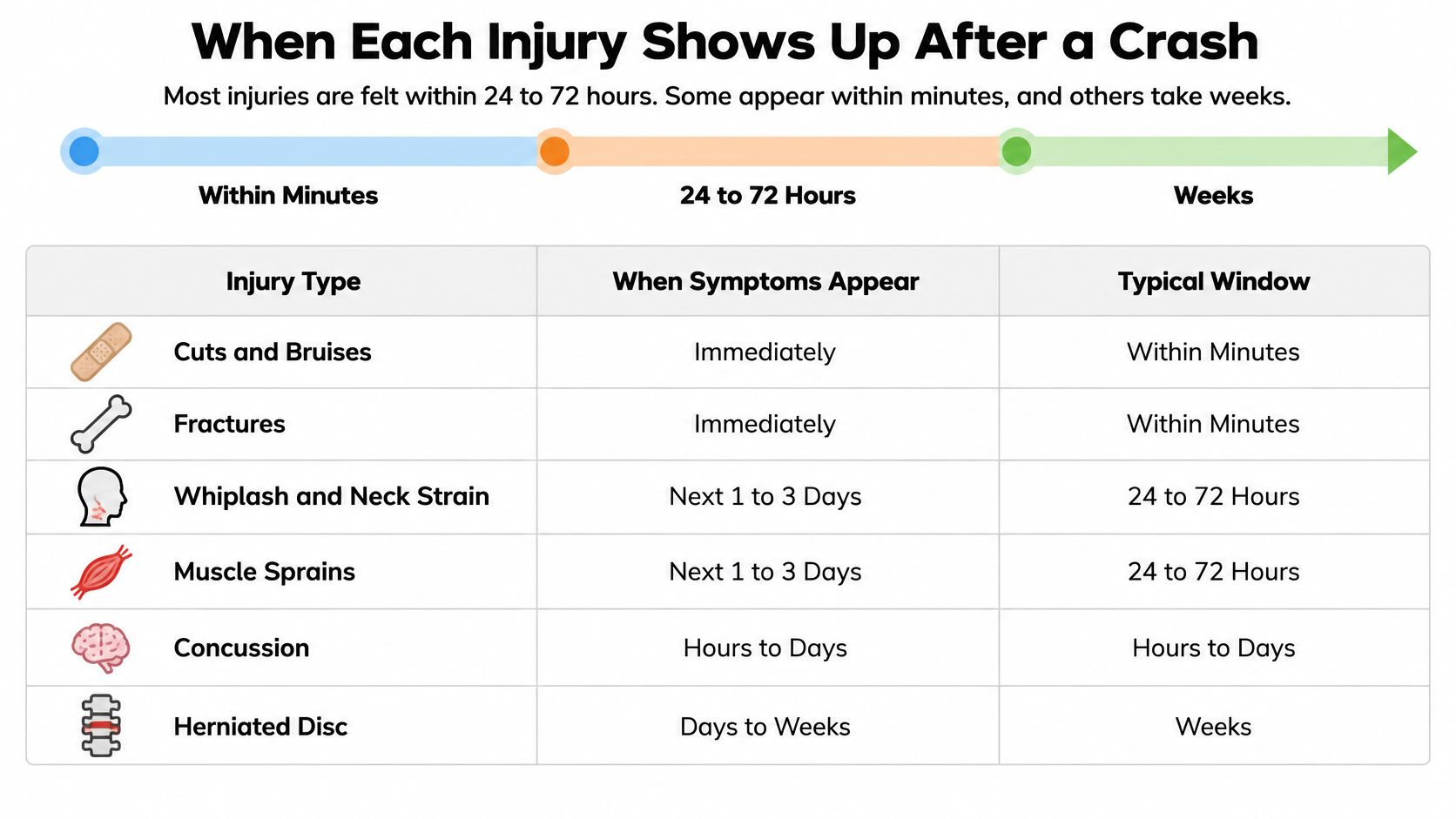
| Window | Typical onset | Injuries or symptoms that may surface |
|---|---|---|
| At the scene | Within minutes | Fractures, deep cuts, visible bleeding, bruising, and airbag burns |
| Same day | Within hours | Pain that was muted at first, headache, dizziness, or possible signs of internal injury |
| Days 1 to 3 | Within 24 to 72 hours | Neck stiffness, back or shoulder soreness, and concussion symptoms |
| Days 3 to 14 | Over several days | Persistent concussion symptoms, low-back strain, arm symptoms from a disc injury, or a worsening headache that needs assessment |
| Weeks to months | Weeks or longer | Jaw problems, persistent neck pain, or nerve symptoms |
| Beyond 12 months | 12 months or longer | Ongoing symptoms in some people diagnosed with whiplash-associated disorder |
Use the table as a guide to when symptoms can become noticeable, not as a diagnostic tool. The timeline has three overlapping parts: the injury happens at impact, the pain signal may arrive later, and a diagnosis may come after an examination or testing. A person can experience a symptom before knowing what caused it, and an early assessment might not identify every problem.
Later symptoms deserve attention
Whiplash-associated disorders can become clearer over the first 24 to 48 hours as soft-tissue injury, muscle guarding, inflammation, and reduced movement develop. Neck stiffness may come with shoulder or upper-back pain, headache, dizziness, arm symptoms, or jaw discomfort. If those problems worsen or limit ordinary movement, arrange medical follow-up rather than assuming the first examination settled the matter. A clinical review of whiplash-associated disorders and jaw symptoms reports that temporomandibular problems may not be identified at the initial assessment and can appear weeks or longer later.
Back soreness may also be easy to dismiss as a bruise or strain. If pain changes, grows stronger, or is accompanied by tingling or weakness in an arm or leg, tell a clinician when it began and how it has progressed. Those details help a clinician decide what assessment is appropriate.
A worsening headache or increasing drowsiness after a head impact shouldn't be treated as ordinary soreness. Serious complications can sometimes become apparent later, so changing symptoms call for reassessment, not a wait for a calendar cutoff. Write down the first day each symptom appears. Doctors need that history to guide care, and insurers may ask when you first noticed the injury.
Why Some Injuries Wait Days to Surface
A crash can leave you shaken, focused on getting to safety, or caught up in the immediate steps afterward. Stress and adrenaline may temporarily make pain or cognitive changes less obvious. Meanwhile, injured soft tissue can become more painful as inflammation and muscle guarding develop.
Think of a sprained ankle that looks manageable beside the road but becomes swollen and stiff by evening. The injury didn't happen when the swelling appeared. The body's response became easier to see over time. Some crash injuries follow a similar pattern, which is why the first few minutes don't always tell the whole story.

Brain symptoms can become clearer during normal activity
The CDC's guidance on concussion and mild traumatic brain injury symptoms says symptoms can start immediately or emerge several hours or days after an event. Changes can be subtle at first and become more noticeable when someone returns to reading, screens, work, or other daily tasks. Possible symptoms include headache, dizziness, fatigue, nausea, sensitivity to light or noise, trouble concentrating or remembering, irritability, and sleep changes.
Many individuals with a mild traumatic brain injury or concussion improve within a couple of weeks, though recovery varies by person and symptom severity. Notice whether symptoms appear or change as you resume your routine, and share that pattern with a healthcare professional.
The video below provides additional context about symptoms that may follow a head injury.
For example, a driver might feel normal on the first day, then develop headaches and trouble focusing after returning to screen-based work. The important detail isn't just that the symptoms arrived later. It's when they started, what makes them worse, and whether they're improving.
Red Flags That Need Emergency Care Now
There isn't a safe waiting period for a serious or worsening symptom after a head impact. Seek emergency medical evaluation for warning signs such as those shown below, especially during the first 24 hours after a head injury. Don't wait for a routine appointment if someone's condition is getting worse.
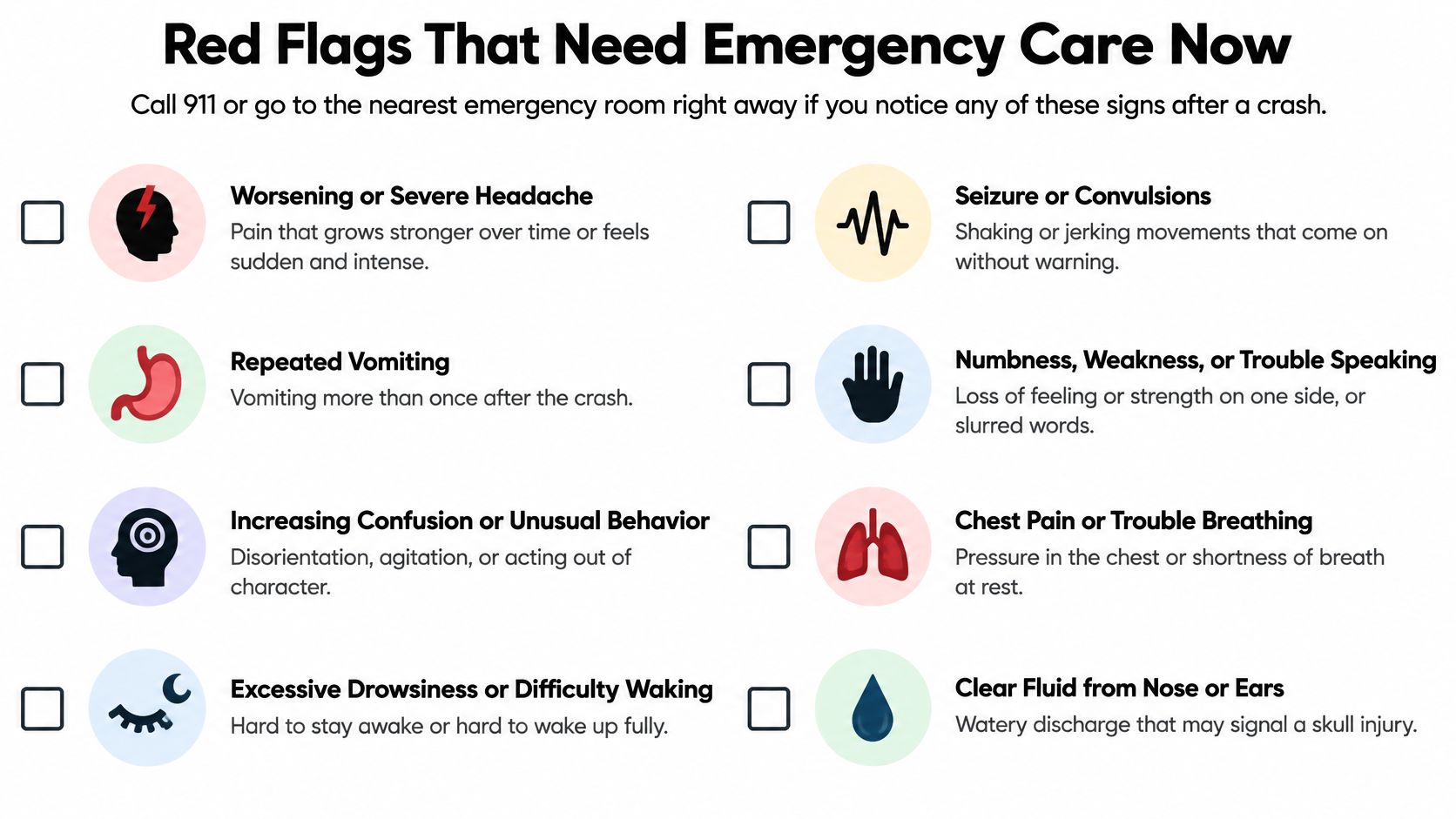
Get emergency help for worsening or severe headache, repeated vomiting, increasing confusion or unusual behavior, excessive drowsiness or difficulty waking, seizures, weakness, numbness, poor coordination, slurred speech, vision problems, or unequal pupils. If someone is hard to wake, has trouble speaking, or develops new weakness, treat it as urgent. People taking anticoagulants or other blood thinners should also get prompt medical assessment after a head impact, even if they feel fine initially. The CDC's patient instructions for mild traumatic brain injury emphasize monitoring symptoms and seeking urgent care for concerning changes.
A later change can still matter
A published case report described a patient whose initial complaints after a motor-vehicle collision were relatively uncomplicated low-back pain, neck pain, and headache. About one month later, the patient developed right-arm numbness, right-leg weakness, and dragging of the leg. The report linked a delayed post-traumatic headache with a subdural hematoma and called for reassessment when symptoms worsen. The medical case report also discusses different clinical classification thresholds for post-traumatic headache: an earlier definition allowed onset within 14 days, while a later one specified 7 days.
Those are classification rules, not assurances that every injury will appear within a week. They don't make a later symptom safe to ignore. If pain worsens or changes character, or you develop weakness, numbness, confusion, repeated vomiting, or vision or speech problems, seek prompt medical care. Record when the change began and describe how it differs from what you felt earlier.
What to Do When Symptoms Appear Later
Marcus felt okay after a collision, but woke on day five with neck pain and a headache that hadn't been there before. A careful record of what happened next can help his clinician understand the change and keep the connection to the crash clear.
Get checked promptly. Contact a healthcare professional when a new symptom appears, and explain that you were in a crash and when the symptom began. Seek emergency care instead of an appointment for warning signs described above.
Describe what you feel in your own words. Say where the symptom is, how it feels, when it started, and whether it's getting better, worse, or staying the same. Specific observations help the clinician assess the change.
Keep a daily symptom diary. Note your symptoms, sleep, work limitations, and activities you had to stop or change. A short entry made that day is usually more useful than trying to reconstruct the details later.
Save your records and expenses. Keep discharge papers, imaging reports, prescriptions, receipts, and mileage to appointments. AskLegally's workers' compensation guide also recommends preserving injury reports, medical records and work notes, insurer letters, out-of-pocket costs, a dated timeline, and photos.
Build a dated timeline. Record the crash, first symptoms, treatment visits, and missed work. AskLegally's workers' compensation guide notes that most disputes turn on what was documented and when.
Keep original photos. Photograph the vehicles, scene, and visible injuries when possible, and keep the originals rather than only edited or cropped copies. Images can add context to written notes.
Notify your insurer in writing. Send a dated email or letter reporting the new symptom and explaining that it may be connected to the collision. Save a copy of what you send and any response.
Attend follow-up appointments. If you can't make a visit, contact the provider and ask how to reschedule. Gaps in care may give an insurer a reason to question whether the injury continued or was related to the crash.
For more help organizing what to do after a collision, see AskLegally's after-accident guide.
How Late Symptoms Affect Your Insurance Claim
A claim adjuster reads the gap between the crash and the first documented symptom as part of the injury story. A late symptom works like a missing link in a chain: the claim can still hold when the surrounding links are dated, consistent, and medically plausible. The questions are usually simple. When did the symptom start? What changed? Did the first clinician hear the same mechanism of injury you are describing now?
Two drivers can have the same diagnosis and very different claim paths. One reports neck pain in the emergency room and follows up when it spreads to the shoulder. The other feels only soreness at first, then develops headaches and back spasms the next week. The second claim needs the record to carry the explanation: the onset date, the reason care waited, the clinician's findings, and whether prior injuries or new activities could account for the symptoms.
Deadlines still matter while symptoms are unfolding. Reporting windows in the policy and filing deadlines under state law vary and can be short, so check the applicable rule promptly instead of assuming time is unlimited. If you want a private way to organize the facts, AskLegally's free Accident Claim Value Assessment reviews details that can affect how an accident claim is handled and gives immediate guidance without requiring contact details.
Before accepting a release, make sure the file reflects the full course of symptoms, including late ones.
Keep the timeline specific: record when you noticed each symptom, when you reported it, and what care followed.
Deciding When to Call a Personal Injury Lawyer
| Situation | Handle it yourself | Talk to a lawyer |
|---|---|---|
| Symptoms resolve within a few weeks and bills are small | Usually manageable with organized records | Optional review |
| Insurer disputes that the injury came from the crash | Harder to resolve alone | Recommended |
| Symptoms remain after three months | Track changes and keep records | Consider a review |
| Concussion, brain injury, or internal injury is diagnosed | Keep imaging and medical notes | Strongly consider |
| A quick settlement arrives before recovery is clear | Don't sign a release yet | Review the offer first |
| Surgery is recommended or lost wages are significant | Document costs and missed work | Recommended |
Some straightforward claims may be manageable without a lawyer, especially when symptoms resolve and the records and bills are clear. A lawyer's review is more valuable when the insurer contests the connection to the collision, the injury is serious, or you're asked to settle before you know how recovery will progress.
That caution matters for whiplash-associated disorder. A 2025 peer-reviewed study reports that more than 50% of people diagnosed with the disorder continue to report symptoms 12 months or longer after symptoms first begin. The study record published by the authors is a reminder that an early settlement can be difficult to assess while symptoms are still changing. Don't sign a release before you understand what it covers and have a clearer picture of your recovery.
If you want to compare your circumstances with common decision points, read AskLegally's guide to whether you need a lawyer after a car accident. Before requesting a review, gather the injury date, how you reported it, claim paperwork, medical records, and pay stubs if available. You don't need every detail ready to ask for guidance.
If symptoms appeared after your crash, AskLegally's free Accident Claim Value Assessment reviews facts that can affect how an accident claim is handled and provides immediate guidance without requiring contact details. Gather the records you have, then visit AskLegally to assess your next steps.