
You're sore, your car is sitting somewhere waiting for an estimate, and an adjuster has already left a voicemail. You're not looking for a courtroom drama. You want to know whether signing a representation agreement helps you or just gives away part of a settlement you could've handled yourself. That's the right question, and it doesn't have the same answer for every crash.
The Decision You Are Quietly Trying to Make
People searching should I get a lawyer after a car accident aren't deciding whether lawyers are useful in general. They're deciding whether their accident has enough injury, fault, or insurance risk that an early mistake could cost them money they can't get back. That's a narrower and more honest test.
If you've got minor vehicle damage, no symptoms after a medical check, clear fault, and an insurer paying promptly, you may not need counsel. Don't hire someone out of anxiety. If treatment is continuing, fault is disputed, bills and missed work are growing, or you're being pushed to settle before you know how you'll recover, the answer shifts. Then a lawyer isn't a luxury. It's protection against signing away a claim you don't yet understand.
Ask What Could Go Wrong Without Help
Use three questions before you call anyone.
- Is the medical picture settled? If you're still treating, waiting on imaging, or developing new symptoms, you don't know the value of what you'd be releasing.
- Is fault undisputed in writing? A friendly phone call isn't an admission, and shared fault can reduce or bar recovery depending on state law.
- Could a deadline or coverage issue hurt you? Notice rules, policy limits, and limitation periods can matter even when injuries look manageable.
Practical rule: The more uncertain the medicine, fault, or coverage, the stronger the case for getting advice before you negotiate.
You don't have to commit today. You do need to protect the option to hire counsel later, because records, statements, and releases can't easily be undone. Read the situations below against your own facts, circle what matches, and be blunt with yourself. If nothing matches, self-management may be reasonable. If two or three match, stop treating this as a do it yourself project and get a case review before the insurer sets the terms for you.
Why Car Accidents Are More Complicated Than They Look
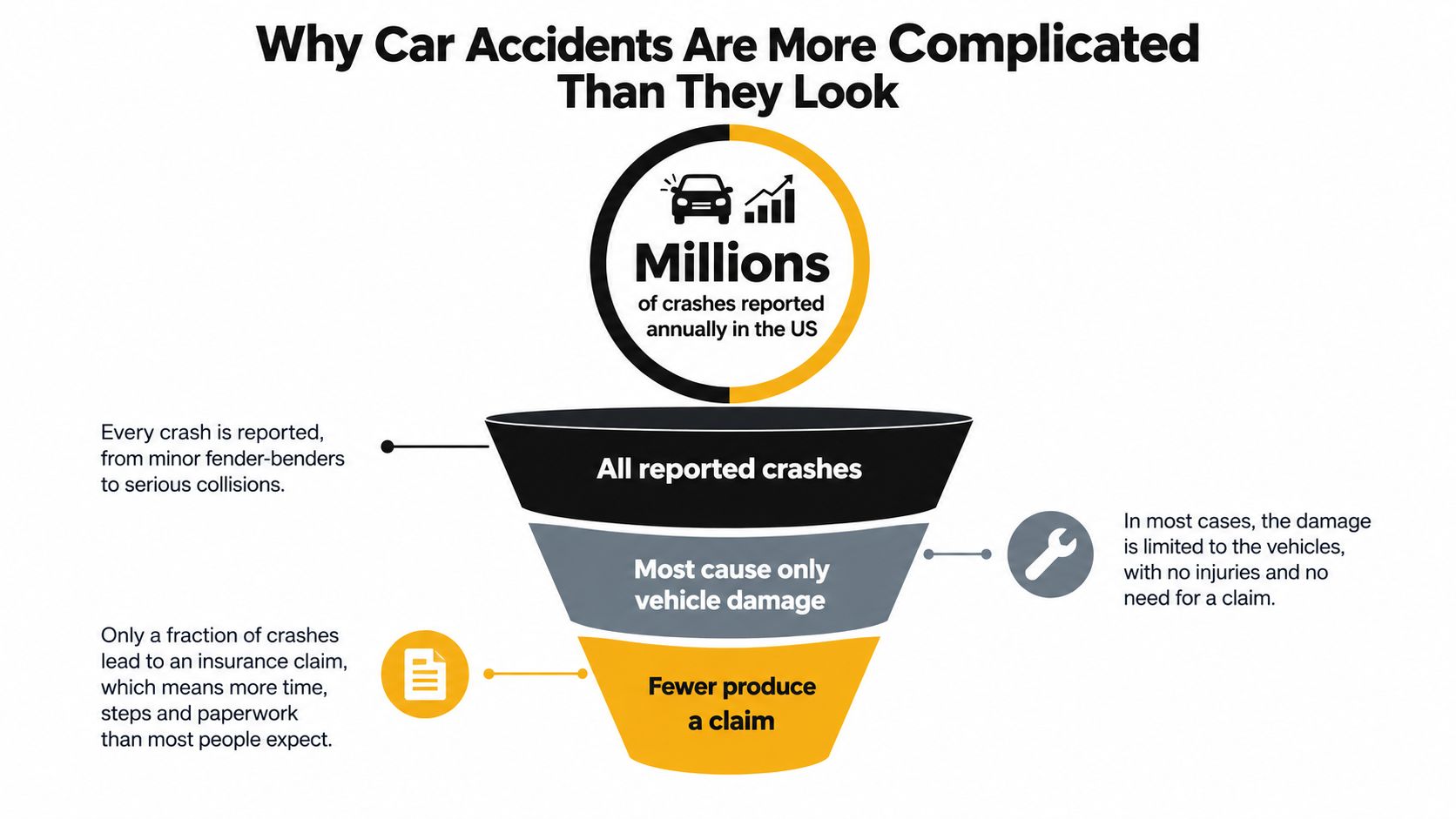
A driver leaves a Friday rear-end crash with a cracked bumper, a stiff neck, and an adjuster calling before the tow truck arrives. The file feels small. The system around it is not: NHTSA estimated 6,138,359 police reported motor vehicle crashes in 2023, with 2,442,581 injuries and 40,901 deaths, and about 28% of reported crashes resulted in injury while fewer than 1% resulted in death, according to NHTSA crash statistics for 2023. Those are population counts, not odds for your claim.
Most collisions stay property-damage matters. The minority that turn into injury claims pull in treatment timelines, causation arguments, wage proof, policy limits, liens, and state fault rules. Two similar impacts can price out very differently because one driver has clean imaging and steady care while the other has a gap in treatment, an old back problem, and an adjuster already building a shared-blame theory.
Severity on Day One Is a Poor Predictor
A bumper can look fine while a neck, shoulder, or brain injury is still declaring itself. Symptoms evolve, work restrictions appear, and what looked like a repair bill can become months of therapy and lost income. Adjusters know early offers often land before you can judge them.
Fault rules also vary sharply by state, so a rule you heard from a friend may not apply. If your crash happened in North Carolina, reviewing NC auto accident fault laws from Select Insurance Group, Inc. is a useful starting point before you discuss blame with any insurer. The governing system can decide whether partial blame reduces recovery or ends it.
That is why the useful question is net recovery: after fees, liens, delay, and the risk of a bad release, does help leave you better positioned than self-management? Roadside impressions do not answer that. Contracts, deadlines, medical proof, and fault law do.
Six Situations Where a Lawyer Adds Real Value
This visual overview shows how treatment, insurer contact, and settlement decisions tend to overlap in a real claim.

If one of these patterns fits, a lawyer has concrete work to do, not just a title to add to your file.
Situations That Justify a Call
- Serious or ongoing injury: You're hospitalized, referred to a specialist, or still treating weeks later. A lawyer helps document future care and impairment instead of letting the insurer price only the bills received so far.
- Disputed or shared fault: The other driver says you merged into them, braked suddenly, or ran the light. Counsel gathers police records, witness accounts, photos, and vehicle damage evidence before the insurer's version hardens.
- Denial or a low offer: The insurer disputes treatment, excludes part of the claim, or offers less than your documented losses. A lawyer can challenge the reasoning with records and a structured demand.
- Uninsured or underinsured driver: Available coverage may come from several policies, and notice requirements can be strict. Missing a policy or deadline can shrink recovery before negotiations begin.
- Significant wage loss or lasting impairment: Missed shifts are only part of it. Reduced hours, lost earning capacity, and work restrictions need payroll records and medical support to be taken seriously.
- Delayed symptoms: Whiplash symptoms can be delayed 12 to 72 hours, may involve soft tissue damage not visible on routine examination, and can persist for years or become permanent in some cases, according to federal regulatory guidance on whiplash injury. That delay gives you a documentation problem a lawyer can help address by connecting crash mechanics, symptom onset, and treatment.
The short video below is worth watching before you assume the insurer will evaluate those issues neutrally.
In each situation, the value is specific. A lawyer controls communications, requests records, identifies coverage, calculates damages beyond the first bills, and can file suit if negotiation stalls. If none of those tasks would change your result, representation may not pay for itself.
When Hiring a Lawyer May Not Be the Best Move
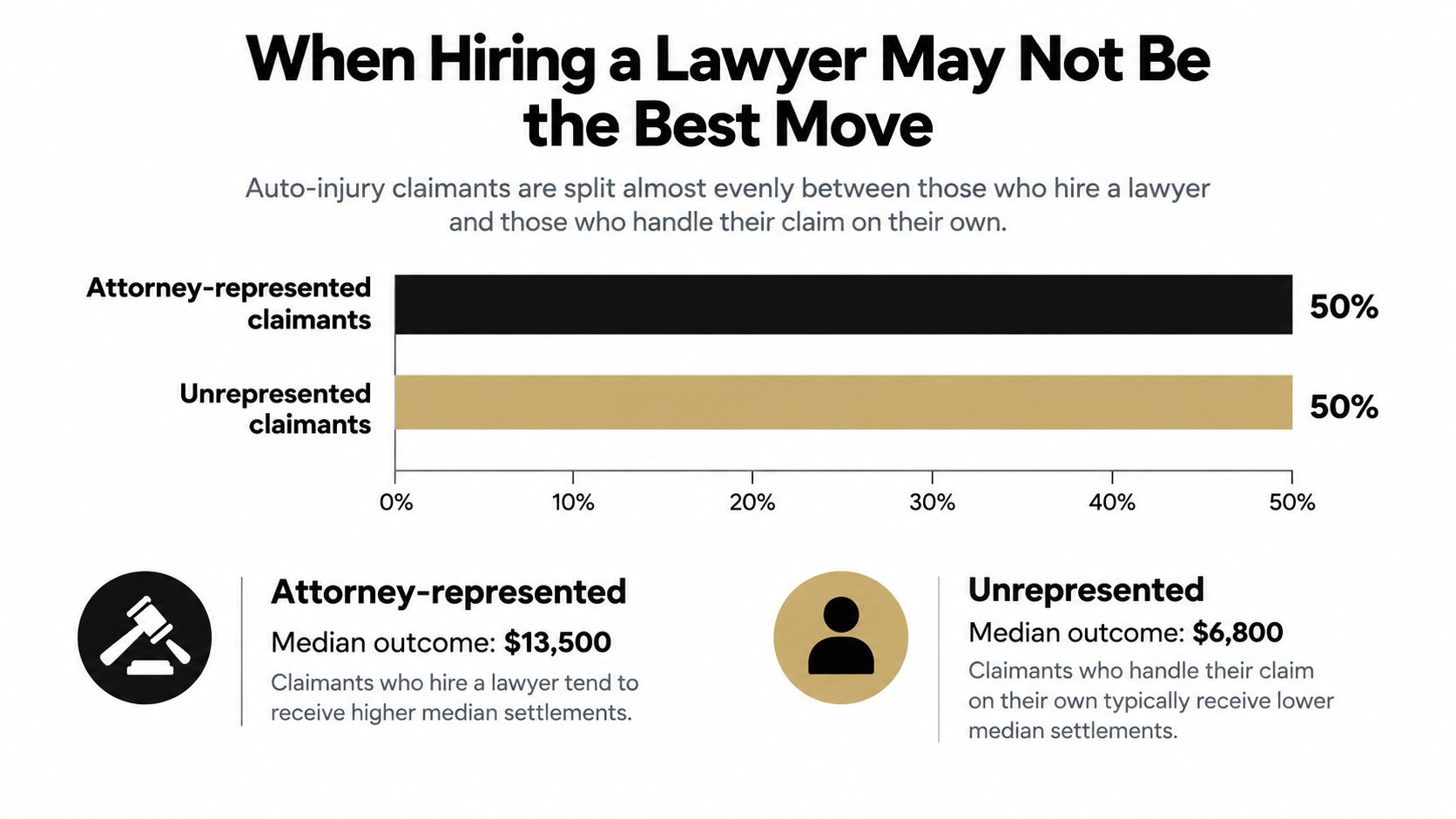
Don't accept the slogan that a lawyer always puts more money in your pocket. Representation can raise the gross settlement and still leave you with less after fees, costs, liens, and delay. A small claim with clear fault may have little room to grow.
The Insurance Research Council reported that attorney representation among auto injury claimants rose from 40% in 2017 to nearly 50% in 2022, while matters entering litigation increased from 10% to 18%, according to the IRC auto injury study. The same study put median closure time near 440 days for represented bodily injury claimants, more than twice the unrepresented group, and reported net recovery of $1.40 per dollar of medical bills for represented claimants versus $1.80 for unrepresented claimants.
Read those numbers carefully. People who hire counsel often have worse injuries, disputed fault, or coverage fights, so averages cannot decide your file.
Run the Net-Recovery Math
Estimate four numbers before signing anything:
| Item | Question to answer |
|---|---|
| Expected gross recovery | What's realistically available from settlement or coverage? |
| Contingency fee and costs | What comes out before you're paid? |
| Medical bills and liens | Who must be repaid from the recovery? |
| Delay and risk | Is waiting likely to improve the result enough? |
I advise handling the claim yourself only when liability is clear, a clinician has confirmed a minor injury, treatment has ended, no future care is expected, and the insurer pays documented losses promptly. Even then, don't sign a broad release until you're confident symptoms have resolved.
A lawyer earns the fee only if the added recovery, reduced risk, or negotiated liens outweigh the fee, costs, and delay.
Ask the blunt question during any consultation: what do I likely keep with you, compared with accepting a fair offer now? If the lawyer can't discuss that math clearly, keep looking.
What to Do in the First 72 Hours After the Crash
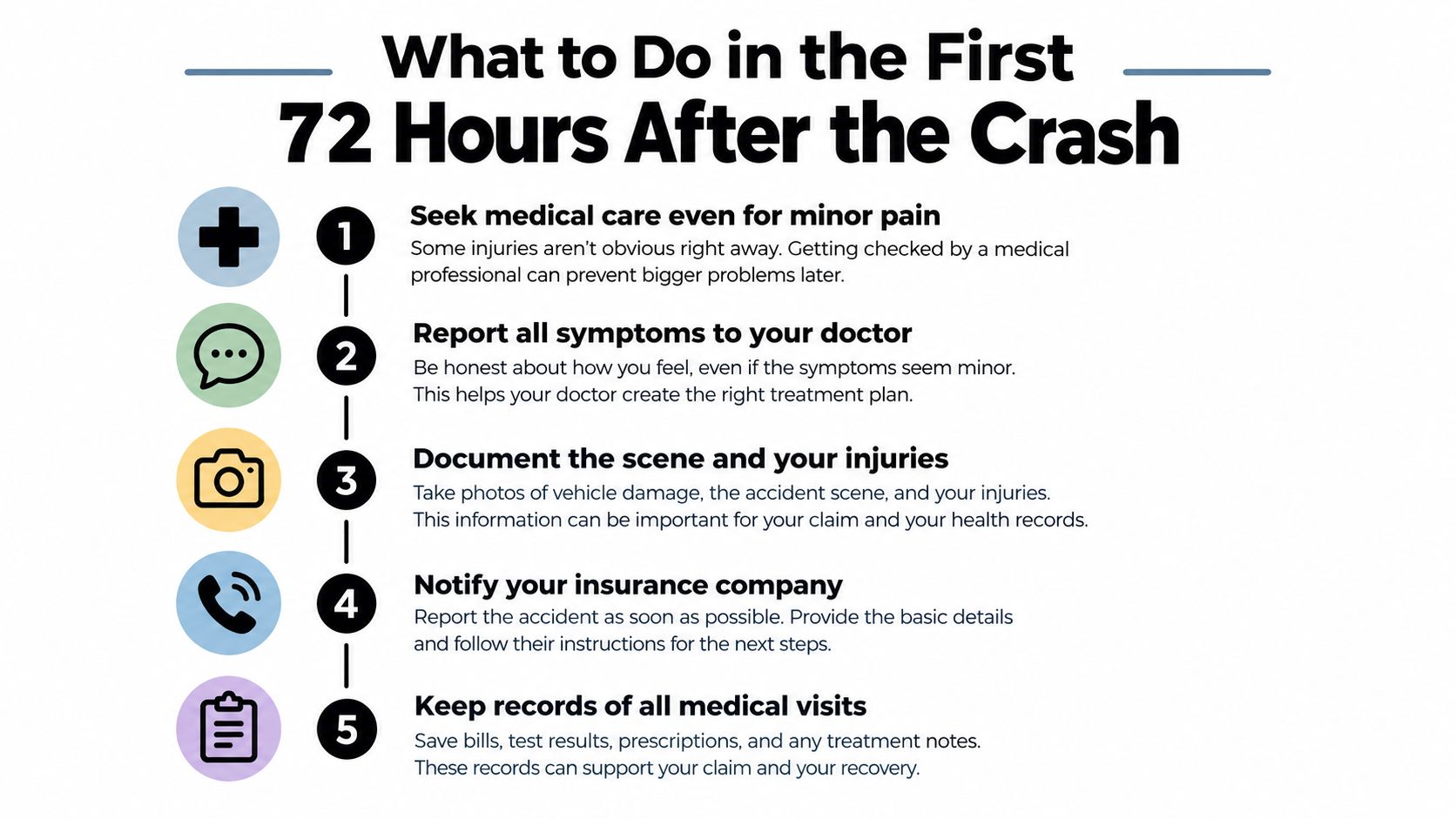
Treat the first three days as evidence protection, not as a deadline to hire someone. The steps below preserve your choices whether you settle alone or bring in counsel later. For a broader checklist, see the guide to what to do after an accident and use it alongside your own notes.
- Get evaluated promptly: Tell the clinician about every symptom, even mild stiffness, headache, dizziness, or numbness. Accurate early records help your health first, and they also reduce later arguments that complaints appeared from nowhere.
- Preserve scene evidence: Keep photos of vehicles, road conditions, visible injuries, and the exact location. Save witness names, officer information, repair estimates, and any dashcam or nearby video you can lawfully obtain.
- Notify your insurer carefully: Report basic facts without speculating about fault or minimizing injuries you haven't had assessed. Don't give the other insurer a recorded statement or sign a settlement until the medical picture is clearer.
- Start a loss file: Track appointments, prescriptions, mileage, missed work, restrictions, and every adjuster call. Small gaps in paperwork become big disputes months later.
Protect Deadlines While You Decide
The National Association of Insurance Commissioners recommends promptly notifying the insurer, collecting witness and officer information, recording location and road conditions, photographing or diagramming the scene, and keeping notes of adjuster communications in its NAIC consumer guide to auto insurance claims. Claims procedures vary by state, so don't confuse an insurer's internal deadline with the lawsuit deadline.
A statute of limitations can bar a claim, and the period varies by jurisdiction and claim type. It may run from the injury date, discovery of injury, or another legally defined event. You don't need to solve that law today, but you must identify it early, especially with a government vehicle, minor claimant, or uninsured motorist claim.
These steps aren't a commitment to litigate. They're the minimum record that lets you, or a lawyer later, prove what happened.
Two Sample Scenarios Side by Side
Two drivers can ask the same question on the same night and need opposite answers. The difference isn't toughness or intelligence. It's medical uncertainty, fault, coverage, and the size of the loss relative to fees.
Scenario A The Contained Rear End Crash
A driver is tapped at low speed, feels neck stiffness, and gets checked promptly. Examination and imaging show no structural injury. Symptoms resolve after a short course of care, there's no missed work, and the other insurer accepts fault and pays the documented bills and vehicle repair.
Handling this alone can make sense once treatment is finished and the release matches the known losses. A contingency fee on a small, resolved claim may reduce net recovery without adding much benefit. Using a car accident settlement calculator can help organize bills and losses, but treat any estimate as a planning aid, not a valuation promise.
Scenario B The Intersection Crash That Keeps Growing
Another driver is hit in the side at an intersection. Each insurer blames the other driver. Neck and back pain worsen over the following days, work is missed, a specialist recommends further treatment, and the at fault driver's coverage may not cover the full losses.
This driver faces disputed liability, delayed symptoms, wage proof, future care, and a possible underinsured motorist claim. A lawyer can investigate fault, identify every policy, coordinate records, and avoid an early release that ignores treatment still to come. Representation may take longer, but settling fast would price an unfinished injury as if it were complete.
Decision lens: Scenario A has a known loss and little dispute. Scenario B has unknown loss and several disputes. Hire for uncertainty and conflict, not for the mere fact a crash occurred.
Find your facts in that contrast. If your claim is drifting from A toward B, because symptoms persist, work is affected, or fault language changes, reassess immediately. Your first assessment isn't binding. Your signed release usually is.
Red Flags That Mean You Should Call a Lawyer Soon
Monitoring a simple claim is reasonable. Ignoring warning signs isn't. Call this week if any of the following appears, because each one signals that the insurer is narrowing your options or the claim is becoming harder to prove.
- Recorded statement request: You're being asked to lock in details before treatment and fault are clear. Inconsistencies will be used against you.
- Early release: The offer requires releasing all future claims while symptoms or treatment continue. Once signed, later discovered damages may be extinguished.
- Denial or exclusion letter: The insurer cites policy language, late notice, or lack of causation. Coverage disputes need legal reading, not guesswork.
- Written blame: The other driver or insurer assigns fault to you. Comparative fault can materially reduce recovery, depending on your state.
- Offer below documented losses: The number doesn't cover medical bills and wage loss, let alone future care. Don't assume it's a firm or fair ceiling.
- Coverage concerns: The other driver is uninsured, underinsured, driving for work, or one of several involved motorists. Multiple policies and parties complicate notice and negotiation.
- A stalled claim: Records go missing, calls aren't returned, or no liability decision arrives. Delay can become a strategy even without a formal denial.
What to Bring to That First Call
Bring the crash report, photos, insurance letters, medical visit summaries, bills received, wage records, and a timeline of symptoms and calls. Write down deadlines anyone has given you, but don't assume they're complete.
Ask directly whether the lawyer sees a net benefit in taking the case now, what work they'd do in the first month, and what could make the case not worth pursuing. You want judgment, not a sales script. If a red flag involves a proposed release, get advice before signing, even if you later decide not to retain that lawyer.
How Lawyers Are Paid and What to Ask in a Free Case Review
Most car accident lawyers use a contingency fee, meaning the fee is taken from money recovered rather than billed upfront by the hour. That structure improves access, but it isn't free representation. Read how the percentage changes if the case settles, enters litigation, or goes to trial. The agreement should also explain case costs, such as records, filing, or expert expenses, and whether those costs are deducted before or after the fee is calculated.
Ask how medical liens and outstanding bills will be handled. A strong gross settlement can disappoint if liens consume much of it, while negotiated reductions can materially change what you keep. That conversation is part of the net recovery framework, not fine print to skim.
Questions That Reveal How Your Case Will Be Handled
- Who handles my file day to day? Get the name of the lawyer and the staff contact, plus how updates will be provided.
- What's your initial plan? Listen for evidence, coverage, treatment status, and demand timing, not vague assurances.
- What's the realistic timeline? A careful lawyer will explain why waiting for medical stability may matter and where litigation could add time and expense.
- Can I terminate the agreement? Ask what you'd owe for fees or costs if you end representation.
- Where's the net benefit? Require a plain discussion of likely deductions and how representation could improve the amount you keep.
If you'd like that initial screen without committing to a firm, AskLegally offers a free car accident lawyer consultation pathway where you can describe the crash and injuries and, if appropriate, be connected with a participating personal injury lawyer. Use it as one option while you compare any lawyer's answers against your own checklist.
Return to the voicemail on your phone. You don't need to answer the lawyer question with a slogan. Hire counsel when injury, fault, coverage, or insurer conduct creates risk you can't price or control alone. Handle it yourself only when the injury is resolved, liability is clear, losses are documented, and the math still works after every deduction.
If you're dealing with ongoing treatment, disputed fault, missed work, or an insurer pushing for a quick settlement, visit AskLegally to request a free case review and learn whether speaking with a participating car accident lawyer makes sense for your situation. Bring your records, ask about fees, costs, liens, and net recovery, and don't sign a release until you've had your specific deadline and coverage questions answered.