
If you felt only shaken at the scene, why would nausea the next morning be a head-injury clue instead of leftover nerves? People often file nausea after a car accident under stress, a skipped meal, or a pain pill. That habit misses what clinicians watch for. Queasiness can start hours or days later, with no blackout, and it often travels with dizziness, headache, or trouble looking at screens.
Nothing on this page can diagnose you. A clinician has to sort concussion, neck injury, medication effects, dehydration, and unrelated illness. What you can do today is separate urgent signs from a same-day visit, and keep one written log that a doctor and an insurer can both read.
Emergency Signs That Need Care Today
Nausea by itself after a crash isn't automatically an emergency. Nausea paired with a change in alertness, speech, strength, or vomiting pattern is. The question isn't whether you feel queasy. It's whether other brain and body signals are getting worse.
When paired signs change the plan
| Warning sign | What it may indicate | Action |
|---|---|---|
| Repeated vomiting | Possible rising pressure or serious head injury | Emergency care now |
| Worsening or severe headache | Possible bleeding or swelling inside the skull | Emergency care now |
| Confusion, unusual behavior, or hard to stay awake | Possible brain injury affecting alertness | Emergency care now |
| Weakness, numbness, or poor coordination | Possible injury affecting brain or nerve pathways | Emergency care now |
| Seizure, fainting, or unequal pupils | Possible serious brain injury | Call 911 |
| Mild, steady nausea while fully alert | Possible concussion or another crash-related cause | Same-day medical check |
Repeated vomiting is the row people talk themselves out of. One episode can follow fear or a new medicine. Vomiting that keeps coming back can reflect rising pressure inside the skull, so the action is emergency care now, not a nap to see if it passes.
A worsening or severe headache gets the same response. Pain that climbs through the day, or a headache you'd call the worst you've had, can go with bleeding or swelling. Another dose of a pain reliever and a dark room isn't a substitute for an exam.
Confusion, unusual behavior, or trouble staying awake means alertness may be affected. If a family member says you aren't making sense, trust that observation over your own sense that you're "just tired." Go to emergency care now.
Weakness, numbness, poor coordination, or slurred speech can mean pathways between the brain and the body aren't working as they should. Dropping a cup, dragging a foot, or words that won't form clearly are not symptoms to sleep off.
Seizure, fainting, or pupils that don't match means calling 911. Don't drive yourself, and don't wait for a clinic that opens in the morning.
What changes an imaging decision
Vomiting also changes how emergency clinicians think about scans. ACEP guidance recommends considering a noncontrast head CT in adults with head trauma and no loss of consciousness or post-traumatic amnesia when vomiting is present, particularly with a focal neurologic deficit, severe headache, age 65 or older, signs of a skull-base fracture, a Glasgow Coma Scale below 15, bleeding risk, or a dangerous mechanism. When loss of consciousness or post-traumatic amnesia did occur, vomiting is one added feature supporting CT consideration, along with headache, age over 60, intoxication, memory deficits, visible trauma above the clavicle, seizure, reduced consciousness, neurologic deficit, or coagulopathy.
A CT doesn't find every cause of nausea. A normal scan doesn't eliminate concussion. Clinicians may still assess the neck, balance system, medicines, dehydration, pain, and the stress of the crash. Repeated vomiting or symptoms that worsen quickly belong in the emergency department, not on a routine appointment calendar.
Practical rule: If nausea is mild and steady and the person is fully alert, arrange a same-day medical check and start the written symptom record the same day.
How Common Post-Crash Nausea Is and How Long It Lasts
In a selected group of people whose symptoms didn't fade quickly, nausea was common, and it rarely showed up alone.
A 2025 peer-reviewed study of 53 patients with persistent symptoms after a motor-vehicle-crash-related concussion reported nausea in 46 patients, or 33.8%, vertigo in 42 patients, or 30.9%, and vomiting in 11 patients, or 8.1%. Those patients reported a median of 11 concussion symptoms.
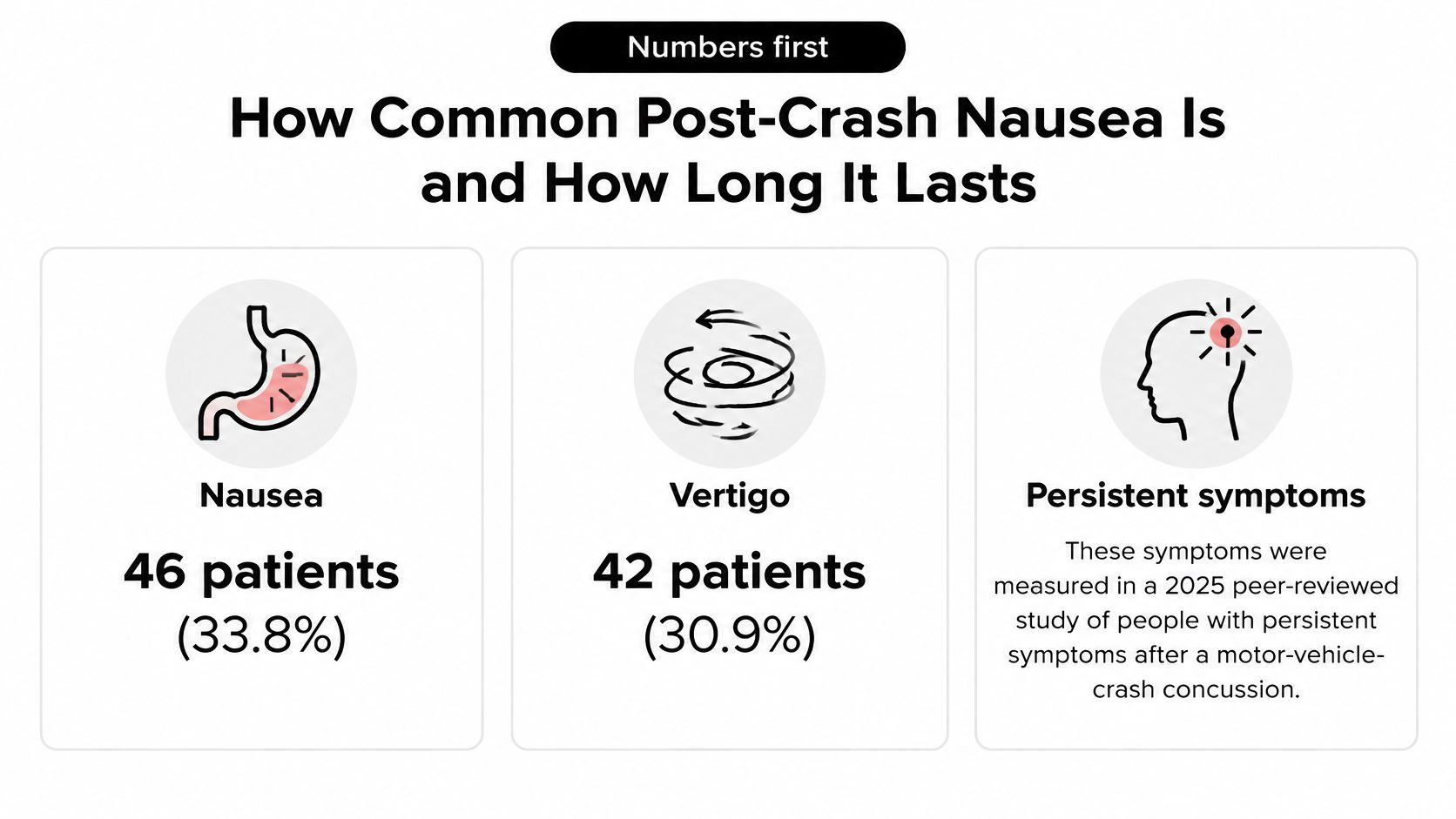
| Symptom | Patients | Share of 53 |
|---|---|---|
| Nausea | 46 | 33.8% |
| Vertigo | 42 | 30.9% |
| Vomiting | 11 | 8.1% |
These figures describe people who already had lingering symptoms. They aren't the share of everyone in a collision who feels sick. In this persistent-symptom sample, roughly one in three patients had nausea and about one in twelve had vomiting, usually inside a wider cluster that also included balance complaints. That cluster is the useful point. A claim file or a clinic note that lists only "upset stomach" leaves out the dizziness, headache, and fatigue that give the nausea its context.
How the timeline usually runs
People with mild traumatic brain injury may have short-term symptoms that improve within weeks or months. Duration still varies from person to person. Nausea that gets in the way of driving, work, eating, hydration, or ordinary tasks should be written down with dates, because memory later flattens a bad month into one vague sentence.
Say a delivery driver felt queasy for several days, then thought he was finished. The feeling returned on long shifts under bright warehouse lights and a phone-based route app. That return doesn't prove a specific diagnosis. It is a pattern: date, activity, and how fast the nausea rose. Persistent or worsening nausea, especially with repeated vomiting, severe headache, confusion, fainting, weakness, vision changes, or increasing drowsiness, needs a healthcare professional, not a self-check.
Nausea that is still limiting work after those early weeks, or that returns when normal activity resumes, is the signal to book follow-up and record the pattern the same day.
Why Nausea Follows a Crash
The brain sits in fluid inside the skull. A sudden stop or spin can jolt it against bone, the way a full cup of water sloshes when a car brakes hard. That disruption can affect the vestibular system, which tracks balance, and the autonomic pathways tied to nausea. You can feel sick with no loss of consciousness at all.
The CDC concussion materials list nausea or vomiting among physical symptoms after a concussion, alongside headache, dizziness, balance problems, fatigue, visual disturbance, and sensitivity to light or noise, and they note that some symptoms appear immediately while others emerge hours or days later. The same public-health record cites the World Health Organization estimate that road crashes kill approximately 1.16 million people annually and cause 20 to 50 million non-fatal injuries, many involving disability. A person who feels fine in the parking lot can still be nauseated the next morning.
What the clinician is sorting
Nausea alone doesn't reveal how severe an injury is. It's a clue that needs the rest of the pattern. Evaluation is what separates concussion or mild traumatic brain injury from other crash-related sources:
- Balance-system disturbance: sickness that shows up with head movement, dizziness, or visual work.
- Medication effects: a new pain reliever or sleep aid started after the crash.
- Dehydration or internal injury: poor fluid intake, abdominal pain, or other body symptoms alongside the nausea.
- Neck injury: stiffness or pain that travels with the queasy feeling.
- Stress: a real response, and not the automatic explanation when other signs are present.
Write down when nausea began, whether it's constant or intermittent, any vomiting or dizziness, medicines taken, and whether movement or visual activity makes it worse. A passenger had a short headache and felt sick only when she turned her head at her desk. That pattern pointed toward balance, not a stomach bug. One symptom is a reason to be evaluated, not a verdict on the injury.
Head Movement and Screen Triggers That Look Like Stomach Illness
Nausea that rises with a head turn, a glance at moving traffic, or a phone screen feels like a stomach bug. Often it tracks the balance and eye-movement systems instead. Busy store aisles, scrolling, and highway traffic are common triggers, and people blame lunch because the stomach is where they feel it.
Persistent nausea after a crash may reflect vestibular or visual dysfunction, not only stomach illness or anxiety. Military Health System guidance on concussion-related dizziness calls for targeted history-taking, a neurological examination, and vestibular and ocular-motor screening, cautions that vestibular-suppressant medicines can potentially worsen concussion symptoms or impede recovery, and lines up with CDC advice to contact a healthcare provider when symptoms don't improve within two to three weeks or worsen after a return to normal activities.
| Trigger pattern | Likely source | Next step |
|---|---|---|
| Nausea worse when turning or tilting the head | Positional vertigo or vestibular dysfunction | Describe the pattern; ask for balance screening |
| Nausea in busy traffic, on screens, or in store aisles | Visual-vestibular or eye-movement issue | Ask for eye-movement screening; follow clinician limits on screen time |
| Nausea with neck pain or stiffness | Neck (cervical) injury | Ask for a neck evaluation |
| Nausea that began after a new medication | Medication side effect | Tell the clinician the drug and dose; don't change medication without advice |
| Nausea after meals with no head or visual pattern | Gastrointestinal illness or dehydration | See a doctor if it persists or fluids stay down poorly |
Three problems people mix together
Urgent danger signs, including repeated vomiting or fading alertness, need emergency care. Treatable post-traumatic dizziness or positional vertigo needs balance and eye-movement screening, not a label you assign at home. Unrelated causes, such as a new medicine, dehydration, or a gastrointestinal illness, need their own check so they aren't folded into a concussion story by default.
A normal initial scan doesn't explain these triggers away. Concussion and post-traumatic vertigo can involve functional disturbances that a clinician finds through history and examination rather than routine imaging alone. That's the plain answer to why you can feel sick looking at traffic even though the scan was read as normal.
Don't start a vestibular suppressant from a pharmacy aisle on your own. Any new medicine, including the dose, belongs in the visit. Say a man felt fine except in supermarket aisles, where the shelves seemed to slide past him. The clinician found positional vertigo, not a digestive problem. That aisle detail should be in the note. Broader patterns of head injury after a collision are covered in this guide to concussion after a car accident.
How to Get Checked and What to Tell the Doctor
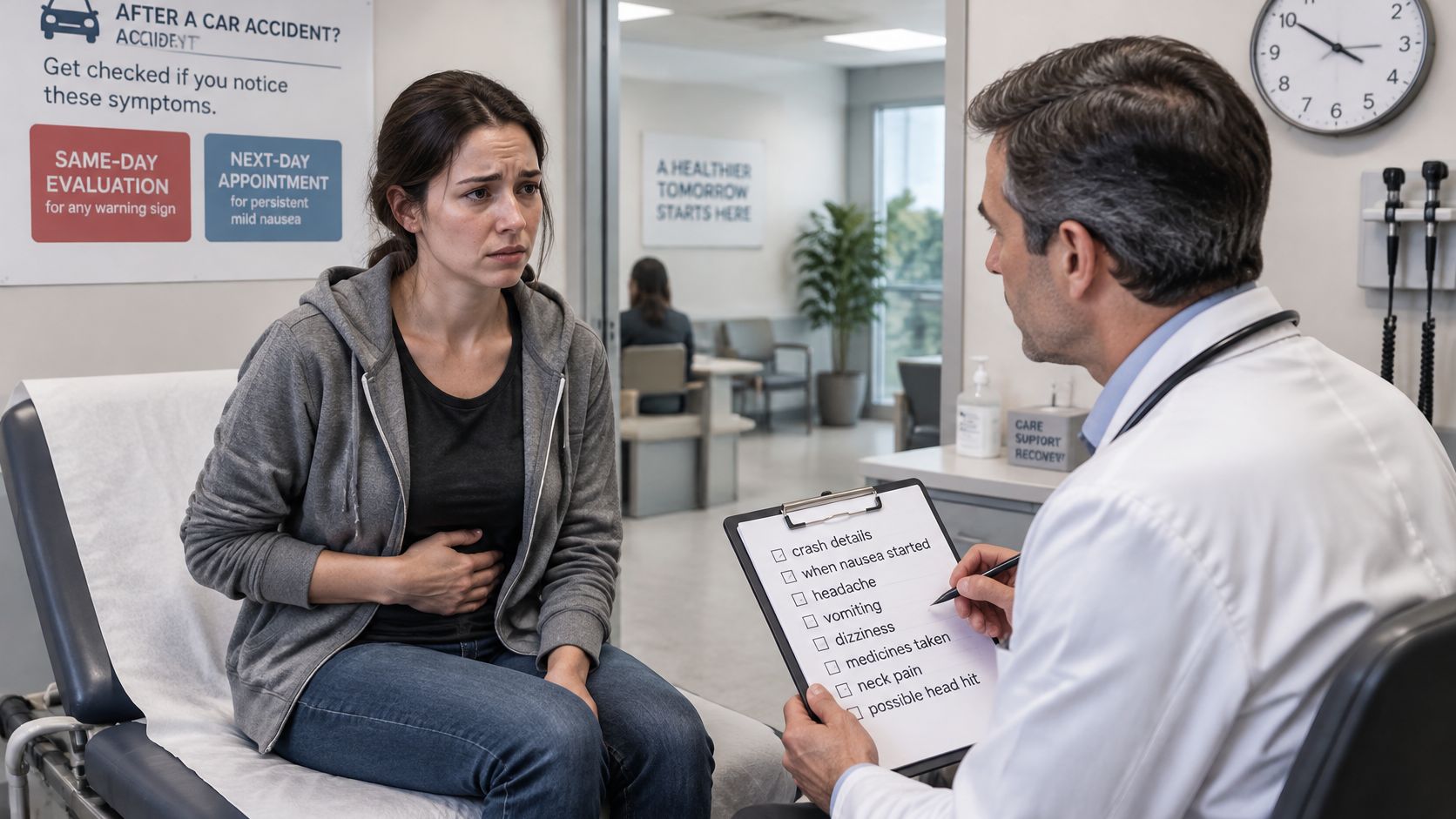
If any urgent warning sign is present, go the same day. If nausea is persistent but mild and you're fully alert, book a visit within a day or two. Bring a short written timeline so the appointment isn't a reconstruction from memory.
The visit works better when the story is concrete. A clinician can't use "I've been off since the wreck" the way they can use a crash time, a head strike, and a list of what makes the nausea rise.
The CDC traumatic brain injury symptom page notes that some concussion symptoms appear right away while others evolve over hours, so a person who felt well at the scene should still be monitored by a responsible adult. That adult can catch vomiting, slurred speech, or a drop in alertness the injured person may not notice. Rarely, bleeding or a clot increases pressure inside the skull, which is why those changes aren't something to watch alone overnight.
What to cover in the visit
State the crash facts first. Give the time, what your head struck if anything, and whether you lost consciousness or have a gap in memory. Those details shape what gets examined.
Describe the nausea in plain numbers. Say when it started, whether it's constant or comes and goes, how often you vomit, and what makes it worse, such as movement or screens.
List every medicine and dose since the crash. Include over-the-counter pain relievers and sleep aids. A new drug can mimic an injury, and the clinician needs the name, not a guess.
Ask which exam is planned and why. A neurological examination plus a balance or eye-movement screen answers different questions than imaging. If you have neck pain or stiffness, ask for a neck evaluation too.
Skip driving and alcohol until you've been assessed. Another head impact, or a drive while dizzy, adds a risk you don't need while the cause is still unclear.
Request written visit notes and a follow-up plan. If ordinary activity still brings the nausea back, book the return visit instead of waiting for it to fade on its own. Those notes tie symptoms to dates, which is what both later care and a claim file rely on.
A family member who will stay with you overnight can use a short symptom walk-through so they know which changes mean a return to emergency care.
Document Symptoms and Evidence for Insurance Claims
A passenger kept a phone note each time nausea hit: the clock time and what she was doing. Weeks later her doctor could see a repeating pattern, and the same note answered an insurer who asked when symptoms started. One log did both jobs because it was written while the feeling was happening, not rebuilt from memory.
Write the entry the day it happens. A bad week shrinks, in recollection, into "I was sick for a while," which is too vague for treatment decisions and too vague for a claim. If you miss a day, leave the gap. Don't backfill a severity you no longer remember.
Records worth keeping
| Record | What to note | Why it matters |
|---|---|---|
| Crash details | Date, time, location, other driver's details, police report number | Anchors every other record |
| Symptom diary | Nausea onset, frequency, vomiting episodes, triggers, severity | Shows the pattern for doctors and insurers |
| Medications | Name, dose, time taken, prescriber | Separates drug side effects from crash injury |
| Medical records | ER, urgent care, follow-up notes and imaging reports | Documents diagnosis and treatment |
| Missed work | Dates missed, pay stubs, employer letter | Supports a lost-wage claim |
| Out-of-pocket costs | Receipts for prescriptions, co-pays, transport | Supports a medical expense claim |
| Scene and injury photos | Vehicle damage, visible injuries, road layout | Preserves evidence before it changes |
Evidence beyond the diary
Request the official police report while the file is still easy to locate. Save photos before the car is repaired and before bruises fade. Keep the other driver's details, every bill and receipt, and texts about the crash. How those pieces fit a claim is laid out in this guide to filing an insurance claim.
Keep any written account factual and consistent with the medical notes. If the chart says nausea started the morning after the crash, don't later describe it as starting in the ambulance unless that's what happened. Avoid a detailed recorded statement to an insurer before you've talked with a professional about what those questions are meant to capture. One casual "I'm fine, just a little carsick" can be read later as a denial that symptoms mattered.
Bring the diary and the stack of records to every appointment. When the clinic note and your log name the same triggers and the same dates, the story doesn't have to be rebuilt under pressure.
Decide Whether to Call a Personal Injury Lawyer
Many people with mild, improving nausea and bills that insurance is covering don't need a lawyer yet. Others should talk with one early, before a quick settlement freezes a medical picture that isn't finished.
A review is worth considering when any of these are true:
- Symptoms linger or return once you go back to work, driving, or screen-heavy tasks.
- Income drops, because shifts are cut or you can't safely do the job.
- Medical bills are large, or recommended care isn't being authorized.
- The insurer disputes the injury, or pushes a fast settlement while follow-up is still open.
- The at-fault driver's coverage looks thin compared with the care you're already using.
A settlement usually closes the claim. Signing before you know whether nausea, missed work, or further visits will continue can leave later costs on you. Clarity on the medical course comes before an agreement, not after.
We offer free tools and straightforward guidance for figuring out what to do next after an accident. The Accident Claim Value Assessment reviews facts that can affect how a claim is handled and gives immediate guidance with no contact details required. Police Report Lookup helps you identify and request the official report, and a request needs your contact and accident details. Free guides and a case review can help you decide whether an attorney is needed. The tools organize the facts. They don't promise an outcome. This overview of when a lawyer may help after a crash walks through that choice in more detail.
Finish the medical check, gather the records, then decide whether to book a case review.
If nausea after a crash is still shaping your days, AskLegally can help you sort the next practical step, from reading your claim facts to requesting the police report, without treating an online page as a diagnosis. Free guides and tools are built for people who haven't hired a lawyer yet and need a clear record for both care and insurance. Visit AskLegally when you're ready to line up those facts.