
You sign the exchange-of-information form at the roadside, wave off the ambulance because nothing hurts yet, and ride home in a friend's car. Somewhere on that drive, or an hour after you walk through your own front door, you vomit. Nothing you ate explains it. Now you're on your phone at midnight, reading about vomiting after a car accident and trying to work out whether this is a stomach bug or something worse.
It isn't a yes-or-no symptom. Doctors read it as a pattern: how many times, how soon after the impact, what came with it, and what you were doing when it started. That pattern is what decides whether you get a scan within the hour or a chair in the observation bay for six hours.
Knowing how that sorting works changes what you do in the next sixty minutes, and it changes what you'll be able to prove three weeks from now when the medical bills arrive.
Emergency Signs to Check Right After a Crash
A driver swaps details at the roadside, jokes with the other driver about the dent, and turns down the ambulance because his neck feels fine. Twenty-five minutes later he asks his wife to pull onto the shoulder so he can be sick. That gap between feeling normal and vomiting is exactly why this symptom gets taken seriously.
Vomiting is not proof of a brain injury, and it's not proof of anything else either. A rapid stop throws the brain against the inside of the skull. Sometimes that produces concussion, and less often it produces bleeding and rising pressure inside the head. Vomiting is one of the body's crude ways of announcing that something in that sequence has gone wrong, which is why clinicians use it as a data point and never as a diagnosis.
Find your pattern in the table, then read what sits underneath it.
| Pattern | What It May Signal | What to Do Now |
|---|---|---|
| One episode, no head impact, minor collision | Pain, shock or a motion response | Same-day medical check and watch for later symptoms |
| One episode after any head impact | Possible concussion or other brain injury | Prompt medical evaluation, not home rest alone |
| Two or more episodes | Repeated vomiting, a danger sign in major guidance | Call emergency services now |
| Vomiting with confusion, drowsiness, seizure, weakness, slurred speech or unequal pupils | Neurological deterioration | Call emergency services immediately |
| Vomiting with severe belly pain, faintness, pale skin or blood in vomit | Internal bleeding or shock | Call emergency services immediately |
| Vomiting with chest pain or shortness of breath | Serious internal or cardiopulmonary injury | Call emergency services immediately |
The count is what clinicians act on
Under NICE's head injury recommendations, three or more separate vomiting episodes after a head injury is a criterion for urgent CT head imaging within 1 hour, and further vomiting while you're under observation also pushes toward a scan. The CDC reads repeated vomiting the same way, as an emergency danger sign, because a clot expanding inside the skull compresses brain tissue. A person can hold a normal conversation for an hour and still be in that category.
One practical rule holds for every row in that table.
Do not drive yourself. Not to the pharmacy, not to the urgent care, not home from the roadside. And don't hand someone a sedative or a drink to settle their stomach while a head injury is still being ruled out.
If the person is alert and talking and you're trying to work out whether a knock to the head needs a formal check, the guide to concussions after a car accident covers the signs clinicians watch across the following week. The short version is that nobody with these symptoms should settle in at home to see how they feel by morning.
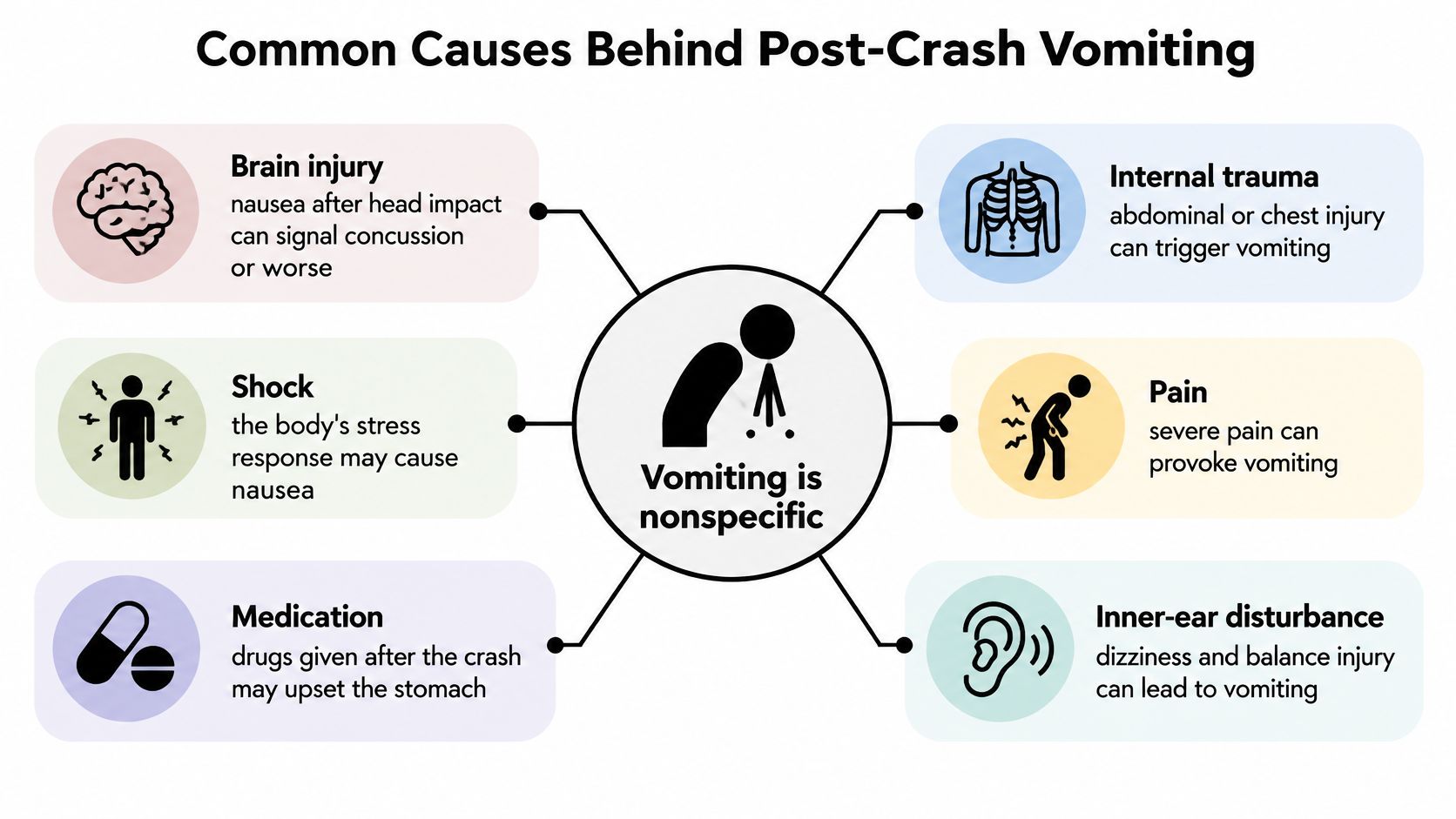
Common Causes Behind Post-Crash Vomiting
The same vomit can come from a jolted brain, a bruised liver, a blood-pressure crash, a pain spike, a new prescription, or an inner ear still rocking from the impact. Doctors describe vomiting as nonspecific for exactly this reason. It's a signal with several possible senders, and the job in the first hours is to narrow down which one.
Here's the map emergency physicians work through, from the most urgent cause to the least.
What the brain-injury numbers actually show
A study published in Orthopedic Reviews followed 800 adults with traumatic brain injury caused by motor-vehicle collisions. Of those, 31 patients (3.9%) were documented as vomiting around the time of injury. Among the 31 who vomited, 26 had mild TBI and 5 had moderate TBI, with none classified as severe in the reported breakdown. Among the 769 with no or unknown vomiting, 115 (15.0%) had severe TBI.
The authors reported that vomiting was associated with greater TBI severity, but the association was not statistically significant. Other findings did the heavier lifting: loss or alteration of consciousness, post-traumatic amnesia, seizures, lack of seat-belt use, and alcohol consumption. That's the single most useful thing to understand about this symptom. Vomiting can't tell you how bad a brain injury is, and a lack of severe vomiting can't reassure you either.
Matching the cause to the company it keeps
What separates these causes is rarely the vomiting itself. It's what travels with it.
| Likely Cause | Companion Signs | What Separates It |
|---|---|---|
| Concussion or brain injury | Headache, dizziness, confusion, memory gaps | Symptoms often grow over hours or days |
| Internal abdominal injury or bleeding | Belly pain, tenderness, bruising from seat belt | Pain localized to abdomen, faintness, pale skin |
| Shock | Pale, cold, sweaty skin, rapid breathing, weakness | Often follows blood loss or severe trauma |
| Pain and stress | Vomiting with severe pain, anxiety or fast breathing | Eases as pain and adrenaline settle |
| Medication effects | Nausea after painkillers, opioids or sedatives | Starts after a dose; check the label |
| Motion sickness or inner-ear disturbance | Dizziness, nausea with movement, imbalance | Vestibular symptoms; still needs assessment after a crash |
Report these details accurately, even the embarrassing ones. Saying you had two glasses of wine, or that you skipped your seat belt for the school run, or that you've been on blood thinners for years, gives a clinician information that changes the decision in front of them. Withholding it doesn't protect you from anything. It just removes a piece from the puzzle they're solving.
How to Respond in the First Hours After a Crash
The sequence below protects two things at once: the injured person's airway and brain, and the record that will matter to every clinician and adjuster who comes later. Follow it in order.
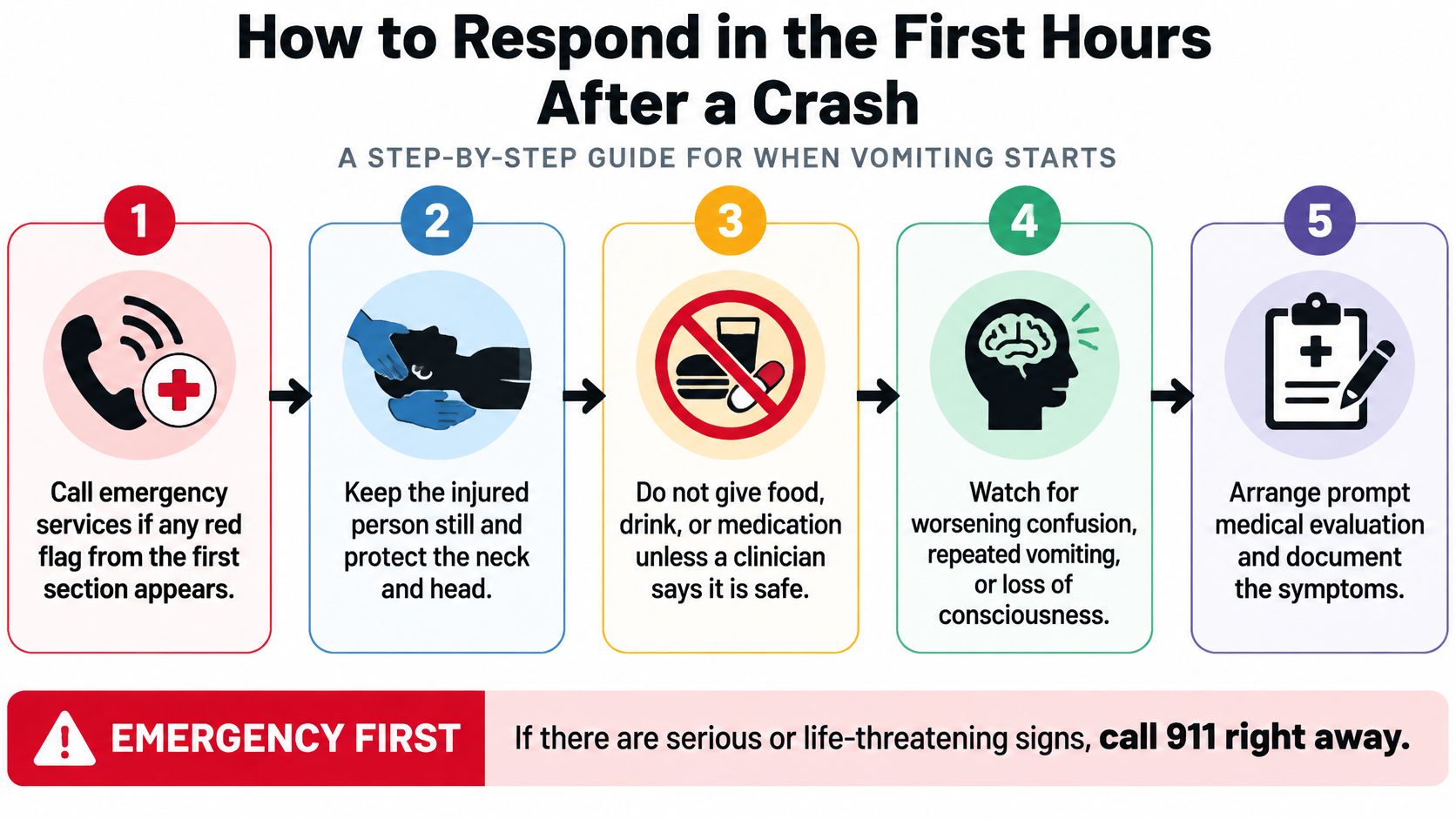
- Call emergency services if red flags are present. Repeated vomiting, confusion, unusual drowsiness, a seizure, weakness, slurred speech, unequal pupils, severe belly pain or trouble breathing all mean an ambulance, not a lift home. Minutes matter when intracranial pressure is climbing.
- Keep the person still. Support the head and neck where they are instead of moving them to sitting, standing or lying flat to check on them. Twisting a neck that may have been strained is a risk you don't need to take to have a conversation.
- Turn the whole body as one unit if they're vomiting or about to. Head, neck and torso move together, which clears the airway and lowers the choking risk without rotating the spine, as Mayo Clinic's head trauma first aid guidance describes.
- Stop them driving, drinking or taking sedatives. Alcohol muddles the neurological picture, and sedating medication can mask a declining level of consciousness. Neither belongs in the first hours.
- Hold off on food and fluids if urgent procedures may be needed. An empty stomach gives an emergency team options, and it also makes vomiting less likely to be inhaled.
- Write down the timing. Crash time, first episode, every episode after that, any blackout or confusion, and any anticoagulant or antiplatelet medication. Memory for these details degrades fast, and a timeline written at 9 p.m. is worth far more than one reconstructed on Thursday.
- Keep the paper as it lands. Ambulance paperwork, discharge sheets, the photo of the seat belt bruise. Put it in one folder, physical or on your phone, and don't tidy it away.
When the danger isn't in the head
The assessment can't stop at the skull. A seat belt, steering wheel or airbag can injure solid organs or bowel, and the signs are easy to attribute to stress: abdominal pain or tenderness, a swollen belly, bruising across the lap, faintness, pallor, rapid breathing, or a weakness that keeps worsening. Vomiting plus chest pain, breathlessness, severe abdominal pain, blood in vomit or stool, or an inability to keep fluids down is an emergency.
A high-speed collision counts as a dangerous mechanism in its own right, per NICE's baseline assessment tool for head injury, particularly when vomiting shows up alongside loss of consciousness, amnesia, a reduced Glasgow Coma Scale score or anticoagulant use.
Feeling fine is not evidence. Plenty of people chat normally at the roadside and deteriorate in the car park.
What Doctors Check and Do After Vomiting
Expect triage to move quickly once you say the word vomit, especially if there was any head impact. The team counts your episodes and adds that count to other findings, including whether you lost consciousness, whether you have amnesia for the crash, and whether you take a blood thinner, to decide between a CT scan now and close observation first.
The neurological check is methodical and quick. They'll watch your level of alertness and score it on the Glasgow Coma Scale, compare pupil size and reaction on both sides, test limb strength, listen to your speech, and often ask you to stand and walk. Each item is a baseline that gets compared against the next check, which is why they come back so often.
Then comes the abdomen. If a seat belt or steering wheel took the load, expect hands pressing along your belly, questions about tenderness, blood tests, and repeat examinations over several hours to catch bleeding or shock that wasn't obvious at arrival.
An early normal scan doesn't close the file. Symptoms that appear later still count, and the observation period exists because of them. Before you leave, ask for the discharge instructions in writing: the specific triggers that mean come back, such as repeated vomiting, a headache that keeps worsening, unusual drowsiness or confusion, plus the follow-up plan for post-concussion symptoms. Keep that sheet with your crash records. It's the document that shows what you were told and what you did next.
Symptoms That Can Surface Days Later
A delayed symptom often looks ordinary first. You sleep badly after refusing the ambulance, wake with a headache you blame on the pillow, feel nauseous again by mid-morning, and by evening the kitchen light is too bright to follow two people talking at once. Nothing dramatic happened overnight. That is the point.
Road traffic crashes kill about 1.16 million people a year and cause 20 to 50 million non-fatal injuries worldwide, according to WHO's road traffic injury guidance, and WHO names them the leading cause of traumatic brain injury in both high-income and low- and middle-income countries. Many people decide they are fine before the full pattern has had time to show up.
Clinicians generally group the delayed cluster as post-concussion symptoms: headache, dizziness, balance or visual problems, fatigue, nausea or vomiting, and sensitivity to light or noise. A crash mechanism explains the force and the timing. It cannot by itself prove severity, and a quiet first day cannot prove the opposite.
The rule that overrides the calendar: repeated vomiting, a worsening headache, confusion, unusual drowsiness, weakness, a seizure, unequal pupils or difficulty waking means emergency department care now, not the follow-up appointment booked for next Tuesday.
When you describe late symptoms, give the clinician the shape of it rather than the summary. When did each symptom start? How many episodes a day? What makes it better or worse? Does movement trigger it, or does it arrive without warning? Which symptoms travel together? Those details turn “I still feel off” into a record that connects timing, pattern and change over days. The guide to delayed symptoms after a car accident explains how those late-appearing signs fit into a claim and why a clear timeline matters.
Documentation to Keep for Your Injury Claim
Care comes before paperwork, every time. Nothing on this list is worth delaying an emergency department visit for, and no adjuster will argue that you should have stayed home taking notes. Get examined first, then collect.
A prompt evaluation produces a contemporaneous medical record, and a record written before anyone has thought about a claim is the hardest kind to dispute. NIH's guidance on traumatic brain injury advises seeking medical attention promptly when symptoms appear after a head injury, and the same advice protects the paperwork side: the earlier a clinician writes it down, the less room there is to suggest the symptom came from somewhere else.
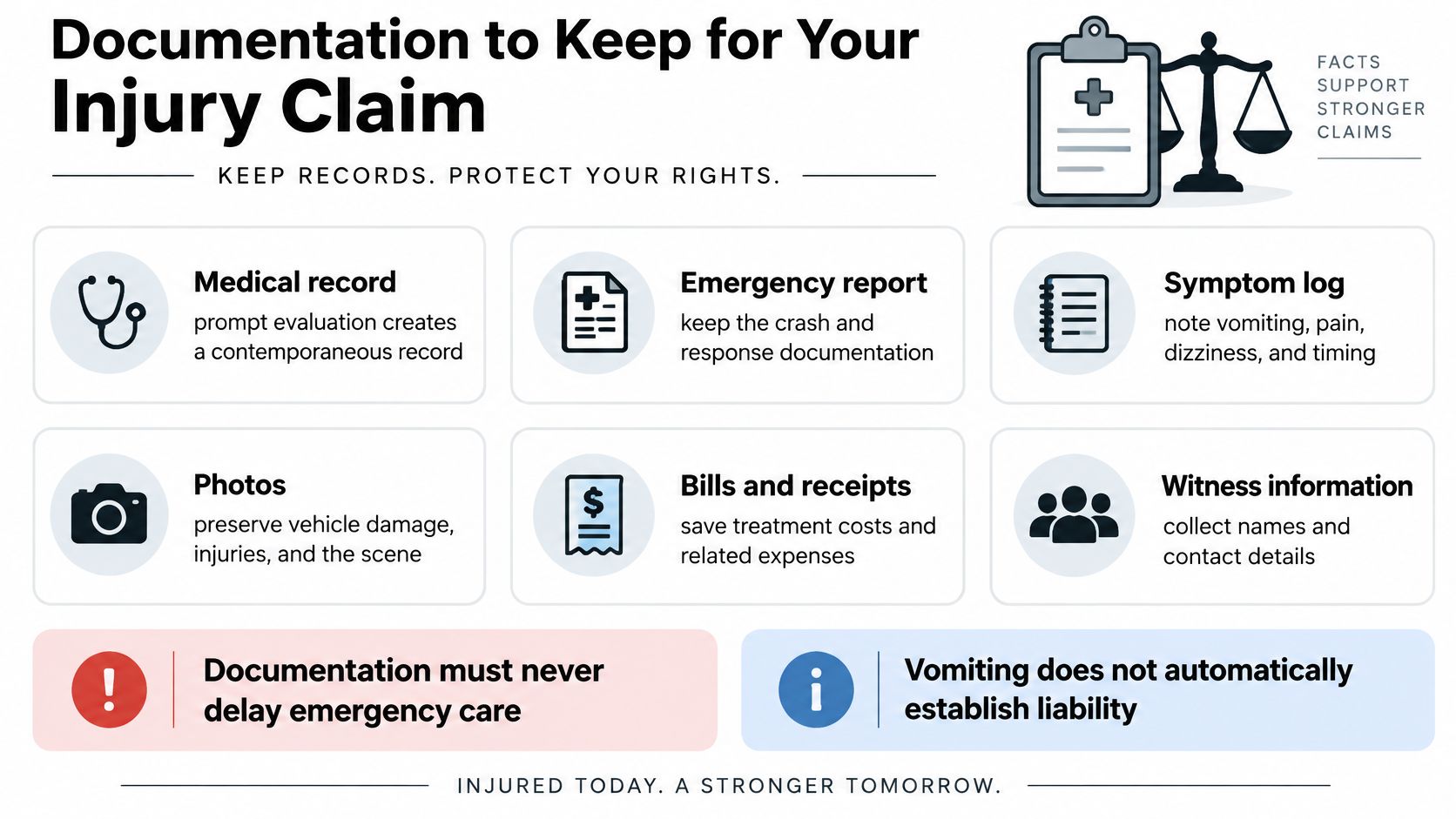
What to collect, and what each item proves
| Record | Why It Matters |
|---|---|
| Crash time and impact points | Sets the injury timeline and mechanism |
| First vomiting episode and later episodes | Shows the pattern and progression |
| Headache, confusion or drowsiness | Records neurological symptoms as they occur |
| Medications taken, including painkillers | Explains medication-related nausea and bleeding risk |
| Emergency call log and ambulance report | Creates a timed, independent record |
| Medical visit notes and discharge instructions | Shows that care followed clinical advice |
| Witness names and contact details | Supports the account of events |
| Photos of scene and injuries | Preserves physical evidence before it changes |
| Missed work and pay records | Quantifies lost income |
Vomiting on its own proves neither fault nor damages. It's a symptom with several possible causes, and an insurer will read the medical record to see what a doctor concluded, rather than what a search engine suggested at midnight. What the record does is tie the symptom to the crash date and to the treatment that followed.
What weakens that tie is time. When a long stretch passes between the collision and the first medical visit, an insurer gains room to argue that something else caused the nausea. A same-day note in an emergency department chart, written by a clinician with no stake in the outcome, closes that gap before anyone can open it.
A symptom log works like a lab notebook. "Tuesday evening, third episode, headache building since morning" tells a doctor and an adjuster far more than "felt sick all week," because it captures the pattern while it's still happening. Date every entry, photograph the pages, and keep them with the discharge sheet and the insurance claim filing steps you'll follow once the medical picture settles. Accuracy is the goal; a record made at the time beats one reconstructed in hindsight.
Deciding When to Call a Doctor or Lawyer
Work through this in order, because the order matters more than the speed.
Step one, any emergency sign means emergency services right now. Repeated vomiting, a worsening headache, confusion, unusual drowsiness, a seizure, weakness, unequal pupils, blood in the vomit, severe belly pain or trouble breathing. Don't drive yourself and don't wait to see whether it passes.
Step two, a single episode after a head impact means a same-day or next-day medical evaluation. So does any symptom that turns up later, even if you felt completely well at the scene. A walk-in clinic or your own doctor can start the record; an emergency department is the right call if anything on the red-flag list appears.
Step three is where legal help starts to make sense. Not because you're planning to sue, but because the claim has stopped moving on its own. The insurer is slow to pay medical bills. It disputes that the injury came from the crash. It asks for a recorded statement before the medical picture is clear. Or the lost wages are stacking up faster than the settlement conversation is progressing.
A recorded statement given on day two, when you still think you had an upset stomach, becomes the insurer's favourite document six months later when a concussion is diagnosed.
If you're at that third step and unsure, AskLegally's free Accident Claim Value Assessment reviews the facts that can affect how an accident claim is handled and returns immediate guidance, with no contact details required. You don't need every document in hand to start either. The injury date, how the injury was reported, claim paperwork, medical records and pay stubs all help, and anything missing can be added as it arrives.
Whatever you decide on the legal side, the next move tonight is the same. Get examined if you haven't, or call emergency services if any red flag is present. Then open a note on your phone and write the crash time, the first episode, and what came with it, while the details are still yours.
AskLegally is built for the stretch you're in right now, where you're not sure whether the vomiting meant anything, whether the bills are covered, or whether you need a lawyer at all. Their free tools and plain-language guides help you separate the medical timeline from the insurance timeline, and a free case review can connect you with a personal injury lawyer if the claim turns complicated. Visit AskLegally and start with whatever you can fill in today, even if that's only the date of the crash.