It often starts with a nagging feeling, that little voice in your head telling you something just isn’t right. That instinct is powerful. It’s your first signal that it's time to dig deeper and maybe start searching for a nursing home abuse lawyer near me to protect your family member.
Knowing When to Seek Legal Help
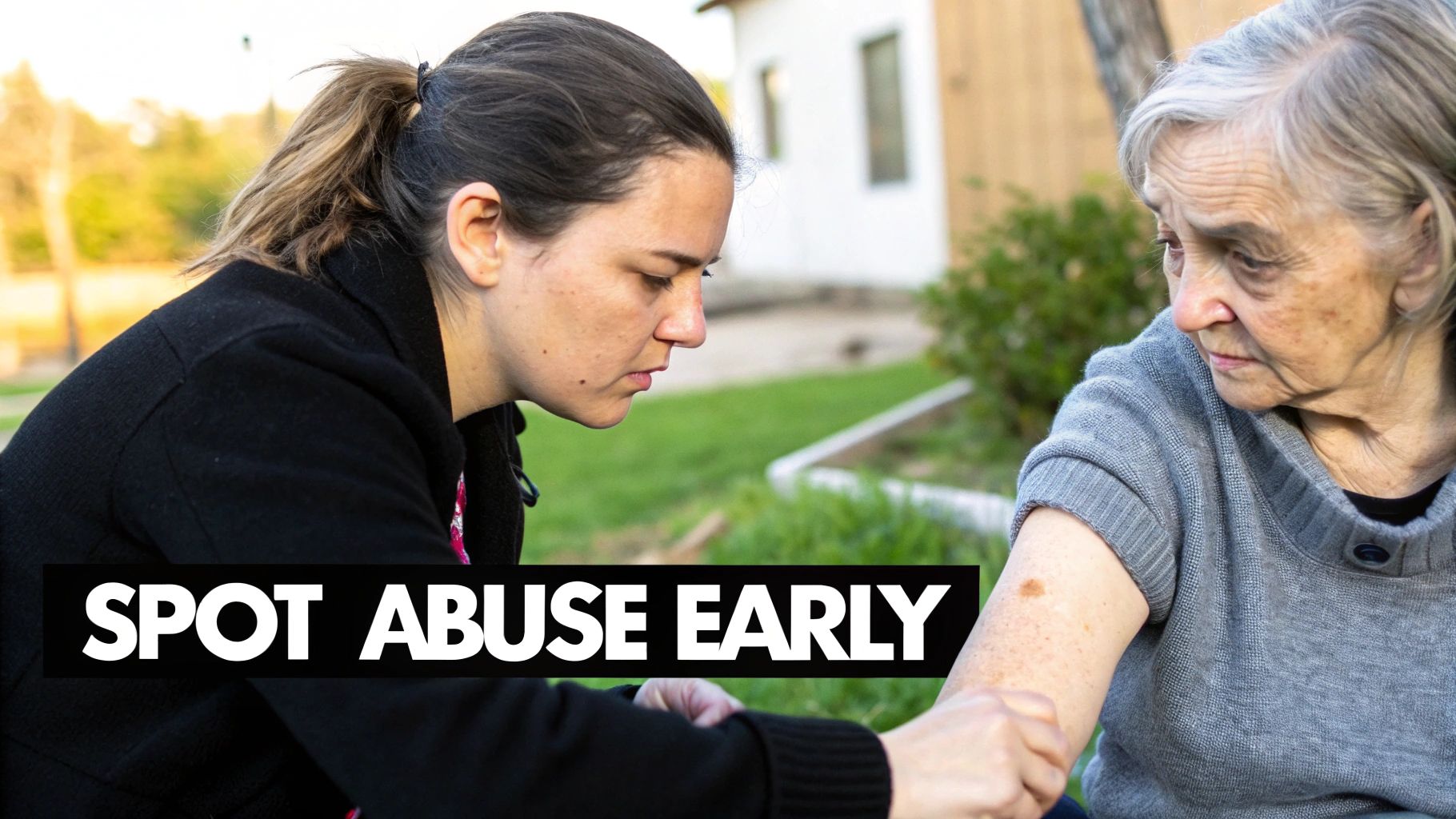
The most important first step is trusting your gut. Of course, some signs of mistreatment are impossible to miss, like unexplained bruises or fractures. But often, the most serious red flags are subtle and easy to brush off.
You might notice your once-vibrant mother has become quiet and withdrawn. Maybe she seems hesitant to speak openly when certain staff members are in the room. These behavioral shifts are huge warnings that shouldn't be ignored.
Pay close attention to how the facility's staff communicates with you, too. Are they evasive when you ask about your father's new medication? Do they downplay your concerns or, worse, make you feel like you're overreacting? A lack of transparency can be a deliberate tactic to hide neglect. Frankly, it’s a sign they may have something to hide.
Uncovering the Hidden Signs
Beyond emotional changes and staff interactions, keep an eye out for other indicators that might not be immediately obvious. These signs often point to bigger, systemic problems at the facility, like chronic understaffing or poorly trained caregivers.
- Sudden Financial Issues: Are there unexplained withdrawals from your loved one's bank account? New credit cards you didn't know about? Sudden, strange changes to a will? These could all point to financial exploitation by staff or even other residents.
- Poor Hygiene and Unsanitary Conditions: A noticeable decline in personal grooming, soiled bedding that isn't changed, or an unclean room are direct signs of neglect. These are fundamental duties of care that should never, ever be overlooked.
- Rapid Weight Loss or Dehydration: Significant physical changes like these can mean malnutrition is setting in. It might also signal that staff aren't providing the necessary help with eating and drinking.
Here's a breakdown of things to look for. Recognizing these signs is the first step toward taking action.
Warning Signs of Nursing Home Abuse and Neglect
This table breaks down potential indicators of mistreatment to help you identify specific areas of concern.
| Type of Sign | Physical Indicators | Behavioral and Emotional Clues | Signs of Neglect |
|---|---|---|---|
| Direct Abuse | Unexplained bruises, welts, burns, fractures, or sprains | Sudden fear of being touched, unexplained agitation, or withdrawal | N/A (Neglect is a separate category) |
| Emotional/Verbal Abuse | N/A (Often no physical signs) | Being withdrawn, rocking, mumbling, or showing signs of depression | Being ignored, staff speaking disrespectfully, or isolation from other residents |
| Financial Exploitation | Missing personal items, sudden changes in financial documents (like a will) | Confusion about finances, unexplained transactions | Lack of amenities despite having adequate funds |
| General Neglect | Bedsores, poor hygiene, rapid weight loss, dehydration | Listlessness, unresponsiveness | Unsanitary living conditions, soiled bedding, unanswered call lights |
| Medical Neglect | Untreated infections or health problems, medication errors (over or under-dosing) | Worsening of a known medical condition, confusion due to medication | Failure to provide medical care for injuries or illness |
Seeing any of these signs is a cause for immediate concern. It’s crucial to document everything you observe, as this information can be vital later on.
The unfortunate reality is that nursing home abuse is a widespread and tragically underreported crisis. While over a million people reside in these facilities, an alarming 95% of residents have either been neglected themselves or have witnessed the neglect of others. Even more shocking, it's estimated that only about 1 in 24 cases of elder abuse are ever actually reported. You can learn more about the prevalence of nursing home abuse and see why your vigilance is so critical.
When a facility fails to provide a safe and caring environment, you have every right to hold them accountable. Acting on your suspicions by talking to a legal professional isn't just about seeking compensation—it's about ensuring your loved one’s immediate safety and preventing other families from suffering the same heartache.
Where to Find a Qualified Local Lawyer
Deciding to seek legal help is a huge step. Now comes the hard part: finding the right person to fight for you. A quick search for a "nursing home abuse lawyer" will throw a ton of names your way, but not all of them have the specific experience your family needs. Let's break down where to look.
Starting With Trusted, Official Sources
Before you get lost in the sea of online ads, start with the official gatekeepers. Your state's bar association is the best first stop. Most have online directories where you can specifically look for lawyers certified in elder law or civil litigation. Think of it as a seal of approval—it means they've proven their expertise.
Reputable online legal directories like Avvo or FindLaw are also solid resources. They go beyond just a name and phone number, offering client reviews, peer endorsements, and sometimes even disciplinary records. This gives you a much clearer picture of who you're dealing with before making that first call.
Getting Smart With Your Online Search
When you turn to Google, specificity is your best friend. A vague search will give you vague results. Instead of just "injury lawyer," get granular.
Try phrases like "elder neglect attorney in Chicago" or "bed sore lawsuit lawyer in Cook County." This instantly narrows the field to lawyers who actually handle these kinds of cases, not just general personal injury attorneys who might not know the first thing about nursing home regulations.
Think about the specific harm your loved one suffered. Was it a medication issue? Search for a "nursing home medication error lawyer." This laser-focused approach connects you with firms that have fought and won these exact types of battles before.
Don't Overlook the Power of a Good Referral
Online research is great, but nothing beats a recommendation from someone you trust. A personal referral often comes with an unspoken guarantee of quality and compassion.
Reach out to people who are already in your loved one's orbit.
- Doctors or Geriatric Specialists: They've likely worked with other families in your shoes and can often point you to a lawyer they know and trust.
- Local Elder Advocacy Groups: Organizations like the Area Agency on Aging are dedicated to senior well-being and usually keep a list of vetted attorneys.
- Social Workers or Hospital Staff: These professionals are on the front lines and know which lawyers have a reputation for getting results for their clients.
This image lays out the essential steps for protecting a resident, starting with documenting everything and then bringing in a skilled attorney.
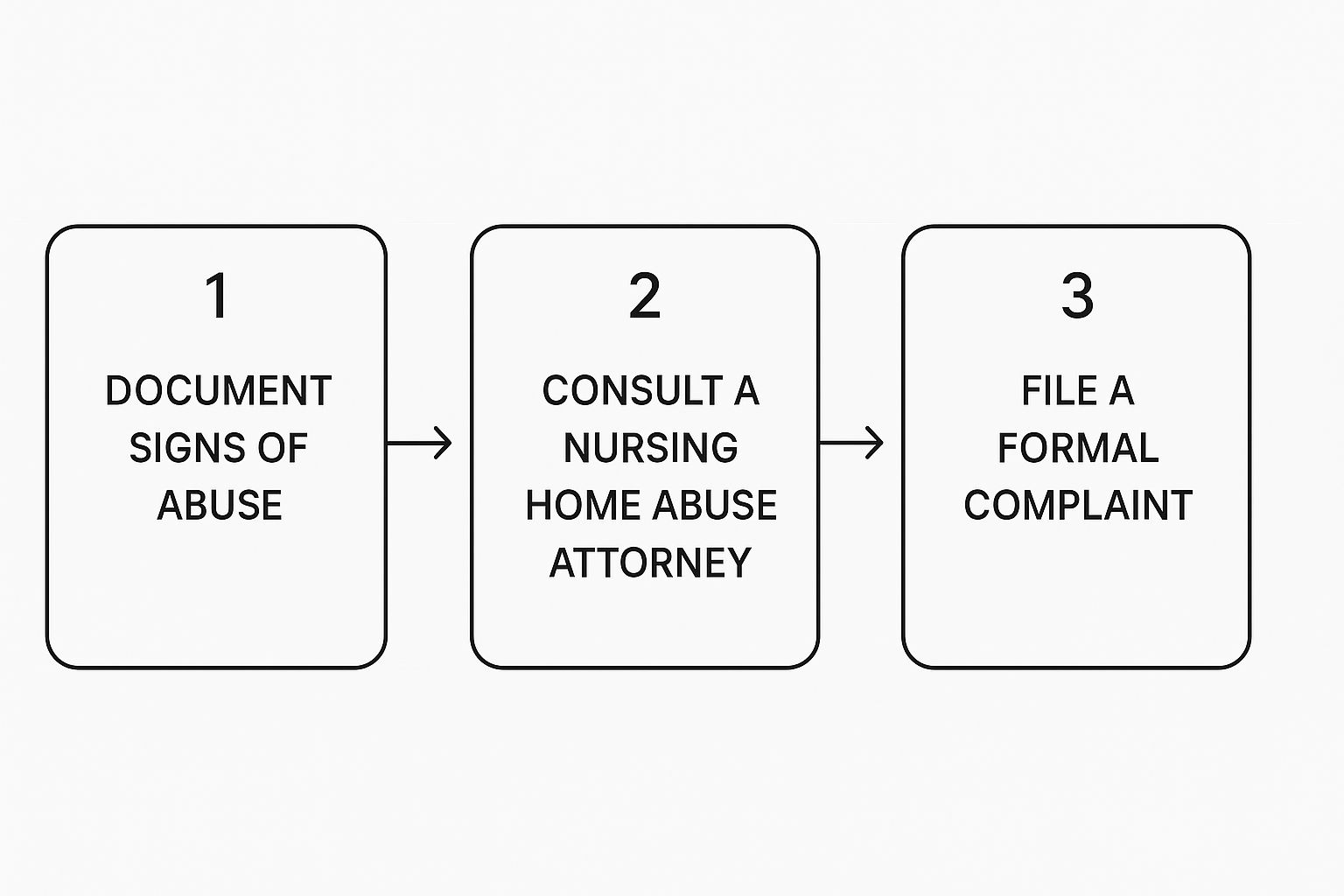
As you can see, finding legal counsel isn't the last step—it's one of the first and most critical moves you can make to ensure accountability. For more in-depth advice, you can learn about finding top-tier nursing home negligence attorneys near you in our comprehensive guide.
A referral from a trusted source often connects you with a lawyer who isn't just skilled in the law but is also known for their compassion and dedication to protecting vulnerable seniors—qualities that are just as important as legal expertise.
How to Vet a Potential Nursing Home Abuse Attorney

So you've got a shortlist of potential lawyers. That’s a fantastic first step. But a name on a piece of paper is just that—a name. Now comes the most critical part: digging in to find a true advocate, someone who will treat your family’s situation with the urgency and skill it deserves.
This isn’t the time for a jack-of-all-trades. Plenty of personal injury lawyers are great at handling car wrecks or slip-and-falls, but nursing home litigation is its own universe. It's a highly specialized field governed by a maze of complex state and federal regulations that a general practitioner simply won't know inside and out.
Your mission is to find a dedicated lawyer whose practice is deeply focused on this area of law. That specific, hands-on experience is often the single biggest factor that can make or break a case.
Evaluating Their Track Record and Specialization
When you sit down with a lawyer, your goal is to confirm they truly specialize in elder abuse cases. Don't be timid about asking direct questions; a confident, experienced attorney will be more than happy to show you their credentials.
A great place to start is by asking what percentage of their caseload is dedicated to nursing home abuse and neglect. An attorney who lives and breathes these cases will be intimately familiar with the tactics nursing homes use to defend themselves and, more importantly, the exact evidence needed to build an airtight claim.
A lawyer's track record of substantial verdicts and settlements in cases similar to yours is the clearest indicator of their ability to deliver results. It proves they not only talk the talk but can successfully fight for their clients against large, well-funded corporate facilities.
Look for a documented history of success. While their website might showcase big wins, it’s perfectly reasonable to ask for more details during your consultation. As you learn how to vet a potential Nursing Home Abuse Attorney, understanding their past victories is key. An attorney with a strong public record of winning these specific types of cases is a powerful ally to have in your corner.
Key Questions for Your Initial Consultation
That first meeting is really an interview—and you're the one doing the hiring. Show up prepared with a list of questions that go beyond "how much do you charge?" The way they answer will reveal a ton about their process, communication style, and commitment to your family.
Here are a few essential questions I always recommend asking:
- Can you walk me through an anonymized example of a case you've handled that's similar to ours? This question gets right to the heart of their direct experience with your specific situation, whether it involves bedsores, medication errors, or financial exploitation.
- What's your process for keeping clients updated? You need a lawyer who communicates proactively. Find out if you can expect regular emails, scheduled calls, or if you'll be the one chasing them for information.
- Who will be my day-to-day contact? Are you going to be working directly with the senior partner you're meeting, or will your case get passed off to a junior associate or paralegal? It’s important to know.
- Have you dealt with this specific nursing home before? A local lawyer might have a history of litigation against the very same facility or its parent company. That kind of insider knowledge can be a huge strategic advantage.
These questions help you get a feel for both their legal expertise and their approach to client relationships. For more on what to expect, check out our guide on what a https://asklegally.com/nursing-home-injury-lawyer/ does for their clients.
Red Flags to Watch Out For
Just as important as knowing what you want in a lawyer is recognizing what you need to avoid. Be wary of any attorney who seems more interested in a quick, easy settlement than in getting real justice for your loved one.
Keep an eye out for these warning signs:
- Vague answers about their experience or past results.
- High-pressure tactics to get you to sign a retainer agreement right away.
- A noticeable lack of compassion or empathy for what your family is going through.
- Guarantees of a specific outcome. This is not only unrealistic, it's unethical.
Choosing the right legal advocate is one of the most important decisions you'll make in this entire process. Take your time, trust your gut, and select the lawyer who truly makes you feel confident and heard.
Recognizing the Different Faces of Abuse and Neglect
To build a solid case, the first step is to get a clear picture of what’s actually happening to your loved one. While a sudden bruise is an obvious red flag, many forms of mistreatment are far more subtle and easier for a facility to hide.
Knowing exactly what you're dealing with—whether it's physical harm, emotional torment, or quiet neglect—is essential. It allows you to walk into a lawyer's office and explain the situation clearly, giving them the information they need to start fighting for you right away.
More Than Just Bruises: Physical and Emotional Abuse
When we hear "nursing home abuse," our minds often jump to physical violence—unexplained fractures, cuts, or bruises. These are absolutely critical warning signs that demand immediate action.
But emotional abuse can be just as damaging, leaving psychological wounds that last a lifetime. This is the yelling, the threats, the constant humiliation, or when staff intentionally isolate a resident from friends and family. It’s abuse designed to control and demean.
Sadly, both types of abuse are disturbingly common. One survey found a shocking 81% of nursing home staff had seen other staff members commit emotional abuse, and 40% admitted to doing it themselves. In that same study, 24.3% of residents experienced at least one incident of physical abuse.
It’s critical to understand that verbal harassment and intimidation aren't just "bad attitudes"—they are legally recognized forms of abuse. Keep a log of these incidents: who said what, when it happened, and who was there. This documentation gives your lawyer powerful proof that goes beyond just physical marks.
The Silent Dangers: Neglect and Exploitation
Sometimes, the worst harm comes not from a direct action, but from a complete lack of action or from calculated deception. These are the hidden dangers that often go unnoticed until it's too late.
You need to be on the lookout for a few key things:
- Widespread Neglect: This is often a symptom of a much larger problem, like a facility being chronically understaffed. It shows up as call lights that go unanswered for hours, poor personal hygiene, painful bedsores, or sudden weight loss from malnutrition. This kind of neglect can also lead to serious medical issues; for example, staff failing to prevent healthcare-associated infections is a major red flag.
- Financial Exploitation: This is a sneaky and predatory form of abuse. Keep an eye out for missing jewelry or cash, sudden and strange changes to a will or power of attorney, or bank statements with withdrawals that don't make sense.
- Sexual Abuse: It's a horrifying reality, but it does happen. This includes any form of non-consensual sexual contact, from unwanted touching to outright assault. Residents with dementia or other cognitive issues are at the highest risk.
Each of these situations requires a different strategy for gathering evidence and pursuing a legal claim. Once you spot the warning signs, taking the right next steps is everything. For more guidance on this, see our complete walkthrough on reporting nursing home abuse to the appropriate state agencies. Acting quickly not only protects your loved one but also preserves the evidence needed for a successful case.
Preparing for Your First Lawyer Consultation

That first sit-down with a potential lawyer is a critical moment. It's your chance to lay everything on the table and see if they're the right person to fight for your family. Walking in prepared does more than just save time—it shows you mean business and helps the attorney immediately understand what you're up against.
Think of it this way: you're the lead detective on this case. The more organized your evidence, the faster a good lawyer can start building a strategy. The work you do now can genuinely shape the entire outcome.
What to Bring to the Meeting
Before you head to their office, your main job is to pull together every piece of paper and evidence you can find. This documentation is the bedrock of your case. The more you have, the clearer the picture becomes for the legal team.
Here's a quick checklist of what you should have in hand:
- Medical Records: This is the big one. Get everything you can related to the injury or health decline—hospital charts, doctor’s notes, prescription lists, everything.
- Photos and Videos: Visuals are incredibly compelling. If you have clear photos of injuries like bruises or bedsores, take them. Pictures of unsanitary conditions or hazards in the facility are just as important.
- A Detailed Timeline: Write down a play-by-play of what happened. Note when you first suspected something was wrong, specific incidents, and every conversation you had with staff about your worries. Dates are your best friend here.
- Communication Records: Did you send emails to the nursing home director? Keep them. Any formal letters? Bring copies. This creates a paper trail that proves you tried to solve the problem before calling a lawyer.
Having this ready helps a nursing home abuse lawyer evaluate the strength of your case right from the get-go.
Remember, abuse isn't always about a visible injury. Neglect is just as dangerous, leading to falls—which happen about 1.5 times per resident each year—and devastating medication errors. One shocking study found that 37.5% of dementia patients were given at least one inappropriate medication. This shows just how deep the problem runs. Discover more insights about U.S. nursing home abuse statistics.
Questions You Need to Ask the Lawyer
Don't forget, this meeting is a two-way street. While the attorney is deciding whether they can take your case, you're deciding if you want to hire them. Come prepared with a list of questions to make sure you have all the information you need to move forward with confidence.
A good, transparent lawyer will expect and appreciate your questions.
Here are a few essential things to ask:
- How do you get paid? Most personal injury lawyers work on a contingency fee basis. This means they only get paid if you win. Make sure you understand their percentage and ask if there are any other out-of-pocket costs you might face.
- What's your initial game plan for a case like mine? This question gives you a peek into their legal mind. How do they approach these complex cases against big nursing home companies?
- What does a realistic timeline look like? No one has a crystal ball, but an experienced lawyer can give you a general idea of how long the investigation, negotiation, and potential court proceedings might take.
- Who will be my day-to-day contact? Will you be speaking directly with the lead attorney, or will a paralegal handle most communication? Knowing this upfront helps manage expectations.
Being this prepared turns that initial meeting from a simple chat into a real strategy session. It gives you the power to choose the right partner for this incredibly important fight.
Answering Your Questions About Nursing Home Abuse Cases
When you're dealing with the shock and anger of discovering nursing home abuse, the legal system can feel like a maze. It’s completely normal to have a flood of questions. Getting straight answers is the first step toward regaining a sense of control and making the right choices for your family.
Let's walk through some of the most common concerns I hear from families just like yours. My goal here is to demystify the process so you can speak with an attorney confidently and know what lies ahead.
How Much Will a Nursing Home Abuse Lawyer Cost?
This is often the very first question, and for good reason. Families worry they can't afford to fight back. Here's the good news: nearly every reputable elder abuse attorney works on what's called a contingency fee basis.
What does that mean for you? You pay absolutely nothing upfront. Your lawyer's fee is simply a percentage of the money they recover for you, whether through a settlement or a court verdict.
If your case isn’t successful and you don't receive any compensation, you owe them nothing for their time and effort. This system levels the playing field, ensuring that anyone can get high-quality legal help without financial risk. Just be sure to ask during your first conversation about the specific percentage and any case costs (like court filing fees) that might come up.
Is There a Deadline to File a Lawsuit?
Yes, and this is critically important. Every state has a law called the statute of limitations, which sets a firm deadline for filing a lawsuit. For nursing home abuse claims, this window can be anywhere from one to six years, depending on your state's specific laws.
The countdown usually begins on the date the injury happened, or sometimes, from the date you reasonably should have discovered the abuse.
This deadline is non-negotiable. If you miss it, the court will almost certainly throw out your case, and you lose your right to seek justice forever. It’s a harsh reality, which is why contacting an attorney the moment you suspect something is wrong is so vital.
What Kind of Compensation Can My Family Recover?
When a facility is held accountable for neglect or abuse, the financial compensation, legally known as "damages," is designed to cover the full spectrum of harm your loved one endured. A skilled lawyer will meticulously calculate these losses to ensure nothing is overlooked.
Damages are generally grouped into three main types:
- Economic Damages: Think of these as the tangible, out-of-pocket costs. This covers things like hospital bills, wound care, physical therapy, counseling, or even the cost of moving to a safer facility.
- Non-Economic Damages: This is compensation for the human suffering involved—the harm that doesn’t come with a receipt. It's meant to acknowledge the resident's physical pain, emotional trauma, fear, anxiety, and loss of dignity.
- Punitive Damages: In the most egregious cases—where a facility showed a shocking disregard for safety or intentionally harmed a resident—a court might award punitive damages. These are meant to punish the wrongdoer and send a clear message that such behavior will not be tolerated.
If you're worried about a loved one in a nursing home, please don't wait. At AskLegally, we understand what you're going through and can connect you with a compassionate lawyer who has experience with these sensitive cases. Let us help you find someone to protect your family and fight for the justice they deserve. Find a qualified lawyer and get the help you need today at AskLegally.com.