When you suspect a loved one is being mistreated in a nursing home, your gut feeling is often the first and most important alarm bell. But before you can take action, you need to know what you’re looking for. The signs of abuse often fly under the radar, looking a lot like the normal struggles of aging, which is exactly what abusers count on.
Trusting that instinct—that nagging feeling that something is wrong—is the critical first step.
Recognizing the Overlooked Signs of Abuse
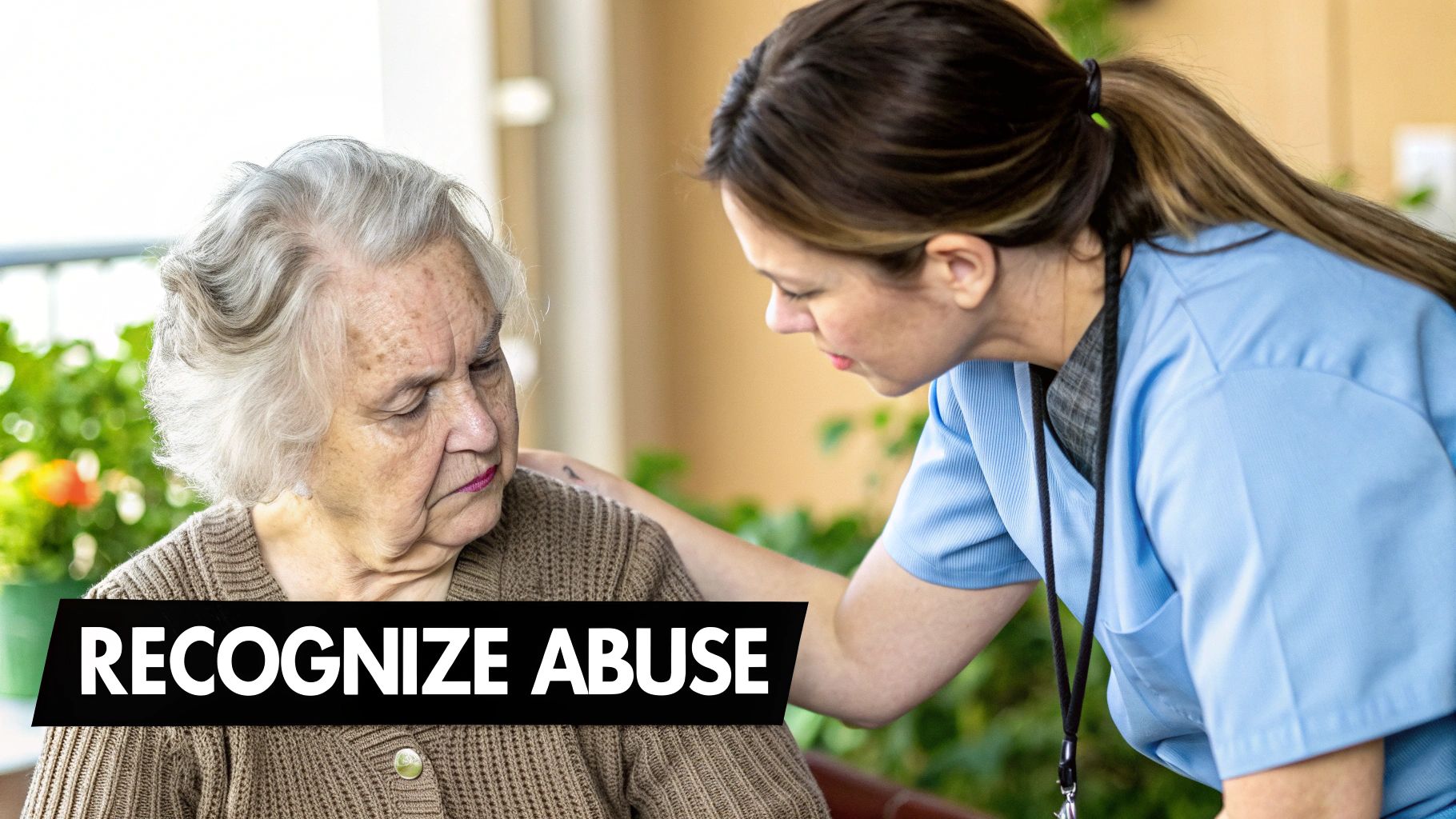
It’s a heartbreaking realization when you discover that someone you entrusted with your family member's care might be causing them harm. While a black eye or a broken bone is an obvious red flag, most abuse isn't that straightforward. It's often a quiet, creeping problem.
Learning to spot the more subtle indicators is your best tool for intervention. It’s about being able to tell the difference between a bad day and a pattern of harm.
Abuse isn't just one thing; it's a whole spectrum of damaging behaviors. To be an effective advocate, you first need to understand the different shapes it can take.
Understanding the Different Forms of Abuse
Each type of mistreatment leaves its own trail of clues. Knowing what to look for during your visits can help you connect the dots.
Physical Abuse: This is any use of force causing pain, from hitting and pushing to the improper use of restraints or even force-feeding. It’s not always about leaving a visible mark.
Emotional or Psychological Abuse: Cruelty doesn't have to be physical to be devastating. This includes yelling, threatening, humiliating, or deliberately isolating a resident from others.
Sexual Abuse: This is any non-consensual sexual contact. It’s a particularly monstrous crime, often committed against residents with dementia or those who can't communicate what’s happening.
Financial Exploitation: This is a quiet theft. Look for missing jewelry or cash, strange bank account activity, or sudden, unexplained changes to a will or power of attorney.
Neglect: This is the silent abuse of inaction—the failure to provide basic, essential care. It shows up as poor hygiene, untreated bedsores, dehydration, malnutrition, or living in an unsafe, unclean room.
Sadly, this is far from a rare problem. One survey found that 24.3% of family members witnessed at least one instance of physical abuse. Emotional abuse is often even more common. In a truly shocking study, 81% of nursing home staff admitted to seeing emotional abuse, and 40% confessed to committing it themselves. You can dig deeper into nursing home abuse statistics to see just how widespread this issue is.
To help you quickly identify potential warning signs, I've put together this quick-reference table. It breaks down the common indicators for each type of abuse.
Types of Abuse and Their Common Indicators
| Type of Abuse | Physical Signs | Behavioral Signs | Environmental Signs |
|---|---|---|---|
| Physical Abuse | Unexplained bruises, welts, cuts, broken bones, sprains, burns, signs of restraint on wrists. | Sudden withdrawal, flinching at touch, fear of being alone with specific staff members, depression. | Torn or bloody clothing, broken eyeglasses. |
| Emotional Abuse | Stress-related symptoms like high blood pressure, sudden weight changes. | Agitation, unresponsiveness, rocking or mumbling, sudden changes in personality, avoidance of eye contact. | Isolation from activities, restricted access to phone or visitors. |
| Sexual Abuse | Bruising around genitals or breasts, unexplained STDs, difficulty walking or sitting. | Panic attacks, PTSD symptoms, inappropriate sexual behavior, social withdrawal. | Bloody or stained undergarments or bedding. |
| Financial Exploitation | Missing personal items, sudden inability to afford small comforts. | Confusion about finances, fear or anxiety when discussing money, unusual secrecy. | Unpaid bills, sudden changes to legal documents, new "best friends." |
| Neglect | Bedsores (pressure ulcers), poor hygiene, dehydration, malnutrition, frequent infections. | Apathy, depression, confusion, listlessness. | Unsanitary living conditions, hazardous items left out, soiled bedding. |
Think of this table as a starting point. Your observations are what truly matter, so always trust what you see over what you're told.
Subtle Behavioral Red Flags to Watch For
Often, the very first clue isn't a physical injury at all—it's a change in your loved one’s personality or spirit. These shifts are easy to write off, but you shouldn't.
For example, has your once-chatty mother suddenly become silent and withdrawn? It's not just "old age." A persistent change like this is a serious warning sign that something is emotionally wrong.
One of the biggest red flags is a new or escalating fear of a particular caregiver. Pay attention. If your father tenses up, gets agitated, or even refuses care when a certain aide walks in, that’s his way of telling you something is happening. He may be too scared or unable to say it with words.
Pay close attention to how your loved one interacts with different staff members. A sudden change in behavior, especially fear or anxiety around one individual, is one of the most reliable indicators that something is wrong.
Key Physical Indicators Beyond Bruises
While we all know to look for bruises, other physical signs can be even more telling because they point to a pattern of neglect.
Bedsores, also known as pressure ulcers, are a massive sign of neglect. They happen when a resident isn't repositioned enough, and they are almost always preventable with proper care.
Sudden, significant weight loss can signal malnutrition. Is someone actually helping your loved one eat, or is their food tray just dropped off and picked up untouched? Likewise, consistently poor hygiene—dirty hair, unkempt nails, soiled clothes—is a direct sign that basic needs are being ignored.
Here are a few more physical clues to keep on your radar:
- Repeated falls that are always blamed on clumsiness.
- Signs of being over-medicated (drowsiness) or under-medicated (pain).
- Torn, stained, or bloody clothing or bedding.
- Frequent UTIs or other infections, which can stem from poor sanitation.
Developing this observational toolkit is your best defense. When you learn to spot these critical signs, you shift from a position of helpless worry to one of informed action, ready to start reporting nursing home abuse with the evidence you need.
Why Your Report Is So Important
It’s completely normal to feel overwhelmed, and maybe even a little doubtful, when you suspect a loved one is being mistreated in a nursing home. You might ask yourself if you’re overreacting or if one person’s voice can really make a difference against a big institution.
Let me be clear: Yes, it can. Your voice isn't just important—it's absolutely essential.
Reporting what you’ve seen does more than correct a single, immediate wrong. It drags a problem that thrives in silence out into the light. When you speak up, you become a crucial advocate, not just for your family member, but for every resident who might be too scared or unable to speak for themselves.
The Staggering Scope of the Problem
The reality is, elder abuse is far more common than most people think. The numbers are frankly shocking. We know that nearly 1 in 10 adults over the age of 60 have faced some form of abuse.
Even more disturbingly, some studies found that two-thirds of staff members in nursing homes admitted to mistreating residents at some point. Despite this, an estimated 1 in 24 cases is ever actually reported. You can dig deeper into these nursing home abuse statistics on sokolovelaw.com.
This huge gap between incidents and reports is what allows abusers to continue their behavior without any real consequences. Your report is a critical step in closing that gap. It creates a formal record that can hold both individuals and the facility accountable.
Think of your report as a single, crucial piece of a much larger puzzle. It can help establish a pattern of neglect or abuse that investigators might otherwise miss, potentially protecting countless others from future harm.
When you file that formal complaint, you create an official paper trail. This documentation is invaluable, not only for internal or state investigations but also for any legal action that might follow. If you find yourself in that position, it's also helpful to understand the details of potential nursing home abuse compensation for your loved one.
Uncovering Deeper Problems Within the Facility
More often than not, abuse isn't just the work of one "bad apple." It’s usually a symptom of deeper, systemic issues inside the nursing home itself. Recognizing these root causes can help you see why your gut feeling is probably right and why external oversight is so desperately needed.
Here are some of the most common factors I've seen in my experience:
- Chronic Understaffing: This is the big one. When a facility cuts corners on staffing, caregivers get overworked, stressed, and simply cannot provide adequate attention to everyone. It’s a recipe for neglect.
- Poor Staff Training: Training has to be more than just the basics. It needs to cover dementia care, de-escalation techniques, and a deep understanding of residents' rights. Too often, it's tragically insufficient.
- High Caregiver Burnout: The work is emotionally and physically draining. Without proper support from management, even the most compassionate staff can burn out, leading to apathy, frustration, and neglectful behavior.
Your report forces the facility to confront these problems head-on. It can trigger investigations that expose things like unsafe staffing ratios or nonexistent training protocols. This kind of external pressure is often the only thing that sparks real, meaningful change, leading to better conditions for every single person who lives there.
How to Document Proof of Mistreatment
When you first suspect something is wrong, it's a gut-wrenching feeling. But turning that suspicion into action requires more than just a gut feeling—it requires proof. Vague concerns are, unfortunately, too easy for a facility's management to brush aside. A detailed, factual, and organized timeline of events? That’s much, much harder to ignore.
This isn't about playing detective. It's about systematically building a clear, objective record that authorities and legal professionals will take seriously when you're reporting nursing home abuse. Your documentation is what transforms a valid concern into undeniable evidence, giving you the power to hold the right people accountable.
Start a Detailed Journal Immediately
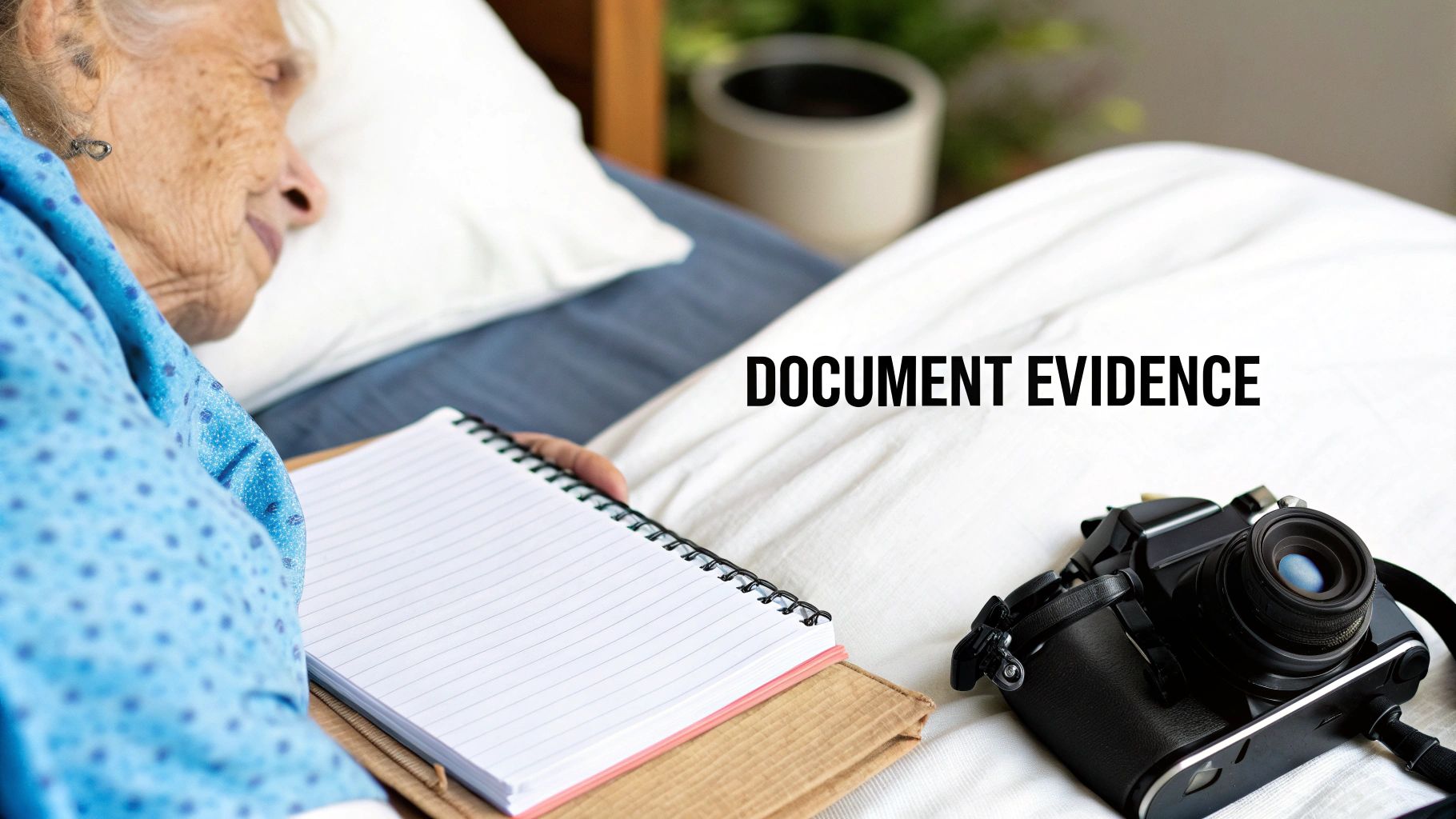
This is the single most important thing you can do, and you need to start right now. Stress can make memories fuzzy and jumble timelines, but a written record is concrete. A simple notebook or even a password-protected document on your computer will work perfectly.
The trick is to be relentlessly specific and factual. For every single entry, make sure you log:
- Date and Time: Pinpoint the exact time of your visit or when an incident occurred.
- Specific Observations: Describe exactly what you saw or heard. Don't just write, "Mom seemed sad." Instead, write, "Mom was crying and wouldn't look at me. She said she's afraid of the evening aide, 'David'."
- Names of Staff: Who was on duty? Always jot down the names of caregivers present, especially anyone involved in or witnessing what happened.
- Your Actions: Note who you talked to. For example, "Spoke with Nurse Jane Smith at 3:15 PM about the new, dark purple bruise on Dad's left forearm."
- The Facility's Response: What did they say? What did they promise to do? Write it down verbatim if you can.
Over time, this journal will build a powerful, chronological story that can expose patterns of neglect or outright abuse that might otherwise go unnoticed.
Use Your Smartphone to Capture Visual Evidence
They say a picture is worth a thousand words, and in these cases, it's absolutely true. Your phone is a powerful tool for capturing visual proof. When it's safe and you can be discreet, take photos or short videos of anything that doesn't look right.
Visual evidence is compelling because it's hard to dispute. Focus on getting clear images of:
- Injuries: Photograph any unexplained bruises, cuts, welts, or bedsores. Try to take pictures from a few different angles and include a common object, like a quarter, to show the scale.
- Unsafe Conditions: Snap photos of things like filthy bedding, dirty rooms, broken wheelchairs, or medical supplies left out in the open.
- Poor Hygiene: Pictures of a loved one with unkempt hair, dirty fingernails, or repeatedly soiled clothing can be powerful indicators of neglect.
A crucial word of caution: Your loved one's safety is the top priority. Always be discreet when taking photos. Never put them—or yourself—in a risky situation by confronting a potentially abusive staff member.
Gather and Organize Important Records
Your personal observations are just one piece of the puzzle. Official records are essential for building a rock-solid case. Start a file and begin collecting and organizing every relevant document you can get your hands on.
Medical records are particularly vital, as they can directly link an injury to something that happened (or didn't happen) at the facility. For instance, a sudden ER visit for severe dehydration or a broken hip from a fall can directly support your claims of neglect.
Similarly, a diagnosis of an advanced bedsore is often a clear sign of inadequate care. You can learn more about how serious these are by reading our guide on the dangers of a stage 3 pressure ulcer. Keep copies of all emails and letters you've exchanged with the nursing home, too. This paper trail helps prove what the facility knew and when they knew it.
Document All Conversations
From the moment you raise your first concern with a staff member or administrator, document it. After the conversation, immediately write down the date, time, the name of the person you spoke with, and what was discussed.
If you have follow-up meetings or phone calls, you need a reliable way to capture the details. For really important conversations, you might even consider using a voice recorder with integrated transcription to create an accurate record of what was said.
This process creates an undeniable timeline of your good-faith efforts to resolve the problem directly. If the facility fails to act, your record of their inaction becomes a critical piece of evidence, making your official report impossible to dismiss.
Making an Official Report That Gets Action
You’ve done the hard work of documenting everything you’ve seen. Now it’s time to turn those notes and observations into action. Filing a formal report is the single most powerful step you can take to protect your loved one and force an official investigation.
This isn't just about a single incident; it's about creating an official record that demands a response. You're moving your concerns from a private matter with the facility into the public sphere, where accountability is required.
The path forward might seem confusing, but there's a clear process for escalating a complaint.
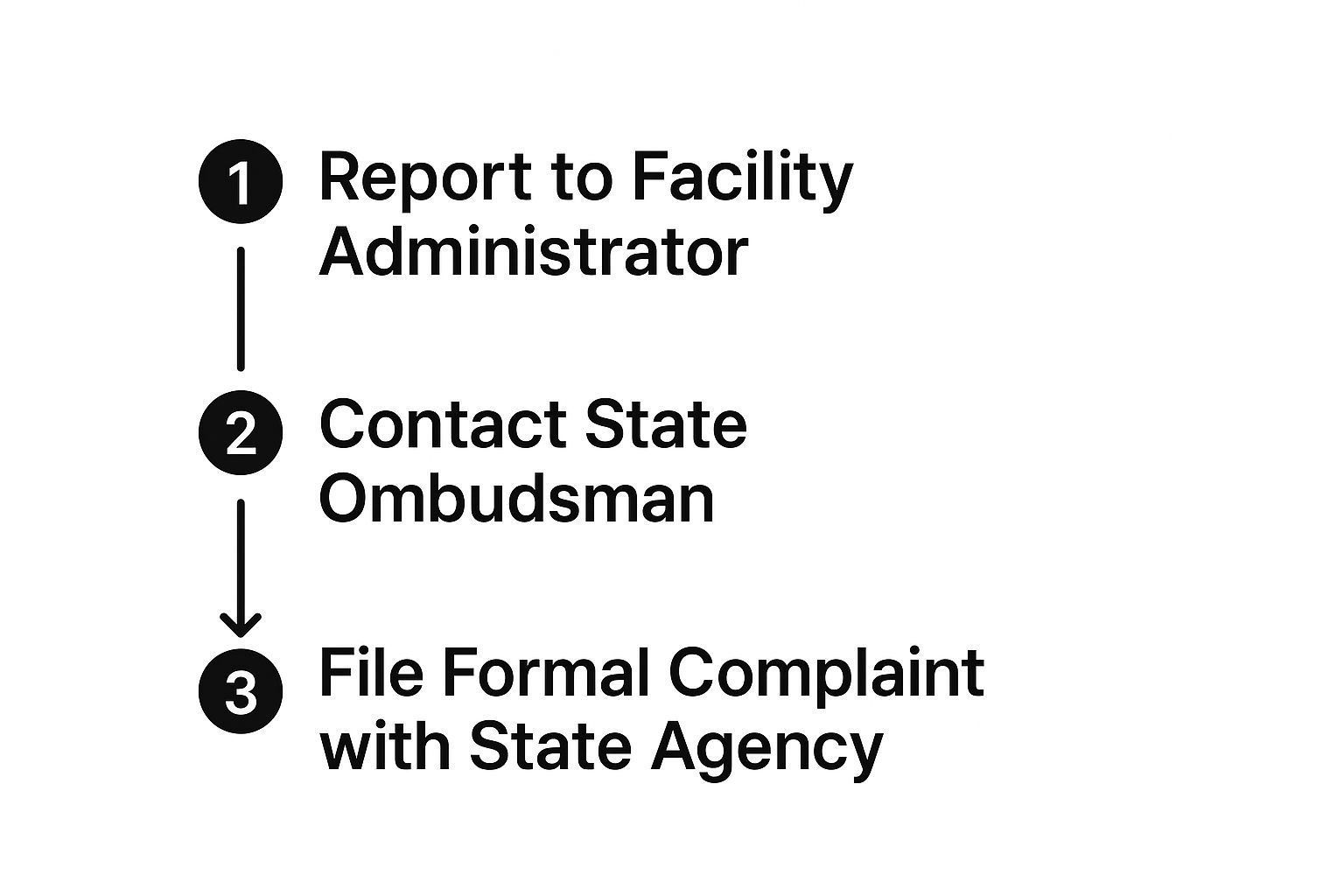
This shows how you can move from internal reporting to getting external, independent advocates and state authorities involved.
Who Should You Contact First?
Your gut reaction might be to call an outside agency right away, and sometimes that's the right move. However, for issues like ongoing neglect or poor care standards, starting with the facility's management can sometimes get you a faster resolution.
But let me be clear: if you suspect criminal abuse or your loved one is in immediate danger, your first and only call should be to 911.
If the situation isn't an emergency, you can try working up the facility's chain of command:
- Start with the Director of Nursing. This person is directly responsible for the quality of care on the floor. Present your documented concerns calmly and factually.
- Escalate to the Facility Administrator. If you don't get a satisfactory response, schedule a formal meeting with the top administrator. Bring your journal, photos, and any other evidence.
- Put it in writing. A formal, written grievance creates a paper trail the facility is legally required to address. It proves you tried to resolve the issue internally.
Even if you report it to the facility, I always recommend contacting an external agency as well. You need impartial oversight.
Key Agencies for Reporting Nursing Home Abuse
When an internal complaint goes nowhere or the situation is too severe, it's time to bring in the authorities. These agencies have the legal power to investigate, issue citations, and force real change.
The Long-Term Care Ombudsman Program Think of the Ombudsman as a neutral advocate fighting for your loved one. They are trained specifically to resolve problems within long-term care facilities. They investigate complaints about residents' rights, quality of care, and conflicts with the facility. This is an excellent, free resource for concerns that are seriously impacting a resident's well-being but may not be life-threatening.
An Ombudsman’s entire job is to advocate for the resident. They work to resolve conflicts and ensure the facility is upholding its legal and ethical duties. Best of all, their services are free and confidential.
Adult Protective Services (APS) APS is who you call for serious allegations of abuse, neglect, or exploitation. They are the frontline investigators for vulnerable adults. Once you file a report, APS is mandated by law to investigate the claim. This usually involves interviewing the resident, staff, and family, and reviewing medical records.
State Licensing Agencies Every nursing home must be licensed by the state, and a specific agency—often part of the Department of Health—is in charge of that. This is the agency that conducts inspections and investigates formal complaints. A proven complaint filed here can lead to heavy fines, sanctions, or even the facility losing its license to operate.
Where to Report Nursing Home Abuse
Choosing the right agency can feel overwhelming. This table breaks down who does what so you can make the right call the first time.
| Reporting Agency | Primary Role | When to Contact | What to Expect |
|---|---|---|---|
| 911 / Local Law Enforcement | Criminal Investigation | For immediate danger, physical or sexual assault, or any criminal act. | An immediate police response, a criminal investigation, and potential arrests. |
| Adult Protective Services (APS) | Abuse & Neglect Investigation | For serious concerns of neglect, emotional abuse, financial exploitation, or physical harm. | A formal investigation within a set timeframe. They assess safety and may coordinate with law enforcement. |
| Long-Term Care Ombudsman | Resident Advocacy & Problem Solving | For issues with quality of care, residents' rights, dietary problems, or conflicts with staff. | A trained advocate will investigate, mediate, and help resolve the issue with the facility on your behalf. |
| State Licensing & Certification Agency | Regulatory Enforcement | When you want to file a formal complaint that could trigger an inspection and official sanctions. | A formal investigation into regulatory violations. If substantiated, can lead to fines and citations for the facility. |
Each agency plays a crucial role. Law enforcement handles the crime, APS protects the vulnerable adult, the Ombudsman advocates for rights, and the state agency enforces the rules.
Be Ready Before You Make the Call
When you report, the investigator will need clear, concise information to act quickly. Being prepared makes your report far more effective. Before you dial, get these details organized.
- The resident's full name, date of birth, and room number.
- The nursing home's full name and address.
- A factual, brief summary of your concerns. Stick to what you personally observed.
- Specific dates, times, and names of staff involved. This is where your journal is invaluable.
- A clear description of any injuries or changes in your loved one's condition.
- The names of any witnesses, like other family members or even another resident, if they are willing and able to speak.
Having this information ready shows you are serious and gives the agency a solid foundation for their investigation. Making that call takes courage, but it’s a necessary step to ensure your voice is heard and justice is served.
Knowing When to Seek Legal Counsel
You’ve done the hard work of reporting the abuse to state agencies, and you might feel like you've reached the end of the road. But it's important to understand the difference between regulatory action and personal justice.
State agencies are essential for investigating and enforcing rules. They can levy fines and cite a facility for deficiencies. What they can't do is secure compensation for your loved one’s pain, suffering, and medical bills. That's a different fight altogether.
This is where a legal expert comes in. An attorney’s mission is entirely different from a state investigator’s. They work for you, and their focus is on holding the facility accountable for the specific harm your loved one experienced. It’s not about being confrontational; it’s about demanding full accountability.
Red Flags That Scream "Call a Lawyer"
While any hint of abuse is deeply concerning, some situations are so serious they demand immediate legal consultation. If you're seeing any of the following, it’s a clear signal to pick up the phone.
- Serious Physical Injury: I'm talking about more than just minor bumps. This includes things like severe, stage 3 or 4 bedsores, unexplained broken bones from a fall, a traumatic brain injury, or any condition caused by neglect that lands them in the hospital.
- Wrongful Death: This is the most painful scenario. If you have any reason to believe that the facility's actions—or inaction—hastened your loved one's death, speaking with an attorney is non-negotiable.
- A Clear Pattern of Neglect: One mistake might be an oversight; a pattern is a policy. If your notes show a consistent failure to provide basic care that leads to malnutrition, severe dehydration, or recurring infections, it points to a systemic breakdown that legal pressure can help fix.
- The Facility is Covering Up or Retaliating: Has the administration been dismissive? Are they stonewalling your requests for records? Or worse, is your loved one’s care declining after you complained? You need an advocate on your side, and you need one now.
These scenarios often involve a level of negligence or willful misconduct that goes beyond what a state agency can fully remedy. An experienced lawyer knows how to cut through the facility's excuses and fight for justice on a personal level.
What a Lawyer Brings to the Table
State investigators and ombudsmen are your allies, but their mandate is public safety and regulatory compliance. A nursing home abuse lawyer is your champion, focused entirely on your family's well-being.
Their goal is to achieve outcomes that government agencies simply aren't equipped to deliver:
- Financial Compensation: This isn't just a number; it’s a way to right a wrong. A lawsuit can recover the funds needed for medical bills, physical therapy, the cost of moving to a safer facility, and the immense pain and suffering your loved one was forced to endure.
- Uncovering the Truth: Lawyers have powerful tools at their disposal. They can issue subpoenas to get the internal documents a facility would rather hide—things like staffing records, internal incident reports, and past complaints. This can often reveal a disturbing history of understaffing or prior incidents.
- Holding the Corporation Accountable: The problem is rarely just one bad employee. It’s often a corporate culture that prioritizes profits over people. A lawsuit targets the company itself, forcing systemic changes that can protect every resident in that building.
Taking legal action sends a clear, powerful message: abuse and neglect will not be tolerated. The financial hit and damage to a facility's reputation from a lawsuit are often the strongest motivators for them to finally clean up their act.
If you do decide to explore this path, it's wise to get a sense of what the legal process entails. For a bigger-picture look, this a strategist's guide to claims and litigation offers some valuable perspective.
Finding the Right Legal Partner
This is one of the most important decisions you'll make, so choose carefully. You don’t want a general personal injury lawyer; you need an attorney with specific, deep experience in elder abuse and nursing home law.
Look for a firm that makes this their primary focus. Our platform can connect you with a qualified nursing home abuse lawyer who lives and breathes these complex cases.
Your initial consultation should always be free, so use it to your advantage. Come prepared with your documentation and don't be afraid to ask tough questions:
- How many nursing home cases have you personally handled?
- What is your track record in cases like mine? Can you share some examples?
- How will you keep me updated on the progress of my case?
- Do you work on a contingency fee basis? (This is crucial—it means you don't owe them a cent unless they win your case.)
Taking legal action can feel daunting, but it is often the only way to get the justice your loved one truly deserves.
Common Questions About Reporting Abuse
Deciding to report potential abuse in a nursing home is a tough, emotional step. It's completely normal to feel overwhelmed by questions and fears about what happens next. You might be worried about retaliation, whether your report will actually make a difference, or how the whole process will affect the person you're trying to protect. Let's walk through some of the most pressing concerns families have, so you can move forward with more clarity and confidence.
One of the biggest fears is retaliation. "If I file a complaint, will the nursing home take it out on my mom?" The answer is simple and backed by law: No. It is absolutely illegal for a facility to retaliate against a resident or their family for reporting a concern. Federal and state laws are crystal clear on this—residents have a right to voice grievances without fear of punishment, whether that’s a sudden drop in care quality, threats of eviction, or any other kind of mistreatment.
If you do see any negative changes after you’ve filed a report, start documenting everything immediately. Then, report this new behavior to the same agency that took your initial complaint. Don't forget to loop in the Long-Term Care Ombudsman. Retaliation is a serious violation, and authorities will not take it lightly.
What Happens After I File a Report?
Submitting that report to an agency like Adult Protective Services (APS) or a state licensing board kicks off a formal process. You won’t just send it off into the void and hear nothing back.
Here’s a general idea of what to expect:
- Your Case is Assigned: A trained investigator, someone who specializes in these exact types of claims, will be put on your case.
- The Investigation Begins: The investigator will almost always make an unannounced visit to the facility. They’ll need to review records, interview staff members, and—most importantly—speak privately with your loved one and possibly other residents.
- Official Findings are Released: After gathering all the facts, the agency issues a formal finding. If they can substantiate your allegations, the facility could be facing citations, hefty fines, or be forced to create and follow a strict corrective action plan.
The timeline can differ depending on your state and how complex the situation is, but investigators are typically required to get started within a few days, especially for the most serious allegations.
Remember, an official report does more than just address your loved one's situation. It contributes to a body of evidence that can reveal systemic issues, protecting all residents within the facility from future harm.
Will My Loved One Have to Testify?
This is a huge source of anxiety, especially when a resident is frail, struggles with memory, or is simply scared. For most agency investigations, your loved one will be interviewed by a trained professional in a private, low-stress environment. They will not be dragged into a courtroom and forced to testify during this stage.
Now, if the situation eventually moves toward a civil lawsuit, their testimony might become necessary. A good attorney, however, will handle this with incredible sensitivity. This is often done through a deposition in a comfortable, familiar setting—not a public courtroom. Your family member's well-being is always the top priority.
What if the Abuse is "Just" Neglect?
Sometimes families downplay what they're seeing. They hesitate to report things they label as "just neglect"—like recurring medication mistakes or a pattern of falls—because it doesn't feel as overtly violent as physical abuse. This is a dangerous way to think.
Neglect is a form of abuse, and its consequences can be just as tragic. Think about it: medication errors and neglect are not minor issues. A study of nursing homes in the Boston area revealed that a shocking 37.5% of residents with advanced dementia were given at least one medication that was inappropriate for them. You can discover more insights about these U.S. nursing home abuse statistics to see how widespread these problems are.
Reporting neglect is crucial. It shines a light on the underlying problems, like chronic understaffing or poor staff training, that cause these "mistakes." Your report can be the catalyst that forces a facility to fix these dangerous issues before they lead to an irreversible tragedy.
If you're trying to navigate the complexities of a suspected nursing home abuse case, you don't have to figure it all out by yourself. AskLegally is here to give you the information and support you need to protect your loved one and hold negligent facilities accountable. Visit us at https://asklegally.com to find resources and get connected with an experienced lawyer today.