The first step toward getting justice and nursing home abuse compensation is often the hardest: seeing the problem in the first place. The signs are rarely as obvious as a black eye or a broken bone. Instead, abuse and neglect often whisper, and you have to learn how to listen. Trust your gut—if something feels off, it probably is.
Recognizing the Subtle Signs of Elder Abuse
It's all too easy to write off changes in a loved one's personality or health as just a normal part of getting older. But these small shifts can be the early warning signs of mistreatment. Your instinct as a family member is your most powerful tool. You know their baseline, their quirks, and their personality better than any staff member ever could.
The real challenge lies in telling the difference between a natural decline and a red flag. For example, has your once-social mother suddenly become withdrawn and quiet? While a health issue could be the cause, it could also be a sign of fear, intimidation, or depression caused by emotional abuse from staff or even other residents.
Beyond the Obvious Physical Harm
Unexplained bruises, cuts, and fractures are clear, alarming signs of physical abuse. But so many forms of mistreatment leave no visible marks at all. Neglect, one of the most pervasive problems, shows up in different ways. You might notice your dad is always in a dirty shirt, his hair is unkempt, or his dental hygiene has gone downhill. These aren't just signs of old age—they're signs of inadequate care.
Keep an eye out for these less obvious physical indicators:
- Bedsores (Pressure Ulcers): These painful, dangerous wounds are almost always preventable. If you find one, it's a massive red flag that your loved one isn't being repositioned or cared for correctly.
- Sudden Weight Loss: A significant drop on the scale can point to malnutrition or dehydration. Is no one helping them eat? Are they not getting the right food?
- Poor Hygiene: A persistent smell of urine or feces means your loved one isn't being bathed or changed regularly. This is not only undignified but also puts them at risk for serious infections.
The scope of this problem is deeply disturbing. The World Health Organization (WHO) found that a shocking two-thirds of nursing home staff admitted to committing some form of abuse. This isn't a rare occurrence; it's a systemic crisis that demands vigilance. You can explore more sobering nursing home statistics on sokolovelaw.com.
Types of Abuse and Their Common Indicators
To help you connect the dots, it’s useful to understand the different categories of abuse and what they look like in the real world. I've put together this table to break down the common signs you should be watching for.
| Type of Abuse | Physical Signs | Behavioral & Emotional Signs | Financial Signs |
|---|---|---|---|
| Physical Abuse | Unexplained bruises, welts, fractures, sprains, burns, or cuts. Rope marks on wrists. Broken eyeglasses. | Fear of being touched. Sudden flinching. Refusal to speak in front of a specific caregiver. | N/A |
| Neglect | Bedsores, poor hygiene, soiled bedding/clothing, dehydration, malnutrition, unattended medical needs. | Social withdrawal, depression, unusual passivity. | N/A |
| Emotional/Psychological Abuse | N/A | Agitation, anxiety, withdrawal. Unusual behaviors like rocking or mumbling. Fearfulness or deference toward staff. | N/A |
| Sexual Abuse | Bruising around genitals or breasts, unexplained STDs, torn or stained underclothing, vaginal or anal bleeding. | Difficulty walking or sitting. PTSD symptoms. Sudden fear of a particular person. | N/A |
| Financial Exploitation | Missing personal items (jewelry, cash, electronics). | Confusion, fear, or secrecy about financial matters. Sudden deference to a new "friend" on staff. | Unexplained bank withdrawals, sudden changes to a will or power of attorney, unpaid bills despite adequate funds. |
This isn't an exhaustive list, of course, but it covers the major red flags that should prompt you to start asking serious questions.
Spotting Emotional and Behavioral Shifts
The emotional damage from abuse can be just as severe as any physical injury. Victims often become intensely anxious, agitated, or fearful, particularly when certain staff members are around. A classic sign of intimidation is a resident who clams up or becomes hesitant to speak the moment a caregiver enters the room.
Think about a real-world scenario: a resident who loved playing bingo suddenly refuses to leave his room for activities. The family might assume he's just tired. But the truth could be that a staff member belittles him in front of others, making the experience humiliating.
Key Takeaway: Never dismiss a significant and unexplained change in your loved one’s personality. Sudden depression, anxiety, or a retreat from social life is a serious warning sign that needs to be investigated.
Other behavioral red flags can include:
- Unusual new habits like rocking, sucking, or mumbling
- A sudden refusal to eat, drink, or take their medication
- Emotional outbursts or agitation that seem to come from nowhere
Uncovering Financial Exploitation
Financial abuse is especially sneaky because it can fly under the radar for months, even years, until the damage is immense. It can be as simple as a staff member "borrowing" cash from a wallet or as complex as manipulating a resident into changing their will.
Start looking for odd financial activity. Are there strange withdrawals from your loved one's bank account? Have valuable belongings like jewelry or a tablet gone missing from their room? Be wary if a particular staff member suddenly becomes a new "best friend" who seems to have an unusual amount of influence. When you pursue nursing home abuse compensation, it isn't just about physical harm—it’s also about recovering assets stolen through this kind of predatory behavior.
How to Document and Gather Compelling Evidence
When you suspect your loved one is a victim of abuse, your immediate actions are critical. Suspicions alone won't hold up; you need to build a case, and that starts with meticulously documenting everything you see and hear.
This isn't just about jotting down notes. It's about becoming a careful investigator for your family member, creating a clear, chronological record that transforms your concerns into undeniable facts. A vague claim is easy to dismiss, but a detailed timeline supported by solid proof is a powerful tool for justice.
The Power of Photographic and Video Evidence
Your smartphone is one of the most powerful tools you have right now. Visual evidence is objective—it shows what’s happening without interpretation and can often tell a story more powerfully than words ever could. It provides an unfiltered look into the conditions your loved one is facing day after day.
Start taking photos of anything that feels wrong. This goes far beyond just visible injuries like bruises, cuts, or bedsores, though you absolutely must capture those with dates. Look deeper and also photograph:
- Poor Living Conditions: Are the carpets stained or the bathrooms filthy? Is trash overflowing? Is essential equipment broken? Snap a picture.
- Hygiene Issues: Document soiled bedding, dirty clothes that haven't been changed, or signs of poor personal care like unkempt hair or dirty fingernails, especially if it's out of character.
- Unsafe Environments: Capture any hazards you see. Wet floors with no warning signs, blocked hallways, or dangerously dim lighting are all evidence of neglect.
- Food and Medication: Take pictures of meals that look insufficient or inedible. If you see medication left out or suspect it's being administered incorrectly, document it.
If your phone has a time-stamp feature, use it. If not, make a quick note in your journal of the date and time each photo was taken. This visual log helps establish a pattern of neglect that becomes very difficult for a facility to explain away.
Create a Detailed Incident Journal
Memories can fade or get jumbled under stress, but a written record is permanent. Grab a dedicated notebook or start a secure digital document to log every single interaction, observation, and concern you have. This journal will become the backbone of your claim, giving your attorney the timeline needed to piece the story together.
Every entry must include the date, time, and people involved. Specificity is your best friend here.
Don't just write, "Mom was upset today."
Instead, be precise: "March 15, 2024, 2:30 PM: Visited Mom in Room 204. Nurse Jane Doe was in the room when I arrived. Mom was crying and told me Jane had yelled at her for spilling a glass of water. I noticed a new, dark bruise on her left forearm that she couldn't explain. Took a photo of the bruise at 2:35 PM."
This kind of detail does more than just record an event. It establishes a pattern of negligence over time, connects specific staff members to incidents, and demonstrates a consistent failure in the facility's duty to provide proper care.
This infographic gives a high-level view of how to move from that first gut feeling to taking decisive action.
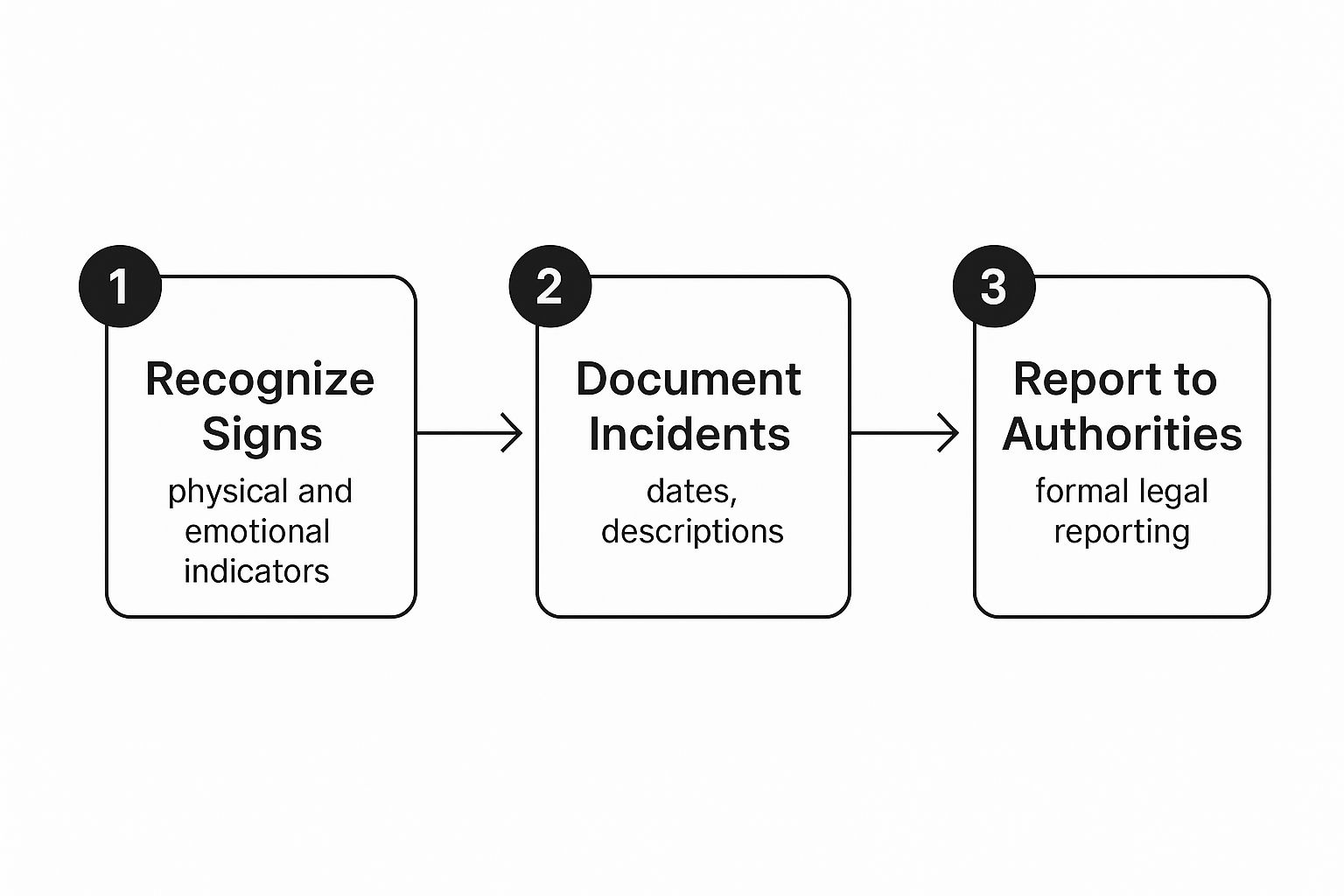
As you can see, recognizing those initial signs flows directly into documenting what you find. This documentation is the crucial step you must take before officially reporting the abuse and bringing in legal help.
Gather Critical Paperwork and Identify Witnesses
Alongside your personal records, you'll need to collect official documents. These papers provide the formal context for your loved one's care and financial status, which is essential for proving damages later on. Start requesting copies of everything you can, including:
- Medical Records: Charts, diagnoses, treatment plans, and all staff notes are crucial for showing a decline in health.
- Financial Statements: If you suspect financial exploitation, bank and credit card statements are the best way to spot fraudulent charges or unusual withdrawals.
- Admission Agreement: This is the contract that spells out exactly what services and level of care the nursing home promised to provide.
- All Correspondence: Save every email, formal letter, or notice you've received from the facility's management.
Finally, start thinking about who else has seen what's going on. Have other families mentioned similar concerns? Is there a compassionate aide who seems genuinely worried? These individuals can become powerful witnesses whose testimony can support your claim. Grasping the importance of evidence is what separates a weak complaint from a strong, successful case.
Once you have this initial evidence in hand, you're ready to take the next step. Our guide on https://asklegally.com/how-to-report-nursing-home-abuse/ will walk you through contacting the right authorities to get an official investigation underway.
Taking Legal Action: The Path to Compensation
Once you’ve gathered evidence of abuse or neglect, the fight for nursing home abuse compensation moves into the legal system. This part can feel intimidating, but knowing what to expect makes it far less daunting. The ultimate goal here is simple: hold the facility accountable and recover damages for the harm done to your loved one.
The first move is often to file a formal complaint with a state agency, such as Adult Protective Services or the Department of Public Health. This starts an official investigation into the facility. While this is separate from your personal lawsuit, a finding of fault from the state can be incredibly powerful evidence for your case down the road.
What a Civil Lawsuit Looks Like
Filing a civil lawsuit is a completely different process from the state investigation. Your attorney will draft a legal document called a complaint, which lays out exactly what happened, who you believe is responsible, and the compensation you’re seeking.
Most of these cases hinge on the legal concept of negligence. It sounds complicated, but it breaks down into four basic things you need to prove:
- The nursing home owed your loved one a duty of care (which they always do).
- They failed to meet that standard of care through their actions or, just as often, their inaction.
- This failure directly caused your loved one’s injury or death.
- Your loved one suffered real damages (like medical bills or pain and suffering) because of it.
Think about a resident who is a known fall risk. If the facility fails to put proper fall prevention measures in place—like bed alarms or non-slip mats—and the resident falls and breaks a hip, that’s a textbook case of negligence. The hospital bills, rehab costs, and the resident's agony all count as damages.
Navigating the Key Stages of a Lawsuit
After the lawsuit is filed, you enter the "discovery" phase. This is where both sides trade information and evidence. All that documentation you collected—the photos, the journal, the medical records—becomes absolutely critical here.
A major part of discovery is the deposition, which is sworn testimony given out of court. It’s a crucial moment in any case, and being ready is key. Your lawyer will help you with this, but understanding what to expect when preparing for a deposition can make a huge difference.
During this time, the nursing home’s lawyers might try to get the case thrown out or block certain evidence from being used. A good attorney knows how to fight these moves and keep the focus on what matters: your family.
The legal fight against nursing home abuse is gaining ground. Some law firms have recovered over $314 million for victims and their families. With the population of older adults needing care expected to jump by 50% by 2030, holding negligent facilities accountable has never been more important. The stakes are incredibly high—seniors who suffer abuse have a 300% greater risk of death.
Don't Miss the Deadline: The Statute of Limitations
This is arguably the most important rule in the entire process: the statute of limitations. It’s a hard deadline for filing your lawsuit.
Every state has its own timeline, and some are as short as one year from the date you discovered the abuse. If you miss that window, your right to sue is gone forever. It doesn't matter how strong your case is.
This is why you cannot afford to wait. The moment you suspect abuse, you need to speak with an experienced nursing home abuse lawyer. They will know your state’s specific deadline and can get the process started immediately to protect your family’s rights.
Of course. Here is the rewritten section, designed to sound completely human-written, with a natural, expert tone.
What Goes Into a Nursing Home Abuse Settlement?
When your family is reeling from the discovery of abuse, talking about money can feel wrong. But let's be clear: pursuing a settlement isn't just about a check. It’s about holding the facility accountable for its actions and securing the funds your loved one needs to heal and live in safety and dignity.
One of the first things people ask me is, "What is our case worth?" There’s no simple calculator for this. Every situation is deeply personal, and the final compensation reflects the specific harm done. The value is built by adding up two different kinds of damages: the ones you can see on a receipt and the ones you can see in your loved one’s eyes.
Tallying Up the Financial Costs (Economic Damages)
The easiest part to understand are the economic damages. Think of these as all the direct, out-of-pocket expenses your family has been forced to pay because of the facility's negligence. These are tangible costs you can prove with a paper trail of bills, invoices, and bank statements.
A skilled attorney will help you track and recover every penny spent on things like:
- Medical Bills: This covers everything from the initial ER visit for a fall to the surgery needed to repair a broken hip or the long-term wound care for severe bedsores.
- Rehabilitation: Physical and occupational therapy are often necessary to help your loved one regain strength and mobility. We make sure the facility that caused the harm pays for the recovery.
- Therapy and Counseling: The emotional scars from abuse are just as real as the physical ones. The cost of a therapist to help with trauma, anxiety, or depression is a critical part of the claim.
- Relocation Expenses: If you had to urgently move your family member to a safer—and likely more expensive—facility, that cost difference can be included.
- Recovering Stolen Assets: In cases of financial exploitation, this means recovering the value of stolen cash, forged checks, or pilfered property.
Keeping meticulous records of every single expense is absolutely crucial. These figures form the undeniable financial foundation of your case.
Accounting for the Human Toll (Non-Economic Damages)
This is where we address the real human cost of the abuse. Non-economic damages are much harder to put a number on, but they often represent the largest part of a settlement because they compensate for the immense suffering your loved one was forced to endure.
My Perspective: Justice means more than just paying back medical bills. It has to acknowledge the fear, the pain, and the loss of dignity your loved one experienced. Those are the most devastating consequences, and they have profound value in the eyes of the law.
These damages are meant to provide compensation for the intangible, but very real, losses:
- Pain and Suffering: For the physical agony they went through, whether from an untreated infection, a broken bone, or the constant pain of bedsores.
- Emotional Distress: This addresses the terror, humiliation, and deep sadness caused by verbal threats, isolation, or complete neglect.
- Loss of Enjoyment of Life: Did the abuse rob them of their ability to enjoy their favorite hobbies, talk with family, or even get out of bed? That loss is a significant part of the claim.
- Disfigurement or Permanent Injury: For permanent scars, the loss of a limb, or any disability that will affect them for the rest of their life.
The severity of the abuse has a direct impact here. The more shocking the facility’s conduct and the deeper your loved one's suffering, the higher the value of these damages. We use your personal journals, photos, and testimony from friends and family to paint a clear and powerful picture of this human cost. For a closer look at this process, our guide on expert strategies for negotiating a settlement offers some valuable tips.
A settlement's value is determined by a range of factors that paint the full picture of the harm caused. Lawyers and insurance adjusters weigh several key elements when they begin negotiations.
Factors Influencing Compensation Amounts
| Influencing Factor | Description | Impact on Settlement Value |
|---|---|---|
| Severity of Injuries | The extent of the physical, emotional, and psychological harm suffered by the resident. | High: Severe injuries like traumatic brain injuries, permanent disability, or wrongful death lead to higher values. |
| Strength of Evidence | The quality and quantity of proof, including medical records, photos, videos, and witness testimony. | High: Clear, undeniable evidence of neglect or abuse strengthens the negotiating position and increases value. |
| Facility's Conduct | Whether the abuse was a one-time error or a pattern of intentional neglect and misconduct. | High: Evidence of gross negligence, cover-ups, or a history of violations significantly increases potential punitive damages. |
| Medical Expenses | The total cost of all past and future medical care required for recovery. | Moderate to High: Higher medical bills directly increase the economic damages portion of the settlement. |
| Victim's Age & Health | The resident's age, life expectancy, and overall health before the abuse occurred. | Varies: A younger, healthier victim may have a higher claim for future pain and loss of enjoyment of life. |
Ultimately, these factors help create a compelling narrative that justifies the compensation your loved one deserves.
So, What Is a Typical Settlement Amount?
Every case is different, so it's impossible to name an exact figure. However, a study published in the prominent journal Health Affairs found the average settlement for nursing home abuse cases hovered around $400,000.
Keep in mind, that's just an average. Cases involving catastrophic harm or wrongful death can, and often do, result in settlements well over $1 million. The final amount always comes down to the specific details of the case, the quality of the evidence, and the skill of the legal team fighting for you.
Finding the Right Attorney for Your Family
Choosing a lawyer is probably the most critical decision you'll make when pursuing a nursing home abuse claim. This is about more than just legal representation; you're looking for an advocate who can guide your family through what is often an incredibly painful and emotional time. The right attorney brings legal skill, of course, but also compassion and a relentless drive to hold negligent facilities accountable.
Let's be clear: not just any personal injury lawyer will do. Nursing home abuse is a highly specialized field, tangled in a complex web of federal and state laws. You need a lawyer who lives and breathes this specific area of law, not a generalist who dabbles in it. A true specialist knows the common defense tactics facilities use and, more importantly, knows exactly how to build a case that can't be ignored.
What to Look for in a Great Nursing home Abuse Lawyer
As you begin your search, you’re looking for a unique blend of toughness and empathy. This person will become your family's voice, fighting for a loved one who has been silenced or harmed.
Here’s what really matters:
- Dedicated Focus: Their practice should be heavily concentrated on nursing home abuse and neglect cases, not just general personal injury. Ask them for a percentage.
- Willingness to Go to Trial: Most of these cases settle before seeing a courtroom, but insurance companies and nursing homes offer far better settlements when they know your lawyer isn't afraid to go to trial. It shows they're serious.
- Clear, Empathetic Communication: You should feel heard and understood, not like another case file on a desk. The lawyer should be able to explain complex legal steps in a way that makes sense and keep you updated without you having to chase them down.
A Quick Note on Fees: The best attorneys in this field work on a contingency fee basis. This is crucial. It means you don't pay a single dollar out of pocket. Their fee is a percentage of the money they recover for you. If they don't win your case, you owe them nothing. This arrangement gives everyone a fair shot at justice.
Key Questions to Ask Any Lawyer You're Considering
Think of your first consultation as a job interview where you are the one doing the hiring. A good, confident attorney will respect tough questions. Don't hold back.
Here are a few essential questions to get you started:
What portion of your caseload is dedicated to nursing home abuse? A specialist will proudly tell you it’s a major part of their work, not just something they handle on the side.
Can you talk about a few cases you've handled that are similar to ours? They can't violate client confidentiality, but they should be able to discuss the types of abuse, the arguments they made, and the general outcomes they achieved.
Who will I actually be working with? Will you have direct access to the attorney you're hiring, or will your case be handed off to a junior associate or paralegal? It's a fair question to ask.
How will you keep us informed about our case? They should have a clear process for providing regular updates. You deserve to know what's happening every step of the way.
Finding the right advocate is the first real step toward justice. For a deeper dive into vetting legal professionals, our guide on choosing a nursing home abuse lawyer offers more detailed tips and red flags. An attorney who answers your questions with both confidence and compassion is the partner you need to secure the compensation your loved one deserves.
Common Questions About Nursing Home Abuse Claims

When you discover a loved one has been harmed in a nursing home, your mind starts racing with questions. It's a confusing and emotional time, and the legal side of things can feel completely overwhelming.
I've worked with countless families in this exact situation. Here are some of the most pressing questions they ask, along with the straightforward answers you need to know.
How Long Do I Have to File a Lawsuit?
This is one of the first things you need to figure out because the clock is already ticking. Every state has a law called the statute of limitations, which sets a hard deadline for filing a lawsuit. In some places, this window can be as short as one year from the day the abuse was discovered.
Miss that deadline, and you lose your right to sue. It's that simple. It doesn't matter how clear the evidence of abuse is; the court will refuse to hear your case.
Because these timelines are so strict and can get complicated, the best thing you can do is talk to an attorney immediately. They can tell you the exact deadline for your situation and make sure your family's chance for justice doesn't expire.
What if My Loved One Has Dementia and Cannot Testify?
This is a huge worry for so many families, but please know it doesn’t stop a case. The legal system is built to handle situations where victims, especially elders with cognitive issues like dementia, can't speak for themselves.
A strong case doesn't have to rely on the victim's memory or testimony. We simply shift the focus to all the other evidence that tells their story for them.
We build a powerful case using things like:
- Medical Records: We look for chart entries that show new injuries, a sudden drop in health, or conditions that weren't being treated properly.
- Photos and Videos: Pictures of bedsores, bruises, unsanitary room conditions, or your loved one looking unkempt are incredibly powerful.
- Witness Statements: We talk to family members, friends who visited, and even concerned staff members who saw what was happening.
- Expert Opinions: Medical experts can review everything and give a professional opinion that connects the resident's injuries directly to the facility's poor care.
A victim's inability to testify doesn't mean an abuser gets a free pass. Often, the physical evidence we gather tells a clearer and more undeniable story of neglect than words ever could.
Can We Still Sue if Our Loved One Passed Away?
Yes, absolutely. If you believe the abuse or neglect was a factor in your loved one's death, the family has the right to file what’s called a wrongful death lawsuit. This legal action is specifically designed to hold the facility accountable for the worst possible outcome.
A wrongful death claim is a bit different from a standard abuse case because it seeks compensation for the losses the surviving family members have suffered.
You can pursue damages for:
- The final medical bills from the facility.
- Funeral and burial expenses.
- The loss of your loved one's companionship and guidance.
- The pain and suffering they endured before they passed.
These are deeply emotional and legally challenging cases. It's crucial to work with a lawyer who has specific experience with wrongful death claims to navigate the process and fight for the justice your family deserves.
How Much Does a Nursing Home Abuse Lawyer Cost?
I know the cost of hiring a lawyer is a major worry. The good news is that almost every nursing home abuse attorney works on a contingency fee basis, which removes the financial burden from families.
Here’s what that means: You pay nothing upfront.
The lawyer covers all the costs of building and fighting your case. Their payment is simply a percentage of the settlement or court award they win for you.
This setup means their goal is the same as yours: to get you the best possible result. If they don't win your case, you owe them zero for their time or expenses. It allows you to pursue justice without any financial risk.
If you're facing these difficult questions and need clear answers, AskLegally provides the resources to help you protect your loved one. We connect families with experienced nursing home abuse attorneys who can fight for the justice you deserve. Explore your options and get help today at https://asklegally.com.