Hiring a Nursing Home Abuse Lawyer Explained
Placing a family member in a nursing home is one of life's most difficult decisions, and it's built on a bedrock of trust. You're trusting strangers to provide the same level of care and compassion you would. So when you start noticing small, unsettling things during your visits, it can be deeply unnerving.
That quiet sense of unease—that gut feeling that something just isn't right—is a painful reality for far too many families. It's a feeling you can't quite shake.
The Reality of Nursing Home Neglect and Abuse
That nagging feeling is often the very first sign that the trust you placed in a facility has been violated. Maybe you've noticed your mother is suddenly quiet and withdrawn, or you see bruises on your father's arm that he quickly dismisses. Perhaps you've seen a noticeable decline in their personal hygiene.
You might be told these are just "part of aging," but your instincts are screaming that there’s more to the story.
This guide is here to validate those instincts. We want to give you the clarity and direction you need to move from suspicion to decisive action. You'll learn how to confidently identify the warning signs, understand your family’s legal rights, and see how a dedicated nursing home abuse lawyer can become your fiercest advocate.
The Scope of the Problem
The problem is far more common than most people think. Studies have found that an unbelievable 44% of residents reported they had been abused in some way. Even more shocking, 95% said they had either been neglected themselves or had seen another resident being neglected.
With over one million Americans living in nursing homes, these numbers are staggering. What’s worse is that the U.S. Department of Justice estimates that only 1 in 24 cases of elder abuse ever gets reported. You can explore more nursing home abuse statistics to grasp the true scale of this crisis.
Trusting what you see is the first and most critical step. A facility may try to explain away injuries or changes in behavior, but you should never ignore a pattern of concerning events. Your vigilance is your loved one's best protection.
This guide will help you cut through the confusion and take the right steps. We’ll walk through:
- Identifying Red Flags: How to tell the difference between the normal signs of aging and the clear indicators of physical, emotional, or financial abuse.
- The Role of a Lawyer: What a nursing home abuse lawyer actually does to investigate a claim and fight for justice on your behalf.
- Navigating the Process: The concrete steps you can take, from initially reporting the abuse to pursuing legal action.
Recognizing The Warning Signs Of Abuse And Neglect
Spotting mistreatment in a nursing home isn't always about finding one glaring piece of evidence. More often, it’s a slow burn—a pattern of small, unsettling changes that are too easy for a facility to explain away. Your gut feeling is often the first and most important alarm bell.
Think of yourself as the lead detective in your loved one's care. You're looking for the gap between what the staff tells you and what you're actually seeing. The most powerful thing you can do is document everything, no matter how minor it seems at the time.
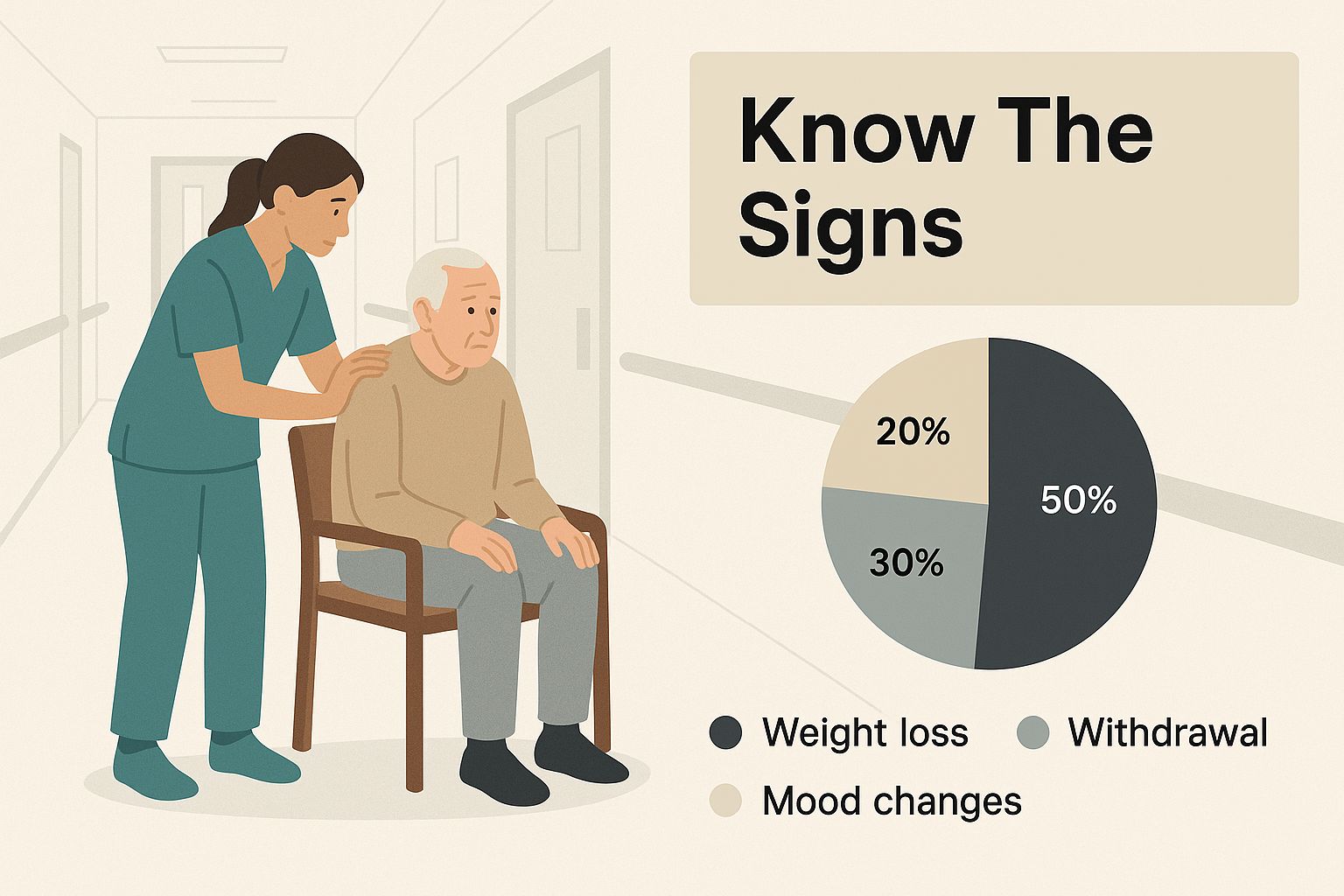
This image really highlights what families expect and deserve: gentle, attentive care. It makes the reality of abuse feel that much more jarring.
Physical Signs Of Abuse Or Neglect
The most obvious signs of a problem are often physical. But it's not as simple as just spotting a bruise. While it’s true that elderly skin bruises easily, the pattern and location of injuries tell a much deeper story.
A single bruise on a shin? That could easily be from bumping a wheelchair. But symmetrical bruises on both wrists? That's a classic sign of improper restraints.
Other physical red flags to watch for include:
- Unexplained Injuries: Be wary of bruises, burns, cuts, or welts that come with a vague or unbelievable explanation from the staff.
- Signs of Restraint: Look for marks on wrists or ankles, which can point to the use of physical or even chemical restraints.
- Sudden Weight Loss: This is a huge indicator of malnutrition or dehydration—two of the most severe forms of neglect.
- Bedsores (Pressure Ulcers): These incredibly painful sores only develop when a resident isn't moved often enough. They are a serious sign that basic care is being ignored.
If you believe neglect is behind these physical issues, it’s critical to get expert advice. A specialized nursing home neglect lawyer can help you understand your options.
Emotional And Behavioral Changes
Sometimes, the worst injuries are the ones you can't see. Emotional abuse is disturbingly common and can be devastating. One study found that a staggering 81% of caregiving staff had witnessed emotional abuse, and 40% admitted to committing it themselves. This can be anything from yelling and insulting residents to isolating them from others.
You might notice that a loved one who was once cheerful and chatty has become withdrawn, anxious, or unusually quiet.
Pay close attention to how they interact with specific staff members. If your mother tenses up or flinches when a particular aide enters the room, that’s a massive behavioral cue that you cannot ignore.
Other behavioral shifts to look out for are:
- Sudden depression, anxiety, or agitation
- Strange, repetitive behaviors like rocking, sucking, or mumbling
- A new reluctance to speak or be touched
- Visible fear or anxiety around certain staff members
Red Flags Identifying Potential Nursing Home Abuse
It’s crucial to know what to look for, as signs of abuse can be subtle and span different categories. The table below breaks down the common warning signs to help you identify potential mistreatment.
| Type of Abuse | Physical Indicators | Behavioral & Emotional Indicators | Financial Indicators |
|---|---|---|---|
| Physical | Unexplained bruises, burns, or scars, especially in patterns. Rope marks on wrists or ankles. Broken eyeglasses or frames. | Fearful reactions to touch. Sudden withdrawal from normal activities. Wincing or showing signs of pain when moved. | N/A |
| Emotional | Sudden weight loss or gain. Signs of dehydration (dry mouth, sunken eyes). | Unusual agitation, anxiety, or depression. Fear of a specific caregiver. Sudden communication issues or mumbling. | N/A |
| Neglect | Bedsores (pressure ulcers). Poor hygiene (unwashed hair, body odor). Unsanitary living conditions (dirty room, soiled bedding). | Listlessness or unresponsiveness. Apparent over-sedation or drowsiness. | N/A |
| Financial | N/A | Unusual secrecy or defensiveness about finances. Confusion about recent financial transactions. | Sudden, large bank withdrawals. Unpaid bills despite having funds. Missing cash, checks, or personal items. Abrupt changes to wills or power of attorney. |
Seeing any of these signs is a serious cause for concern. Remember to document everything with dates, photos, and detailed notes. This record can become invaluable if you decide to take further action.
What a Nursing Home Abuse Lawyer Actually Does
Discovering that a loved one might be a victim of abuse is a gut-wrenching experience. It throws your world into chaos and leaves you feeling helpless. This is where a nursing home abuse lawyer steps in—not just as an attorney, but as a specialized investigator and a fierce advocate for your family.
Think of them as the calm in the storm. Their first job is to lift the heavy burden from your shoulders. They handle the intimidating phone calls and formal letters from the facility, their lawyers, and their powerful insurance providers. This frees you up to focus on what truly matters: your loved one's health and recovery.

Building a Case from the Ground Up
The moment you bring them on board, an experienced lawyer kicks off a meticulous, fact-finding mission. Their goal is to uncover the truth and gather the hard evidence needed to prove neglect or deliberate harm. This is far more than just shuffling papers; it’s an active, hands-on process.
Here’s a glimpse at what that investigation looks like:
- Digging into the Records: They’ll get their hands on every relevant document—medical charts, staff schedules, incident reports, and internal facility records. They’re trained to spot the red flags, like medication mistakes or care plans that were blatantly ignored.
- Speaking to Witnesses: Your lawyer will track down and interview key people. This includes current and former staff, other residents, and visiting family members who might have seen something. These conversations help build a concrete timeline and support your claims.
- Bringing in the Experts: Top attorneys have a network of trusted professionals, from geriatric specialists to forensic nurses. These experts can review the evidence and provide powerful testimony about how the facility’s care fell below the accepted standard.
A great lawyer is like a detective building a case. They collect every piece of evidence—every chart, every statement, every expert opinion—and assemble it into a powerful, undeniable argument that leaves the nursing home with nowhere to hide.
Fighting for Justice and Fair Compensation
With a strong case built, your lawyer’s focus shifts to one thing: holding the at-fault parties accountable. This mission generally follows one of two paths.
The first step is usually negotiating a settlement with the nursing home’s insurance company. When faced with solid evidence, most facilities would rather settle quietly than face a public trial. Your lawyer will lead these tough negotiations for you.
But if the other side refuses to be reasonable, a trial-ready lawyer won't back down. They will file a lawsuit and fight for your family in court, presenting the case to a judge and jury. The goal is to secure the compensation your loved one needs for their medical bills, pain, and suffering. It's about getting justice for your family and sending a clear message that abuse will not be tolerated.
Your First Steps After Suspecting Abuse
https://www.youtube.com/embed/1ibvx2qypg0
That gut-wrenching moment you realize a loved one might be suffering from abuse is overwhelming. It’s a chaotic mix of anger, fear, and confusion. But in this crisis, taking calm, deliberate action is the best way to protect them and start building a case.
Your first priority, above all else, is to ensure their immediate safety. If you think they are in imminent danger, call 911 right away. Don’t second-guess yourself. Trust your instincts—if that means removing them from the facility, do it. Their well-being comes first.
Document Everything Meticulously
Once your loved one is out of harm's way, your role shifts. You need to become a detective. Evidence is the bedrock of any abuse claim, and what you gather in these early moments can make all the difference.
Get as detailed as you possibly can.
- Take Dated Photos and Videos: Use your phone to document everything. Capture visible injuries like bruises, bedsores, or unexplained cuts. Take pictures of unsanitary living conditions, a filthy room, or soiled linens.
- Keep a Detailed Journal: Start a log immediately. Note the date and time of every suspicious incident or observation. Write down what you saw, what was said during conversations with staff, and any changes in your loved one’s mood or behavior.
- Preserve All Communication: Don't delete anything. Save every email and text message. After a phone call, jot down who you spoke with and the key points of the conversation.
In the most tragic cases, where neglect or abuse is suspected to have caused a death, getting an independent, unbiased look at the evidence is absolutely critical. Families facing this unimaginable loss might need to consider options like private autopsy services to uncover the truth a facility might try to hide.
Report the Abuse Officially
While you’re gathering evidence, you also need to make an official report. This is a crucial step that many people miss in the heat of the moment. Filing a report creates an official paper trail and triggers an investigation by an outside agency.
There are two main places you need to contact:
- Adult Protective Services (APS): This is the key state agency that investigates elder abuse complaints.
- Long-Term Care Ombudsman: This person is a dedicated advocate for nursing home residents, appointed to help resolve problems.
Making these official reports is essential. For a more detailed guide on this process, you can learn more about how to report nursing home abuse.
Consult a Nursing Home Abuse Lawyer
Don’t put off getting legal advice. You should be talking to a nursing home abuse lawyer at the same time you're making reports, not weeks later. A good lawyer will immediately guide you on how to protect your family member, preserve key evidence, and handle communications with the nursing home. They are your advocate from the very beginning, helping you avoid missteps that could jeopardize your case down the road.
Choosing the Right Legal Advocate for Your Family
When you suspect abuse, picking a lawyer is one of the most important decisions your family will face. This isn’t just about finding any attorney. It’s about finding a specialist—someone with the right mix of experience, empathy, and fight to go up against a large facility.
Think about it like this: you wouldn't ask a family doctor to perform open-heart surgery. In the same way, you don't want a general practice lawyer handling a case as complex and specialized as nursing home abuse.
The initial consultation is your interview. This is your chance to really vet the person you might hire to protect your loved one. Don't hold back. Ask the tough questions to gauge their expertise and see if they're the right person to champion your cause. A truly experienced nursing home abuse lawyer will expect this and give you straight answers.
Key Questions to Ask During a Consultation
Walking into that first meeting with a list of questions puts you in control. It helps you cut through the noise and focus on what actually matters for your family's situation.
Here are a few questions you absolutely must ask:
- What percentage of your cases are specifically about nursing home abuse or neglect? You're looking for a specialist, not a jack-of-all-trades. A high number shows they live and breathe this area of law.
- If I hire your firm, who will be my main point of contact? You need to know if you'll be working directly with the seasoned partner you're meeting, or if your case will be handed off to a less experienced associate.
- Can you walk me through your contingency fee agreement? Any credible attorney will clearly explain that you pay nothing unless they win. They should be able to break down the exact percentage they take from a settlement or verdict.
- How familiar are you with our state's nursing home regulations? These rules are incredibly complex and vary from state to state. Their answer should be confident and show a deep understanding of local law.
The right lawyer should feel like a partner in this fight. They won't just bring legal skill to the table; they'll show real compassion for what your family is enduring and treat your loved one's case with the dignity and urgency it deserves.
What to Look for in Their Answers
Listen closely not just to what they say, but how they say it. You’re searching for more than a legal expert; you need a strategic ally who gets the unique emotional and tactical challenges of these cases.
A top-notch advocate will show you:
- A Deep Knowledge of Medical Records: They should be able to talk comfortably about digging through medical charts, nurses' notes, and medication logs to uncover hidden proof of neglect.
- A Compassionate Yet Determined Approach: You want someone who listens to your story with genuine empathy but talks about confronting the nursing home with unwavering resolve.
- A History of Taking Cases to Trial: Most cases settle out of court, but hiring a lawyer who isn't afraid of a courtroom sends a powerful message to the other side. It tells them you won't be pushed into accepting a lowball offer.
Making this choice is a heavy weight, but asking these questions is the first step toward getting justice. To get started, you can find a list of qualified nursing home negligence attorneys near me ready to stand up for your family.
Navigating the Legal Process and What to Expect

The thought of filing a lawsuit can be overwhelming, especially when you're already dealing with the trauma of a loved one being harmed. But knowing what the road ahead looks like can make the entire experience feel much more manageable. A nursing home abuse claim isn't a chaotic free-for-all; it follows a clear path, and an experienced nursing home abuse lawyer is your guide for every single step.
It all starts with an in-depth investigation. Your attorney will dig into everything from medical charts and staff records to firsthand accounts from witnesses. Once they’ve built a strong foundation, they'll file a formal lawsuit. This is the official starting gun—it puts the nursing home on legal notice and requires them to answer for their actions.
A common fear is that the facility might retaliate against your family member. This is a legitimate worry, but it's also the first thing your lawyer will shut down. They’ll immediately notify the facility that all communication must go through them, creating a protective legal bubble around your loved one and ensuring no evidence "disappears."
The Discovery and Evidence Gathering Phase
Once the lawsuit is underway, the case moves into a crucial period called discovery. This isn't just a single meeting; it's a months-long, court-supervised process where both sides lay their cards on the table. Think of it as a deep-dive investigation where the truth starts to surface.
During discovery, your attorney has several powerful tools at their disposal to unearth the facts:
- Depositions: These are formal, recorded interviews conducted under oath. Your lawyer will question nursing home staff, managers, and anyone else with knowledge of the situation. Their sworn testimony becomes official evidence.
- Interrogatories: These are simply written questions sent to the nursing home's attorneys, which they are legally obligated to answer truthfully and in writing.
- Requests for Production: This is a formal demand for documents. Your lawyer can get their hands on everything from internal incident reports and staffing logs to maintenance records and even video footage.
This phase takes time and patience. Your job is to support your legal team as they meticulously piece together the puzzle that proves what happened.
The discovery process is the great equalizer. It stops a facility from hiding behind closed doors and gives your attorney the power to expose the systemic failures that led to your loved one's injury.
Reaching a Resolution Through Negotiation or Trial
As your lawyer gathers more and more evidence, the pressure on the nursing home and its insurance company builds. This is when settlement talks usually begin. In fact, the overwhelming majority of these cases—over 90%—are resolved through a negotiated settlement without ever stepping inside a courtroom.
A case built on a mountain of solid evidence gives your attorney the leverage they need to demand full and fair compensation for medical expenses, emotional distress, and pain and suffering.
However, if the facility digs in its heels and refuses to make a reasonable offer, your lawyer needs to be ready for a fight. Taking the case to trial means presenting all the evidence to a judge and jury for a final verdict. While trials are less common, it’s absolutely essential that you hire an attorney who isn't afraid of the courtroom.
For a deeper dive into the legal world of senior care, you can explore these legal resources for elder care.
FAQs: Your Questions About Nursing Home Abuse Cases Answered
When you suspect a loved one is being harmed, a million questions probably race through your mind. It's a stressful, overwhelming situation. Let's walk through some of the most common concerns families face and get you the clear answers you need.
Most experienced nursing home abuse attorneys operate on what’s called a contingency fee basis. In simple terms, this means you don’t pay a dime out of pocket. Their payment comes as a percentage of the compensation they secure for you, whether that's from a settlement or a court verdict. If they don't win your case, you owe them nothing for their time.
What About Deadlines and Fear of Retaliation?
Every state has a legal stopwatch running on these cases, known as the statute of limitations. This is a strict deadline, often giving you only one to three years from the date the abuse was discovered to file a lawsuit. If you miss that window, your right to seek justice could be gone forever, which is why acting quickly is so important.
It's also completely natural to worry that the facility might retaliate against your loved one if you speak up. This is against the law. Once you bring a lawyer on board, they act as a protective barrier. They will immediately notify the nursing home that all future communication must go through their office, shielding your family member from any potential pressure or further mistreatment.
In the most tragic situations where abuse or neglect leads to a resident's death, your attorney will likely pursue a wrongful death claim. This process often involves complex evidence gathering, including understanding when to request things like private autopsies for wrongful death cases to build a strong case for negligence.
Hiring an attorney gives you the peace of mind to move forward, knowing a professional is protecting your family’s rights and interests.
If you're worried about a loved one's safety and well-being in a care facility, AskLegally can connect you with the help you need. We provide a bridge to seasoned nursing home abuse lawyers ready to investigate your concerns and fight for your family. Visit https://asklegally.com to find the right support today.