When a loved one shows troubling signs of mistreatment in assisted living, it’s a gut-wrenching experience. An assisted living abuse lawyer can guide your family through the next steps, but acting quickly is key to protecting your family member and preserving critical evidence.
What Are the Warning Signs of Assisted Living Abuse?
The first step is learning to spot the red flags. Abuse isn't always as obvious as a physical injury; it can be subtle and creep in slowly, making it difficult to recognize at first. The signs can range from visible marks to quiet, almost imperceptible shifts in your loved one's personality.
I’ve seen cases where a small, seemingly insignificant detail was the first clue that something was terribly wrong.
- Are there unexplained bruises, cuts, or even fractures that don’t quite line up with the explanation you're given?
- Have you noticed a sudden withdrawal from social activities or increased anxiety, especially around certain staff members?
- Is your family member suddenly struggling financially, with strange bank withdrawals or charges you can't account for?
- Does their personal hygiene seem neglected? Are they losing weight or not getting their medications on time?
One daughter I worked with first became suspicious when her mother, who loved her morning routine, started refusing breakfast. It turned out a new staff member had arbitrarily altered her diet plan without consulting a doctor, a seemingly small act of neglect that snowballed into malnutrition.
This is a far more widespread problem than most people realize. According to the World Health Organization (WHO), about 1 in 6 people aged 60 or older experience some form of abuse in community settings each year. The numbers in institutional settings are even more alarming. WHO data reveals that a staggering 2 in 3 nursing home staff members admit to committing some form of abuse or neglect.
“We saw Dad’s mood shift drastically in just a few weeks,” one son told me. “He went from being his usual self to quiet and withdrawn. It was the bruises we noticed later that made us start asking the tough questions.”
How to Document Your Concerns Effectively
If your gut tells you something is wrong, start documenting everything immediately. Consistent, detailed records are your most powerful tool. A simple notebook can become credible, undeniable proof.
Make sure to date every single entry. If you see an injury or a hazardous condition in their room, take a clear photo with your phone. Whenever your loved one tells you something concerning, write down their exact words.
Organizing your notes can help you spot patterns you might otherwise miss. Try keeping a running list:
- Date and time of any odd financial activity you discover.
- Specific staff behavior or concerning comments you overhear.
- Changes in their routine, like missed meals or inconsistent personal care.
To help families quickly identify potential issues, here is a breakdown of the different types of abuse and the warning signs that often accompany them.
Types of Abuse and Common Warning Signs
| Type of Abuse | Physical Signs | Behavioral/Emotional Signs | Financial Signs |
|---|---|---|---|
| Physical | Unexplained bruises, welts, broken bones, burns | Fear of being touched, flinching, withdrawal | N/A |
| Emotional | Sleep disturbances, sudden bouts of crying, rocking | Agitation, depression, apathy, confusion | N/A |
| Neglect | Bed sores, dehydration, poor hygiene, weight loss | Social isolation, seems disoriented or confused | Unpaid facility bills despite adequate funds |
| Financial | N/A | Anxiety or confusion about money, sudden secrecy | Unusual banking activity, missing property, new wills |
Seeing these signs laid out can help connect the dots. A sudden change in behavior might not seem like much on its own, but when combined with other indicators, it can paint a very clear picture of mistreatment.
When Is It Time to Call an Attorney?
Once you have documented a pattern of concerning incidents, it’s time to seek professional advice. If the problems continue or get worse despite you raising them with the facility, don't wait.
Our guide on reporting nursing home abuse can walk you through the immediate next steps you should take.
Having those detailed records in hand will prepare you to speak with an assisted living abuse lawyer with confidence. Acting on these early warning signs is the best way to stop the abuse and start the journey toward getting justice for your loved one.
A Real-Life Example of Intervention
In one case, a woman named Julia noticed her father’s medications were consistently being given late. She started a log, noting the timestamps of every delayed round and taking pictures of the untouched pill organizers. When she presented her detailed notes to the facility's director, they finally addressed their critical staffing shortages within days. Her simple, consistent documentation forced them to act.
“If you notice anything off, trust your instincts and record it,” advises elder-care attorney Mark Thompson. “That logbook is often the most important piece of evidence in a case.”
These proactive steps do more than just protect your loved one—they build the foundation of any legal claim your assisted living abuse lawyer might file later. When you come to the table armed with clear evidence, you can hold care providers accountable.
Practical Tips for Monitoring Care
- Vary your visits. Stop by at different times of the day, including mealtimes or evenings, not just on a predictable weekend schedule. If you can't visit in person, schedule frequent and random video calls.
- Review the records. Ask to see the meal and medication logs every week. Look for gaps, inconsistencies, or anything that doesn’t add up.
- Trust your gut. More often than not, if you feel something is wrong, it probably is. You know your loved one better than anyone.
Finding the Right Lawyer: Research and Vetting
Once you have a handle on the situation and have documented your concerns, it’s time to find a legal expert who can fight for you. A quick search for "assisted living abuse lawyer" will throw a ton of names at you, but your job is to see past the advertisements and find a true specialist.
Don't just go with a general personal injury lawyer. While they’re great for car accidents, they often don't have the deep knowledge required for elder abuse cases. These situations are incredibly nuanced, involving specific state regulations and complex standards of care that only a seasoned expert will understand. You need someone who lives and breathes this area of law.
Where to Start Your Search
Casting a wide net is the best approach. Don't put all your eggs in one basket; instead, use a few different avenues to build a solid list of potential attorneys.
- State Bar Associations: This is your first and most reliable stop. Every state bar has a directory you can search by legal specialty. It’s a great way to confirm a lawyer is licensed, active, and in good standing right from the get-go.
- Elder Advocacy Groups: Organizations like the National Center on Elder Abuse (NCEA) and local ombudsman programs are invaluable resources. They often maintain lists of vetted lawyers who specialize in protecting seniors.
- Personal Referrals: This is often the gold standard. Talk to trusted doctors, social workers, or even friends who've navigated similar challenges. Hearing about someone's direct experience with a lawyer can tell you more than any website ever will.

Digging Deeper Online
With a few names in hand, it's time to do some online reconnaissance. A professional website is a basic requirement, but you need to look closer. Do they have a specific section dedicated to assisted living or nursing home cases? Are there real client testimonials or case results that show a track record of success?
A huge red flag is a website that guarantees a big payout. An ethical, experienced lawyer will give you a grounded, realistic assessment of your case based on the facts—not pie-in-the-sky promises.
It's also smart to understand how lawyers use SEO to attract clients. Knowing this helps you see why certain law firms pop up first in Google and allows you to look past the slick marketing to focus on what really matters: their actual experience and qualifications.
Your goal here is to narrow your options down to a shortlist of three to five strong candidates. From there, you can start the process of evaluating them more personally. For more on this, our https://asklegally.com/how-to-find-lawyer-ultimate-guide-choosing-legal-partner/ provides some extra tips. Taking your time with this research is the single most important thing you can do to find an advocate who is the right fit for your family and has the expertise to win.
Digging Into a Lawyer's Credentials and Experience
When you're trying to find the right lawyer for an assisted living abuse case, you need to look past the fancy websites and TV commercials. What truly matters are their qualifications, their track record in court, and what their former clients have to say.
An attorney who lives and breathes elder abuse law will have a much different background than a general personal injury lawyer. They understand the specific regulations and corporate tactics that define these complex cases.
What to Look for in Certifications and Memberships
Certain professional affiliations are a good sign that an attorney is deeply invested in this field. They’re not just dabbling in it; it's their focus.
Look for things like:
- NAELA Certification: This shows a serious commitment to understanding the ins and outs of elder law.
- American Board of Professional Liability Attorneys Membership: This is a big one. It signals that the lawyer has significant trial experience and is recognized for their litigation skills.
- National Center on Elder Abuse (NCEA) Involvement: This indicates a lawyer who is dedicated to protecting seniors and stays current on advocacy issues.
Specialist vs. Generalist: Why It Matters
Years of experience are one thing, but the right kind of experience is what wins cases. You want someone who has gone head-to-head with large assisted living corporations, not a generalist who handles car accidents one day and slip-and-falls the next.
Here’s a quick comparison:
| Factor | Elder Abuse Specialist | General Injury Lawyer |
|---|---|---|
| Case Focus | Deeply focused on assisted living and nursing home abuse. | Handles a broad range of personal injury claims. |
| Verdict Success | Often higher, with specialists seeing up to a 78% success rate. | Varies widely depending on the case type. |
| Trial Readiness | Comfortable and frequently in the courtroom. | May prefer to settle cases quickly out of court. |
A specialist knows the defense strategies these corporations use inside and out. They won't be caught off guard.
The Right Questions to Ask About Their Track Record
When you talk to a potential lawyer, don't be shy. You need to ask direct questions about their specific experience with cases like yours.
- "Can you tell me about some of your verdicts against large nursing home chains?"
- "How many assisted living abuse cases have you actually taken to trial?"
- "What kind of settlement amounts have you been able to secure for families in situations similar to ours?"
Their answers will tell you a lot about whether they have the grit to see a difficult case through to the end.
Before you go any further, always do a quick search on your state bar association's website. It’s a simple step that lets you verify their license is active and see if there are any disciplinary actions against them.
An attorney in good standing with the bar is a non-negotiable. It’s the baseline for ensuring they meet the ethical standards required to handle such a sensitive case.
Case Highlight
Think about the Seattle family whose mother developed horrific bedsores due to neglect. Their lawyer didn't just file a claim; they dug deep. By presenting damning evidence like staffing records and expert medical reports, they secured a $1.2 million verdict against a major assisted living corporation. That’s the kind of result an experienced specialist can deliver.
Don't Just Skim the Client Reviews
Online reviews and testimonials offer a window into what it’s actually like to work with a lawyer day-to-day. Look past the simple star ratings and read the detailed stories.
- Responsiveness: Do reviews mention that the lawyer returned calls promptly? Or were clients left waiting for days?
- Communication: Was the legal team good at providing clear, timely updates? Or was the communication confusing and infrequent?
- Compassion: Look for comments that mention empathy, dedication, and genuine care for the family's well-being.
I once read a review from a woman in Florida who praised her attorney for sending weekly video updates. That small, consistent effort made her feel seen and involved throughout the entire process. That’s the kind of dedication you’re looking for.
Pay attention to when the reviews were posted. A string of positive, recent testimonials is a great sign that the attorney is still actively and successfully handling elder abuse claims.
A Quick Checklist for Vetting Credentials
Before making a final decision, run through these final checks:
- Search the state bar website to confirm their license is active.
- Look for specialty certifications on their firm’s website.
- Carefully review their case results and ask if you can speak to a past client.
- Note any peer-reviewed awards or recognitions specifically in elder law.
Finally, make sure you have a crystal-clear understanding of their fees. A reputable attorney will be upfront about their contingency fee arrangement and explain all potential costs, so there are no surprises later. Taking these steps will give you confidence that you've found a lawyer with the proven skills and track record to fight for your family.
Decoding Legal Fees and Payment Structures
Don't let the fear of high legal costs stop you from getting justice for your loved one. Many families are relieved to find out they don't need any money upfront to hire an excellent assisted living abuse lawyer. This is all thanks to a specific payment model that puts victims and their families first.
Most respected elder abuse attorneys operate on what’s called a contingency fee basis. In plain English, this means the lawyer only gets paid if they win your case. You won't owe them a dime unless they secure a financial settlement or a favorable court verdict for you.

How Contingency Agreements Actually Work
With a contingency agreement, the attorney’s fee is simply a pre-agreed-upon percentage of the money they recover for you. This slice of the pie typically falls somewhere between 33% and 40%, often depending on how complex the case is and whether it has to go all the way to trial.
Let’s say your lawyer secures a $300,000 settlement and your agreement was for 35%. Their payment would be $105,000.
This setup is powerful because it puts you and your lawyer on the exact same team. Their financial success is tied directly to yours, giving them every reason to fight for the best possible outcome. If you don't get paid, they don't either.
Of course, attorney fees aren't the only expenses involved in a lawsuit. It’s critical to understand how these other costs are handled.
A good fee agreement is a transparent one. It should clearly spell out every potential cost, from court filing fees to hiring expert witnesses. Make sure you ask a crucial question: Are these costs deducted before or after the attorney's percentage is calculated? The answer can make a big difference in how much money you ultimately receive.
It’s a sad reality that financial exploitation is a huge part of elder abuse, with nationwide losses soaring past $28 billion annually. As detailed in a sobering recent Congressional report, this abuse often happens at the hands of the very people trusted to provide care, which is why having strong legal representation is so important.
A Real-World Scenario
Let's walk through what this looks like in practice. Imagine your family’s case settles for $200,000. Here’s a simple breakdown of how the funds might be distributed:
- Total Settlement: $200,000
- Case Expenses (Expert witnesses, court fees, etc.): $15,000
- Attorney's Contingency Fee (35%): $70,000
- Your Family's Net Recovery: $115,000
As you can see, the process is straightforward, ensuring legal help is accessible when you need it most. If you're facing financial pressure while the case is ongoing, you might also look into legal financing. To learn more, check out our ultimate guide to settlement funding companies.
Getting Ready for Your Lawyer Consultation
That first meeting with an assisted living abuse lawyer is a big deal. When you walk in prepared, it does more than just show you’re serious—it gives the attorney the information they need to provide a clear, honest assessment of your case right from the start. This first conversation really sets the tone for everything that follows.
Think of it this way: you're essentially building a preliminary case file. Your job is to lay out a clear, fact-based story backed up by whatever proof you can find. This level of organization helps an attorney quickly identify the strengths and potential hurdles in your claim, which is crucial for mapping out an effective strategy.
What to Bring to the Table
Before you head to the meeting, put together a "consultation kit" with every scrap of relevant information you have. The more organized you are, the more you’ll get out of your time with the lawyer.
Here’s a look at the essential documents you should gather:
- A Detailed Timeline: Jot down a chronological list of everything that happened. Make sure to include dates, times, the names of specific staff members involved, and exactly what you saw or were told.
- Medical Records: Get your hands on copies of your loved one’s charts, medication administration records (MARs), and any reports from hospital or urgent care visits that took place while they were living at the facility.
- Photo and Video Evidence: Print out clear, dated photos of any visible injuries like bruises, bedsores, or cuts. You should also include pictures of unsafe or unsanitary conditions—things like a dirty room, broken equipment, or cluttered hallways.
- Financial Statements: If you’re worried about financial exploitation, bring bank statements, credit card bills, or any documents showing unusual withdrawals, new names added to accounts, or charges you can’t explain.
- Communication Log: Pull together copies of any emails, texts, or even handwritten notes from conversations you had with the facility's management or staff about your concerns.

It’s also important to consider accessibility. For anyone who needs it, using tools like text-to-speech assistance for visual impairment can be a huge help in reviewing documents and case details before the meeting.
To help you get organized, here’s a quick checklist of what to gather and what to ask.
Consultation Preparation Checklist
| Document/Item | Purpose | Key Question to Ask |
|---|---|---|
| Written Timeline of Events | To provide a clear, chronological overview of the abuse or neglect. | "Based on this timeline, what are the strongest points of my case?" |
| Medical Records & MARs | To link injuries or health decline directly to the facility’s care. | "Do these records show a clear deviation from the standard of care?" |
| Photos/Videos | To offer visual proof of injuries, poor conditions, or neglect. | "How compelling is this visual evidence from a legal standpoint?" |
| Financial Records | To document any suspected financial exploitation or fraud. | "What patterns in these statements stand out to you as red flags?" |
| Communication Log | To show you reported concerns and how the facility responded (or didn't). | "Does this correspondence establish that the facility was put on notice?" |
Having these items ready will make your consultation incredibly productive.
Important Questions to Ask the Lawyer
Remember, this meeting is a two-way street. You're interviewing the attorney just as much as they're evaluating your case. You need to walk away feeling confident in their experience and comfortable with how they communicate.
Have a list of questions ready to go. Here are a few I always recommend:
- "What percentage of your practice is dedicated specifically to assisted living abuse cases?"
- "Who will be my main point of contact at the firm, and how often can I expect to get updates?"
- "Based on what I've shown you today, what's your gut feeling about my case?"
- "Can you walk me through your firm's typical process for a case like this one?"
I once worked with a family who asked a simple but brilliant question: "Have you ever taken a case to trial against this specific assisted living corporation?" The lawyer’s detailed, confident answer gave them all the assurance they needed to hire him on the spot.
When you’re this prepared, the initial consultation transforms from a simple meet-and-greet into a real strategy session. It puts you in a position of power and gives your potential lawyer the tools they need to start fighting for your loved one right away.
Navigating the Legal Process to File Your Claim
Once you've found the right attorney and they're on board, the legal journey officially starts. Knowing the road ahead can make a daunting process feel much more manageable. Think of it as a series of steps, each with its own purpose.
Your lawyer's first official act is usually to send an evidence-preservation letter to the assisted living facility. This is a critical legal notice that demands they protect everything related to the incident—from documents and emails to video footage and other records. It puts them on notice and prevents crucial evidence from conveniently "disappearing."
The Discovery and Deposition Stage
With the evidence secured, your case moves into what's known as the discovery phase. This is where both sides exchange information under legal supervision, and frankly, it's often the longest part of the entire process, sometimes stretching for months.
During discovery, your lawyer will be busy:
- Requesting Documents: They'll formally demand things like staffing schedules, incident reports, internal policies, and resident care plans from the facility.
- Submitting Interrogatories: These are written questions the facility is legally required to answer under oath.
- Conducting Depositions: These are formal, out-of-court interviews where your attorney questions facility staff, managers, and other witnesses under oath. A court reporter transcribes every word.
Don't be surprised if you and other family members are also asked to give a deposition. It's a standard part of building a complete picture of what happened, showing the human impact of the negligence.
It’s during this phase that your attorney may bring in expert witnesses, such as geriatric care specialists or medical doctors. Their testimony is vital for establishing the expected standard of care and proving how the facility failed to meet it.
This stage can feel painstakingly slow, but every document and every answer helps build the foundation of your case. If the facility drags its feet or refuses to provide evidence, your lawyer can file a "motion to compel," asking a judge to force their hand.
From Settlement Talks to Trial
After discovery wraps up, both sides finally have all their cards on the table. This is the point where serious settlement negotiations often begin. It’s a fact that over 90% of personal injury claims, including those for elder abuse, are resolved before ever seeing the inside of a courtroom.
Your lawyer might suggest mediation, bringing in a neutral third-party professional to help facilitate a resolution. Mediation is essentially a structured negotiation designed to find a fair settlement and avoid the time, cost, and emotional toll of a trial.
If the facility isn't willing to offer a fair settlement, the case moves toward trial. While going to court is the exception rather than the rule, it's why you hired a skilled trial attorney in the first place. They will present the evidence, tell your loved one's story, and ask a judge or jury to deliver justice and determine the compensation you deserve.
Answering Your Questions About Assisted Living Abuse Claims
When you're facing the possibility of taking legal action against an assisted living facility, questions and uncertainties can feel overwhelming. Let's walk through some of the most common concerns families have.
How Long Do I Have to File a Lawsuit?
This is a critical first question. Every state sets a deadline for filing a lawsuit, which is known in the legal world as the statute of limitations. This isn't a soft guideline; if you miss this window, you lose your right to sue.
Because these timeframes vary so much from one state to another, talking to an experienced assisted living abuse lawyer right away is essential. They can tell you the exact deadline for your specific case and make sure you don't miss it.
What if My Loved One Has Dementia and Can't Testify?
Yes, you can absolutely still build a powerful case. Many residents in these situations cannot testify for themselves due to dementia, Alzheimer's, or other cognitive impairments. We don't rely solely on their testimony.
A strong case is built on a foundation of solid evidence, which can include:
- Medical records and physician's notes
- Facility incident reports and staffing logs
- Photographs or videos of injuries and living conditions
- Testimony from family, friends, and other visitors
- Input from independent medical experts
What Kind of Compensation Can We Recover?
When a facility's negligence or abuse causes harm, the law allows victims and their families to seek financial compensation, often called "damages."
This typically covers tangible, out-of-pocket costs (economic damages) like medical bills, therapy expenses, or the cost of moving to a new facility. It also includes compensation for the human cost of the abuse—the physical pain and emotional suffering (non-economic damages). In especially shocking cases of recklessness or intentional harm, courts may award punitive damages, which are meant to punish the facility and deter similar behavior in the future.
This visual gives you a simple overview of what the initial steps look like when you decide to pursue a claim.
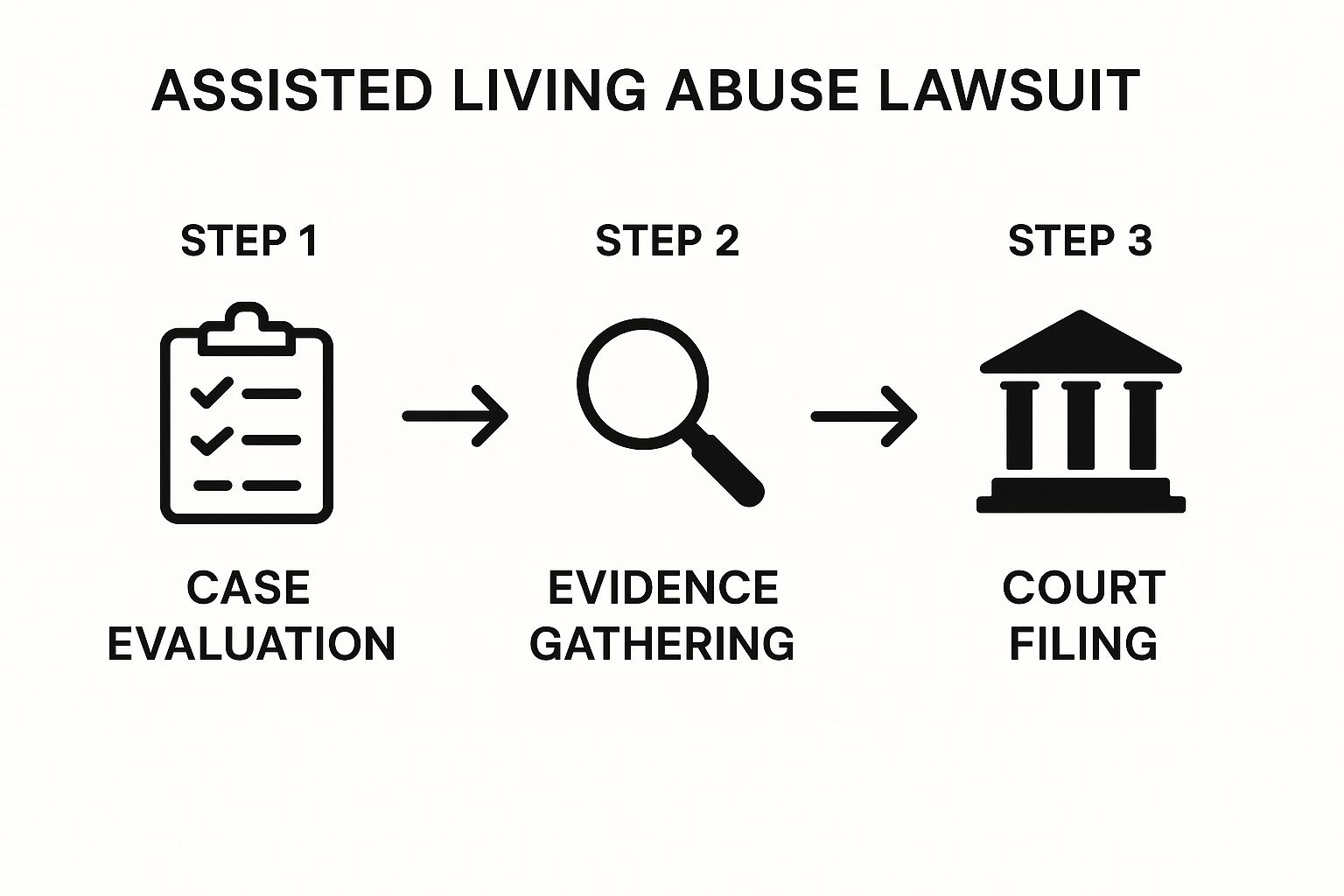
As you can see, it all starts with evaluating the situation. From there, your legal team focuses on gathering the proof needed to build a strong foundation before formally filing a lawsuit.
If you're worried that someone you care about is a victim of abuse or neglect, AskLegally is a resource that can connect you with a skilled lawyer. They can help investigate what happened and fight for the justice your family deserves. To find out more, visit https://asklegally.com.