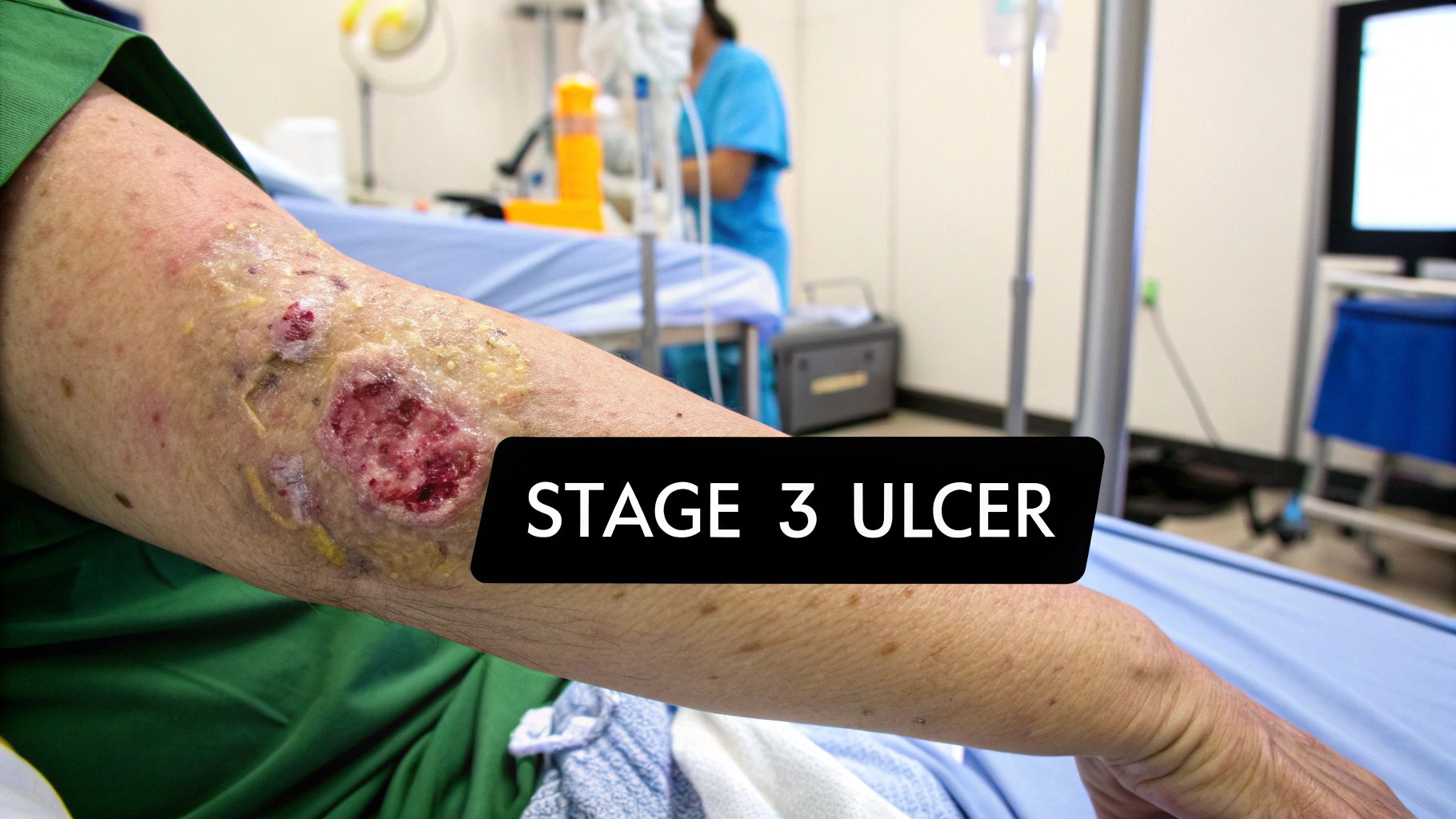
When a pressure ulcer reaches stage 3, it's no longer a surface-level issue. This is a deep, serious wound where the top layers of skin have been completely lost, exposing the fatty tissue underneath. We've moved far beyond a simple blister or red mark; a stage 3 ulcer is a visible, crater-like wound that demands immediate and skilled medical attention.
What a Stage 3 Pressure Ulcer Looks Like
Think of your skin in layers. You have the outer layer (epidermis) and the layer just beneath it (dermis). Below those is a layer of fat, also called subcutaneous tissue.
A stage 1 ulcer is just redness on that top layer. A stage 2 ulcer is a break, like a blister or shallow scrape. But a stage 3 pressure ulcer is a whole different story. The damage has burrowed all the way through the top two layers of skin, carving out a deep crater that stops at the yellowish layer of fat.
Telltale Signs of a Stage 3 Wound
These ulcers have a very distinct and concerning appearance. You’re not just looking at the skin's surface anymore; you're looking down into a deep wound.
Here’s what to look for inside that crater:
- Visible Fatty Tissue: The most definitive sign is seeing the yellowish subcutaneous fat at the bottom of the wound.
- A Deep Crater: The ulcer will look like a depression or a deep hole in the skin.
- Rolled Edges (Epibole): You might notice the wound's edges look thick and are curling inward. This is a sign that the body is trying, and failing, to heal across such a deep gap.
- Dead Tissue: The wound bed is often covered with gunk that gets in the way of healing. It might be a yellowish or tan stringy material called slough, or it could be covered by a patch of hard, leathery black or brown tissue called eschar.
Importantly, at this stage, you won't see any muscle, tendons, or bone. If those deeper structures are visible, the ulcer has progressed to stage 4. Sometimes, if there's too much slough or eschar, a doctor can't see how deep the wound truly is until it's been cleaned out.
A stage 3 pressure ulcer is a medical red flag. It shows that a significant amount of tissue has died and often points to a breakdown in preventative care. The risk of life-threatening infections like cellulitis, osteomyelitis (bone infection), and sepsis skyrockets.
This stage is a critical turning point. The wound has become a gateway for bacteria to invade deep into the body. Healing is now a long, complicated road that requires professional medical care, including things like debridement (removing dead tissue), specialized dressings, and a very aggressive plan to keep all pressure off the area.
Recognizing a stage 3 ulcer for what it truly is—a full-thickness wound—is the crucial first step. It’s the signal that you or your loved one needs urgent, comprehensive treatment to stop it from getting even worse.
How to Identify a Stage 3 Pressure Ulcer
Knowing what to look for with a Stage 3 pressure ulcer goes beyond a simple checklist. It's about recognizing the tell-tale signs of serious tissue damage. Unlike the more superficial Stage 2 wounds, a Stage 3 ulcer is a deep, open crater that has completely eaten through the top two layers of skin.
This is what we call full-thickness skin loss. The damage has gone all the way down into the subcutaneous fat layer lying just beneath the skin. The absolute giveaway for a Stage 3 ulcer is the visible presence of yellowish, fatty tissue at the base of the wound. If you see that, you're looking at a Stage 3.
This infographic breaks down some of the key factors that put people at a higher risk for developing these severe wounds.
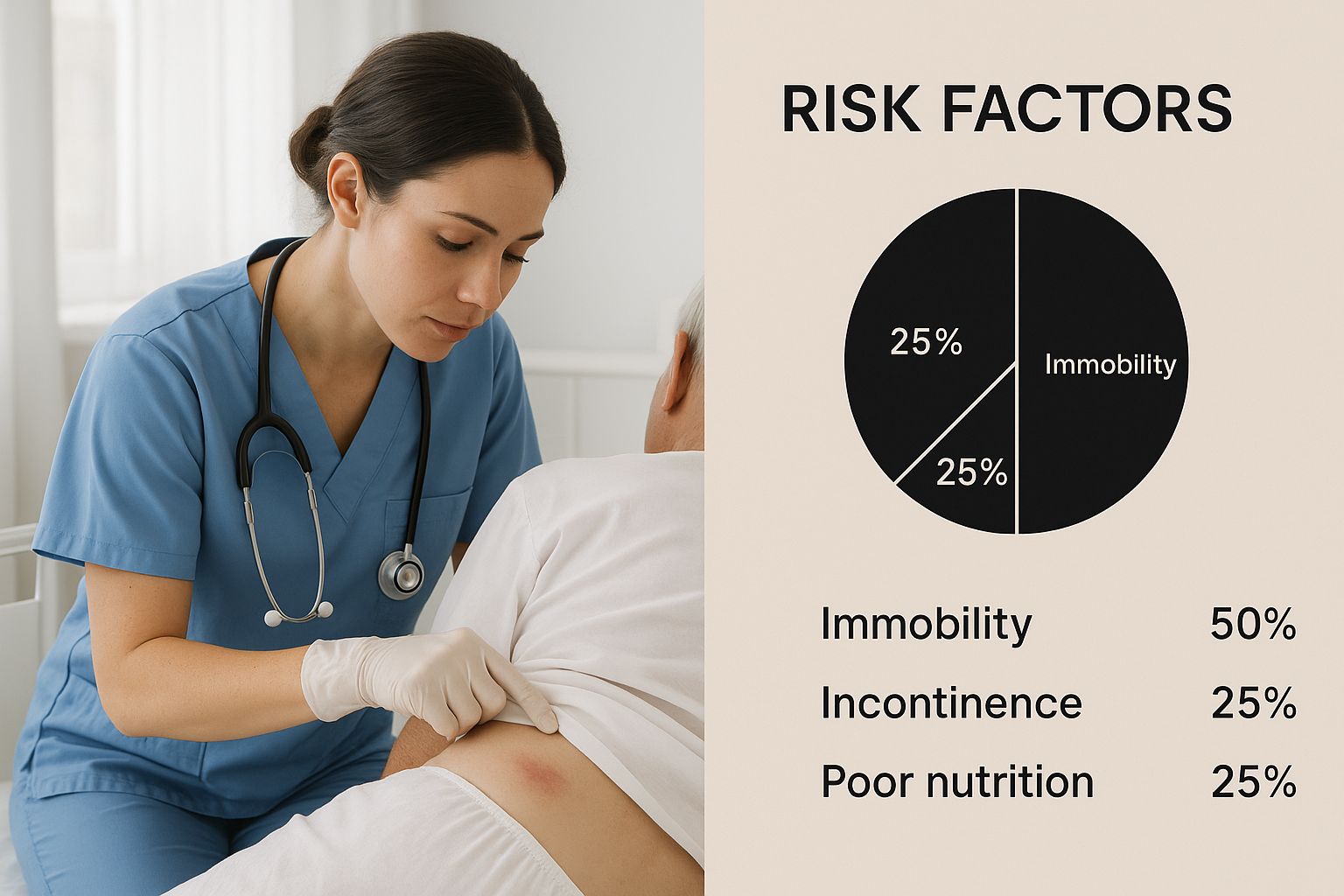
As the graphic shows, things like immobility and poor overall health are major contributors. This is why consistent, thorough skin checks are absolutely non-negotiable for anyone at risk, especially those in nursing homes or long-term care facilities.
Key Visual Characteristics
When you're examining a potential wound, you’re looking for a combination of signs. While every wound can look a little different, these are the common features of a Stage 3 pressure ulcer.
- A Deep Crater: The wound looks like an actual hole or depression in the skin. It’s not just a scrape or a blister.
- Visible Fatty Tissue: You may see a yellowish, almost granular-looking substance at the bottom of the crater. This is the adipose (fat) tissue, and it's the hallmark of a Stage 3 wound.
- Rolled Edges (Epibole): The wound's edges might look thickened and curled under. This is a sign that the body is struggling to heal and close such a deep, wide gap.
- Dead Tissue (Slough or Eschar): The wound bed might be covered by gunk that makes it hard to see the bottom. This could be slough, which is often yellowish, tan, and stringy, or eschar, a thick, leathery scab that can be brown or black.
A critical part of identifying a Stage 3 pressure ulcer is knowing what you shouldn't see. While you can see the fatty tissue, you should not see exposed muscle, tendon, or bone. The moment those deeper structures become visible, the ulcer has progressed to a much more dangerous Stage 4.
Distinguishing Between Pressure Ulcer Stages
Getting the stage right is absolutely crucial. It dictates the entire treatment plan and the urgency of the response. Mistaking a deep Stage 3 wound for a minor Stage 2 can lead to catastrophic delays in getting the right care.
To help you understand the differences, we’ve put together a quick comparison table. Knowing this can empower you to ask the right questions and be a more effective advocate for yourself or a loved one.
| Feature | Stage 1 | Stage 2 | Stage 3 | Stage 4 |
|---|---|---|---|---|
| Skin Integrity | Intact skin with non-blanchable redness. | Partial-thickness skin loss (like a blister or shallow crater). | Full-thickness skin loss down to the fat layer. | Full-thickness tissue loss with exposed deeper structures. |
| Visible Tissues | No open wound. Skin is unbroken. | The dermis (second skin layer) is visible. | Yellowish adipose (fat) tissue is often visible. | Muscle, tendon, and/or bone are directly visible or palpable. |
| Depth of Wound | No actual wound depth. | A shallow open ulcer with a red-pink wound bed. | A deep, crater-like appearance. | Extremely deep, often with visible bone or muscle at the base. |
| Undermining/Tunneling | Not present. | Not present. | May be present (tissue loss under the wound edge). | Frequently present and can be extensive. |
| Dead Tissue | Not present. | No slough or eschar. | Slough (yellowish) or eschar (black/brown) may be present. | Slough and eschar are often present, sometimes covering large parts of the wound. |
Understanding these distinctions is the first step in ensuring proper medical attention is not just received, but demanded. Each stage represents a significant jump in severity and requires a more aggressive and specialized approach to treatment.
Understanding Who Is Most at Risk
A stage 3 pressure ulcer doesn't just appear out of nowhere. Think of it as the result of a perfect storm—a combination of factors where the body's natural defenses are down and it's under constant, unrelenting pressure. Pinpointing who is most vulnerable is the absolute first step in preventing these devastating wounds.
Some people are simply at a much higher risk. This is usually due to circumstances that limit their movement, affect their overall health, or make their skin weaker. Recognizing these risk factors isn't about pointing fingers; it’s about identifying where we need to be extra vigilant with care.
Immobility and Constant Pressure
The biggest culprit, by far, is prolonged immobility. When someone can't shift their own weight, pressure builds up on bony areas like the tailbone, hips, heels, and even the elbows. This constant force is like stepping on a garden hose—it chokes off the blood supply.
Without fresh, oxygen-rich blood, the skin and the tissue underneath begin to starve. They start to die. For anyone who is bedridden or spends most of their day in a wheelchair, this pressure can be relentless. It turns vulnerable skin into a ticking time bomb for serious tissue breakdown.
This is exactly why regularly changing a person's position is a non-negotiable standard of care. Turning a patient at least every two hours gives that compressed tissue a chance to breathe and get blood flowing again. It's the most basic and critical defense against a stage 3 pressure ulcer.
The risk of developing pressure ulcers isn't just a local issue; it's a global health concern, particularly for aging populations. While the worldwide age-standardized prevalence has seen a slight decrease, the sheer number of cases is rising, having more than doubled from 300,442 in 1990 to 645,588 in 2021.
Compounding Health Factors
Beyond just being immobile, several other health issues can dramatically raise the risk of a wound developing and worsening. These conditions essentially handicap the body, making it less able to withstand pressure and heal itself properly.
- Poor Nutrition and Dehydration: Your skin is an organ, and just like any other organ, it needs fuel. Protein, vitamins, and plenty of water are essential to keep it strong. When someone is malnourished or dehydrated, their skin becomes thin, fragile, and tears far too easily.
- Medical Conditions: Illnesses that mess with blood flow, like diabetes and vascular disease, are major red flags. They make it harder for vital nutrients to even reach the skin in the first place. On top of that, conditions like diabetic neuropathy can reduce sensation, meaning a person might not even feel the pain from a sore that's starting to form.
- Incontinence: When skin is constantly exposed to moisture from urine or feces, its natural protective barrier breaks down. It becomes soft, waterlogged, and incredibly susceptible to damage from even minor pressure or friction.
Age and Fragile Skin
As we get older, our skin changes. It naturally gets thinner, loses its elasticity, and becomes much more fragile. That layer of fatty cushion we have under our skin also shrinks, leaving bones closer to the surface with less padding. This makes the elderly exceptionally vulnerable to pressure injuries.
A minor bump or a short fall that might just cause a bruise on a younger person can lead to a serious skin injury for an older adult. For residents in nursing homes, you often see a dangerous combination of age, immobility, and other health problems. This creates a high-stakes environment where proactive, preventative care isn't just a good idea—it's essential. This is why it is also important to learn more about preventing falls in nursing homes, as a fall can easily lead to extended bed rest, which drastically increases ulcer risk.
When you look at all these factors together, a clear picture emerges. Anyone who can't move freely, has poor circulation, isn't getting proper nutrition, or has naturally fragile skin is at high risk. Protecting them requires a hands-on, vigilant approach that tackles every single one of these vulnerabilities.
Effective Treatment and Management Strategies
Treating a stage 3 pressure ulcer isn't a passive process; it's an active, coordinated effort that demands a dedicated healthcare team. Unlike a minor cut that your body can often handle on its own, this deep wound has lost its ability to close without serious intervention. The whole goal is to create the perfect environment for the body to start rebuilding that lost tissue from the inside out.
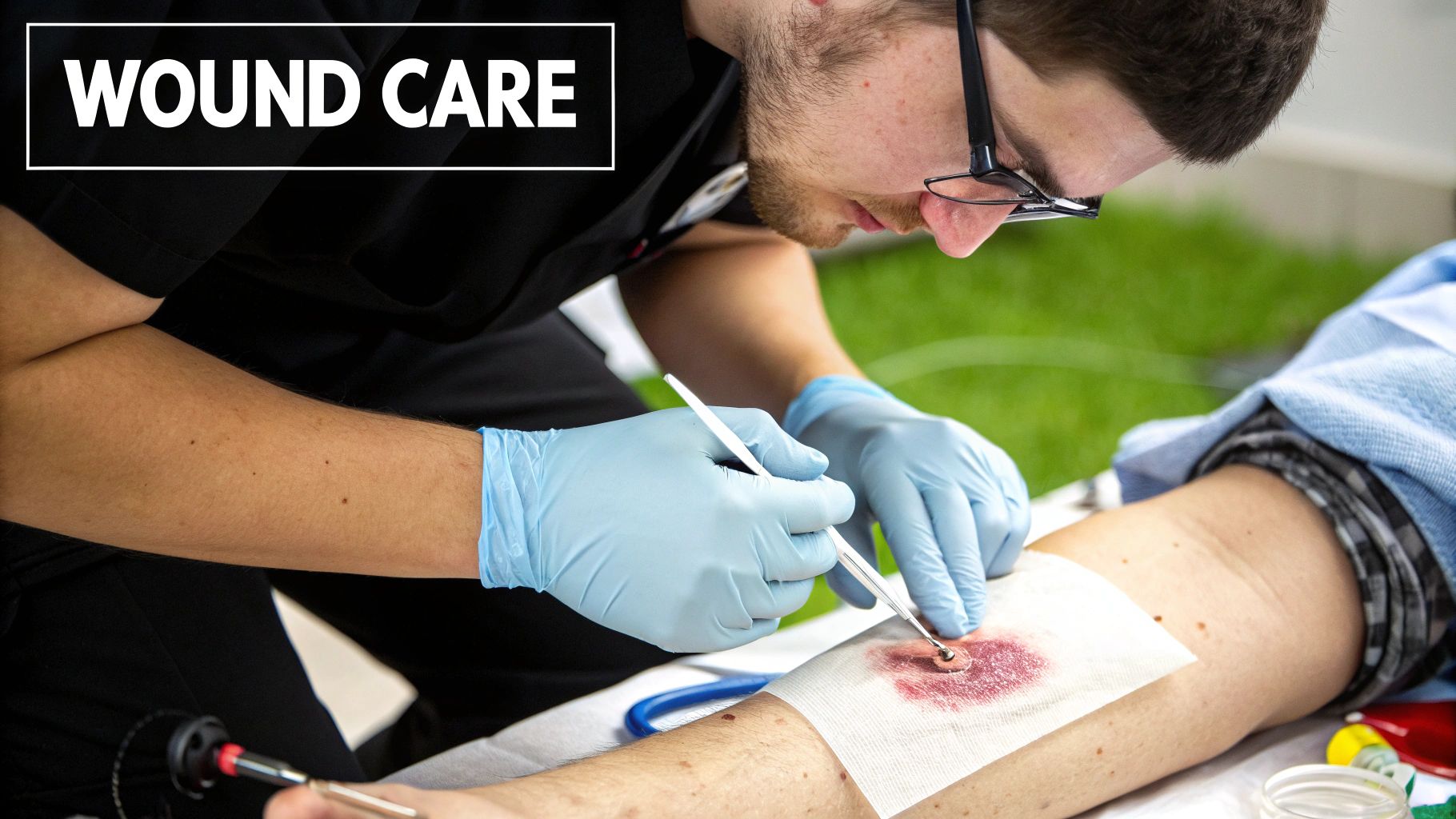
This isn't about just putting a bandage on it and hoping for the best. It's a multi-pronged attack that gets to the root cause of the wound while giving meticulous care to the damaged area itself. A solid plan is absolutely essential for healing and, more importantly, for preventing life-threatening complications down the road.
Relieving the Pressure
First things first: you absolutely have to get the pressure off the wound. This is the single most important step. If the force that created the sore in the first place isn't removed, healing is physically impossible.
Think of it like trying to patch a hole in a dam while water is still rushing against it. You have to stop the force before any repair will hold.
This means a strict and consistent repositioning schedule is non-negotiable. For a bed-bound individual, this usually means being turned at least every two hours. For someone in a wheelchair, those weight shifts need to happen even more frequently.
Specialized equipment is also a key part of the solution:
- Pressure-relieving mattresses: These aren't your standard mattresses. They can be made of advanced foam or contain air chambers that inflate and deflate on a cycle, constantly shifting the points of pressure on the body.
- Cushions and supports: Simple tools like pillows and foam wedges become incredibly important. They are used to completely "float" heels and other bony spots off the bed's surface, eliminating pressure entirely.
Cleaning and Preparing the Wound
Before any real healing can start, the wound bed has to be clean and free of dead tissue. A stage 3 ulcer often has slough (a yellowish, stringy gunk) or eschar (a hard, black, leathery scab) inside it. This dead material is a five-star hotel for bacteria and forms a physical barrier that stops new, healthy tissue from growing.
The process of removing all that dead tissue is called debridement. A doctor or a wound care specialist will look at the wound and choose the best approach.
| Debridement Method | Description |
|---|---|
| Surgical Debridement | A doctor uses a scalpel to quickly and precisely cut away the dead tissue. This is the go-to method for large wounds with a lot of tough eschar. |
| Enzymatic Debridement | A special prescribed ointment containing enzymes is applied directly to the wound. These enzymes are like tiny Pac-Men, working over time to dissolve and break down the dead tissue. |
| Autolytic Debridement | This method uses specialized, moisture-retaining dressings. It cleverly harnesses the body's own enzymes and moisture to naturally soften and liquefy the dead tissue so it can be gently washed away. |
| Mechanical Debridement | This involves physically removing debris. It can be done with things like pressurized saline irrigation. Older methods like wet-to-dry dressings are used much less often today because they can harm healthy tissue. |
Once the wound is debrided, it's cleaned gently with a saline solution. The goal is to wash away bacteria and loose debris without damaging the very delicate new tissue that's trying to form.
Managing Infection
An open, deep wound like a stage 3 ulcer is a wide-open door for bacteria to march right into the body. Preventing and managing infection is a huge priority. Caregivers are trained to be on high alert for the tell-tale signs: increased redness spreading around the wound, warmth to the touch, a foul odor, or pus-like drainage.
If an infection is suspected, it is a medical emergency. The bacteria can spread to the surrounding skin (cellulitis), dive deep into the bone (osteomyelitis), or get into the bloodstream (sepsis), which can be fatal. A doctor will almost always take a swab of the wound to find out exactly which bacteria is causing the problem and prescribe the right antibiotics to kill it.
Beyond just treating the wound, a big part of care is rigorous infection control. This helps reduce complications like secondary bacterial infections and includes strategies for preventing Methicillin-resistant Staphylococcus aureus (MRSA) infections.
Optimizing Nutrition for Healing
You can't build a house without bricks and mortar, and you can't heal a deep wound without the right nutrients. Proper nutrition isn't just a helpful suggestion; it's a critical part of the treatment plan. Healing a wound this severe demands a ton of energy and specific nutritional building blocks.
A dietitian is often brought onto the team to map out a diet that will supercharge tissue regeneration. This plan will almost always focus on:
- Increased Protein: This is essential for building new skin, blood vessels, and all the connective tissue needed to fill the wound.
- Vitamins and Minerals: Vitamin C, Vitamin A, and zinc are the superstars here. They are crucial for a strong immune response and for producing collagen, the "scaffolding" of new tissue.
- Adequate Hydration: Good old water is vital. It's the delivery truck that carries all those important nutrients to the wound site and keeps all skin healthy.
Without the right fuel, the body simply can't perform the complex, energy-intensive job of healing a stage 3 pressure ulcer, no matter how perfect the direct wound care is.
When a Stage 3 Ulcer Signals Neglect
Finding a Stage 3 pressure ulcer on someone you love is more than just upsetting—it's a serious red flag. It immediately makes you question the quality of care they're receiving. While it's true that some wounds are unavoidable in very frail individuals, a Stage 3 ulcer often points to a breakdown in fundamental care.
The core issue comes down to something called the standard of care. This isn't just a vague guideline; it's the established minimum level of attention and proactive treatment that any reasonable healthcare provider is expected to give. When a nursing home fails to meet this standard, a preventable wound can easily become a life-threatening one.
What is the Standard of Care?
Think of the standard of care as the essential playbook for keeping residents safe. It’s a set of specific, non-negotiable actions designed to prevent skin from breaking down in the first place, especially for those who are most vulnerable.
These duties are the absolute basics of proper care:
- Frequent Repositioning: Actively turning and moving residents at least every two hours to take the pressure off of sensitive areas like the heels, hips, and tailbone.
- Good Nutrition and Hydration: Making sure residents get enough to eat and drink. Healthy skin simply can’t be maintained without proper nutrients and hydration.
- Keeping Residents Clean and Dry: Providing prompt toileting and hygiene is critical. Skin that’s constantly exposed to moisture becomes weak and breaks down much faster.
- Regular Skin Checks: Performing thorough, documented skin assessments on a routine basis. This is how you catch a small red spot before it has a chance to turn into a deep, open wound.
A Stage 3 pressure ulcer doesn't just appear overnight. Its development often means that one or more of these basic, essential duties were neglected over a significant period.
Common Failures That Lead to Neglect
Negligence isn't always malicious. It often happens because a facility is understaffed, the employees lack proper training, or there are systemic problems. But for the resident suffering from the wound, the reason doesn't matter.
Here are some real-world examples of failures that can directly cause a Stage 3 ulcer:
- Ignoring the First Signs: A staff member notices a Stage 1 or 2 sore but fails to report it or take action, allowing it to get much worse.
- Skipping the Turning Schedule: A resident is supposed to be repositioned every two hours, but staff shortages mean they are left in the same position for half the day.
- Failing to Provide Nutritional Help: A resident who has trouble eating isn't given the dietary supplements or hands-on assistance they need to stay nourished.
- "Pencil-Whipping" the Charts: The documentation for repositioning and skin checks is filled out, but the care itself was never actually provided. Gaps or falsified records are a huge indicator of neglect.
Pressure ulcers are a persistent problem in healthcare. Even in the United States, the incidence rate was 116.2 per 100,000 people in 2017, which shows just how challenging prevention can be. You can see more data about pressure ulcer incidence rates on PMC.
If you believe a loved one’s Stage 3 ulcer is the result of poor care, you need to act. Start by documenting everything, request a meeting with the facility’s management, and know your rights. For a step-by-step guide, learn how to report nursing home neglect in our dedicated article. Your voice is your loved one's best line of defense.
Why Documentation Is Crucial for Care and Legal Action
In healthcare, there's a saying: if it wasn't documented, it didn't happen. This couldn't be more true when it comes to a stage 3 pressure ulcer. Meticulous records are not just a clinical tool; they are a legal shield.
Think of the patient's chart as the wound's official story. It’s a detailed, ongoing narrative that tracks every change, guides treatment, and paints a clear picture of the care being provided. For families, this record is the key to holding a facility accountable.
But this story isn't just about jotting down a few notes. It demands specific, consistent data to be truly effective. Good documentation acts as a roadmap for the entire care team, making sure everyone is on the same page and working toward the same goal.
Building the Case with Clear Records
When we talk about documenting a stage 3 pressure ulcer, we're not talking about a simple checklist. We’re talking about gathering precise evidence that either validates the quality of care or exposes serious failures.
Here’s what that looks like in practice:
- Precise Wound Measurements: Staff must regularly record the ulcer's length, width, and depth. This is how you track whether it's healing, staying the same, or getting worse.
- Detailed Wound Bed Descriptions: The notes should describe the color of the tissue, the presence of dead tissue (slough or eschar), and any signs of healthy new granulation tissue.
- Regular Photographs: Dated photos are undeniable proof. They create a visual timeline that words alone can't capture, showing the wound's real condition over time.
- A Log of All Treatments: Every single dressing change, cleaning, debridement procedure, and medication application needs to be recorded with a date and time.
- Records of Repositioning: The chart must show that a consistent turning and repositioning schedule was actually followed to relieve pressure on the wound.
This detailed log is vital for making smart clinical decisions. If a wound isn't improving, the documented history helps the medical team figure out if a different treatment or dressing is needed. Exploring the benefits of medical voice charting shows how technology can help capture these critical details more efficiently.
Documentation as a Legal Safeguard
When neglect is on the table, the patient’s chart becomes the single most important piece of evidence. A well-kept record can protect a facility that provided excellent care. On the other hand, sparse, inconsistent, or missing documentation is a massive red flag.
In legal terms, an absence of documentation often implies an absence of care. It strongly suggests that critical tasks like repositioning, wound cleaning, or regular skin checks simply weren't done.
This is why it's so important for families to understand what to look for in these records. Pressure ulcers are a huge global problem. In 2021, the worldwide prevalence was estimated at 645,588 cases, with the burden of disability totaling over 803,000 person-years. These numbers show just how widespread this issue is and why accountability matters.
Inconsistent entries or records that look like they've been altered can become the cornerstone of a successful legal claim. If you believe a loved one's stage 3 pressure ulcer is the result of poor care, a lawyer’s first step will be to demand these records. You can learn more about the process by reading about what a nursing home negligence lawsuit entails.
Ultimately, thorough documentation creates an undeniable record of care, protecting both the patient who needs it and the provider who delivers it properly.
Your Questions Answered: Navigating a Stage 3 Pressure Ulcer Diagnosis
When a loved one develops a stage 3 pressure ulcer, it's natural to feel overwhelmed and have a lot of questions. We’ve compiled answers to the most common concerns families face, giving you a clearer picture of what to expect.
How Long Does It Take for a Stage 3 Pressure Ulcer to Heal?
There's no single timeline, but you're typically looking at a long road—anywhere from one to four months, and sometimes even longer. The healing process is a marathon, not a sprint, and it’s heavily influenced by the person's overall condition. Things like diabetes or poor circulation can really slow things down.
A few factors have a massive impact on recovery speed:
- Proper Nutrition: The body needs fuel to rebuild itself. A diet rich in protein and vitamins is absolutely critical for tissue repair.
- Dedicated Care: This is non-negotiable. Consistent, round-the-clock pressure relief and expert wound care are the cornerstones of healing.
- Underlying Health: A person's general health and age play a huge part in how effectively their body can mend such a deep wound.
Without a solid care plan that tackles all of these elements, the healing of a stage 3 pressure ulcer will unfortunately stall or even go backward.
Can a Stage 3 Pressure Ulcer Heal on Its Own?
No, it absolutely cannot. A stage 3 ulcer isn't just a surface wound; it's a deep crater where the skin and underlying tissue are gone. At this point, the body has lost its ability to close the gap without significant medical help.
Thinking a stage 3 pressure ulcer will simply get better with time is a dangerous mistake. An untreated wound will inevitably get worse, digging deeper until it becomes a stage 4 ulcer and opening the door to life-threatening complications.
Treating these wounds isn't just a good idea—it's a medical emergency. A comprehensive plan is required, including professional wound cleaning, removing dead tissue (debridement), using specialized dressings, and ensuring the patient is never putting pressure on the area.
What Are the Most Dangerous Complications?
The biggest and most immediate threat is infection. A stage 3 ulcer is a wide-open door for bacteria to enter the body, which can trigger a cascade of serious medical problems.
- Cellulitis: This is a bacterial infection that spreads into the surrounding skin, causing redness, swelling, and severe pain.
- Osteomyelitis: This is when the infection gets so deep it reaches the bone, which is incredibly difficult to treat.
- Sepsis: This is the worst-case scenario. The infection spills into the bloodstream, causing a massive, body-wide inflammatory reaction that can quickly lead to organ failure and death.
Sepsis is the most critical risk from a deep, poorly managed pressure ulcer and requires immediate, aggressive medical intervention.
If you're worried that a loved one's pressure ulcer is the result of poor care, AskLegally can help you understand your legal options. We connect families with experienced lawyers who can investigate potential nursing home neglect and fight for the safety and dignity your family member deserves. Learn more about your rights.