Find Nursing Home Negligence Attorneys Near Me
It’s a horrible, sinking feeling—that moment you visit a loved one in a nursing home and something just feels off. Your gut tells you they aren't being treated right, and that suspicion can quickly turn into anger and confusion. Trusting that instinct is the first, most important step.
This is often when people start searching for nursing home negligence attorneys near me, not just as a reaction, but as a proactive way to protect someone they care about.
Recognizing the Signs of Nursing Home Negligence
When we think of nursing home negligence, we often picture obvious physical abuse. But the reality is that it's frequently much more subtle. Neglect, emotional abuse, and even financial exploitation can fly under the radar unless you know what to look for.
Your intuition is a powerful tool. You know your family member best, so if you notice changes, pay close attention.
What to Watch For
The warning signs aren't always dramatic, but they paint a clear picture when you put them together.
- Unexplained Physical Changes: Are they suddenly losing a lot of weight? Do they have frequent infections? The appearance of bedsores (also called pressure ulcers) is a major red flag, often indicating they aren't being moved or repositioned as they should be.
- Shifts in Behavior: Has your outgoing parent become withdrawn and quiet? Do they seem unusually anxious or fearful, especially around certain staff members? These can be tell-tale signs of emotional or verbal mistreatment.
- Poor Hygiene and Unsanitary Conditions: A noticeable decline in personal grooming, dirty clothes, soiled bedding, or a messy room are often direct signs of neglect. It means basic needs are being ignored, likely due to an understaffed or poorly managed facility.
These aren't just minor oversights; they are serious failures in the standard of care your loved one deserves. The statistics are truly sobering: around 44% of residents have reported being abused, and an astonishing 95% say they've either been neglected themselves or have seen another resident being neglected.
Worse yet, it's a silent crisis. Only about 1 in 24 cases of abuse are ever officially reported. One key to improving this is facilities seriously committing to implementing evidence-based practice, which helps standardize and elevate the quality of care.
Taking action is critical. Once you've identified potential signs of mistreatment, understanding how to report nursing home abuse is the immediate next step in protecting your loved one and holding the facility accountable for its failures.
Finding the Right Local Attorney for Your Case
When you suspect a loved one is being mistreated, the last thing you need is the added stress of finding a good lawyer. Just typing "nursing home negligence attorneys near me" into a search engine is a start, but it often brings up the firms with the biggest marketing budgets, not necessarily the most qualified specialists. A little strategy goes a long way.
I always recommend starting with your state's official bar association website. They all have a lawyer directory you can search, letting you filter by specific practice areas like elder law or personal injury. This is your first quality check—it confirms you’re looking at licensed attorneys in good standing.
Cast a Wider Net with Reputable Legal Directories
Once you've checked the state bar, it's time to dig a little deeper using some well-respected online legal directories. These platforms are built to help people like you find proven legal experts.
Here are a few I consistently trust:
- Avvo: A great resource for seeing the full picture. It pulls together client reviews, ratings, and even public disciplinary records.
- Martindale-Hubbell: This is the old-school, gold-standard directory. It’s known for its peer-review ratings, meaning lawyers are rated by other lawyers—a huge indicator of respect and skill.
- Super Lawyers: This service has a rigorous selection process to identify top attorneys, offering a curated list of professionals who have been thoroughly vetted.
The trick to using these sites effectively is in the filters. Don't just look for a general "personal injury" lawyer. You need to narrow your search to attorneys who specifically list "nursing home abuse" or "elder neglect" as a core part of their practice. That focus is what makes all the difference. If you want to dive even deeper, our ultimate guide to choosing a legal partner breaks down the entire process.
A quick tip from my experience: Don't forget about personal referrals. People on the front lines—like your loved one’s doctor, a hospital social worker, or a local elder care ombudsman—often know exactly which attorneys have a strong reputation for handling these specific cases.
By combining these different search methods, you’ll build a much stronger list of candidates—one based on credentials, peer respect, and real-world results. This approach helps ensure you find a true advocate who can fight for your family.
What to Look for When Vetting Attorneys
Okay, you've got a list of potential attorneys. Now comes the crucial part: digging in to see who really has the chops to handle your case. Let me be clear—not all personal injury lawyers are the right fit for a nursing home negligence claim. These cases are a different beast entirely.
The laws around elder care are incredibly complex and specific. You don't want a jack-of-all-trades who handles car wrecks on Monday and slip-and-falls on Tuesday. You need a specialist, someone who lives and breathes this area of the law.
An attorney who focuses on nursing home cases will know the Illinois Nursing Home Care Act backward and forward. More importantly, they’ll have a network of medical experts ready to go—professionals who can authoritatively speak to the proper standards of care. Their focused experience is your advantage; they know precisely what evidence to hunt for and can anticipate the tactics the nursing home's defense team will throw at you.
Proven Track Record and Client Experiences
Think of a law firm's website as their professional portfolio, not just a digital business card. Your first stop should be their case results or settlements page. Are they proudly displaying wins specifically in nursing home abuse and neglect cases? While no two cases are the same, a history of successful outcomes in situations like yours is a powerful indicator of their competence.
But don't stop at the numbers. Take the time to read through client testimonials. What are people really saying? Do words like "compassionate," "responsive," and "supportive" pop up? You're not just hiring a legal technician; you're entrusting someone with a deeply personal and emotionally taxing fight. You need an advocate who gets it.
This visual shows how recognizing the problem is just the first step on the path to getting qualified legal help.
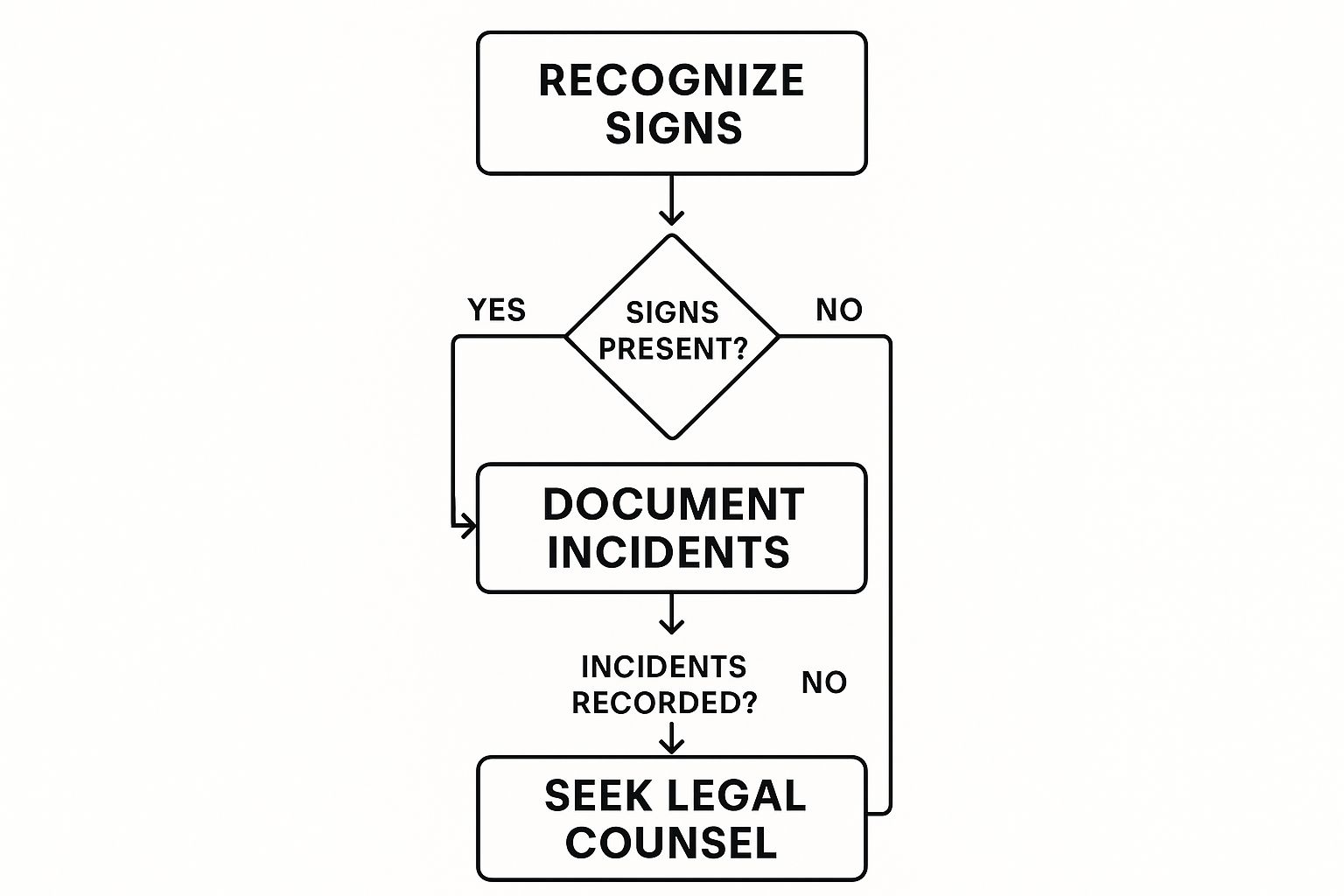
As you can see, seeking legal counsel isn't just an option; it's a direct and necessary follow-up once you've recognized and started documenting the signs of neglect.
Fee Structure and Firm Resources
Worries about cost should never stop you from seeking justice for a loved one. The good news is, nearly every reputable nursing home negligence attorney operates on a contingency fee basis. Make sure to confirm this right away.
What is a contingency fee? It’s simple: you pay zero upfront costs. The lawyer’s fee is a percentage of the final settlement or verdict they secure for you. If they don't win your case, you owe them nothing for their time and effort.
This arrangement is fantastic because it puts you and your attorney on the same team—their success is directly tied to your success.
Finally, don't be afraid to ask about the firm's muscle. Do they have a dedicated team of paralegals and investigators? Do they have the financial resources and expert connections to go toe-to-toe with massive nursing home chains and their insurance companies? A well-equipped firm has the stamina and firepower to ensure your case isn't just heard, but fought for relentlessly.
Your initial consultation is the perfect time to get these answers. Going in prepared with a list of questions will help you make a confident, informed decision.
Key Questions for Your Attorney Consultation
This table outlines the essential questions you should ask any attorney you're considering. It's your interview, so don't be shy about getting the details you need to feel comfortable.
| Question Category | Specific Questions to Ask | Why It's Important |
|---|---|---|
| Experience & Specialization | How many nursing home negligence cases have you personally handled? What percentage of your practice is dedicated to this area? | You need a specialist, not a generalist. This confirms their focus and depth of experience in this unique legal field. |
| Case History & Results | Can you share some examples of recent settlements or verdicts in cases similar to mine? What is your trial record like? | This demonstrates their track record of success and their willingness to take a case to court if a fair settlement isn't offered. |
| Your Case Strategy | Based on what I've told you, what are your initial thoughts on my case? What are the potential strengths and weaknesses? | This gives you insight into their analytical process and helps set realistic expectations from the beginning. |
| Communication & Process | Who will be my primary point of contact? How often can I expect to receive updates on my case? | Establishes clear communication protocols and ensures you know who to call with questions, preventing frustration later on. |
| Fees & Costs | Do you work on a contingency fee basis? What percentage do you charge? Are there any other costs I might be responsible for? | Provides complete financial transparency and ensures there are no hidden fees or surprises down the road. |
Having these questions handy will empower you to compare different attorneys effectively and choose the one who is truly the best fit to fight for your family.
The Critical Link Between Staffing and Neglect
If you talk to an experienced attorney, they’ll tell you something that might be surprising: a huge number of negligence cases boil down to one core problem—inadequate staffing. When a nursing home is chronically understaffed, filled with undertrained workers, or constantly dealing with high turnover, it creates a perfect storm for neglect. It's rarely about one bad apple; it’s about a system that's been stretched to its breaking point.

Think about it in real-world terms. A resident might develop life-threatening bedsores, not because a nurse maliciously harmed them, but because there's only one Certified Nursing Assistant (CNA) assigned to an entire floor. That CNA is so buried in basic tasks—like getting residents fed and handing out medication—that they simply can't keep up with the strict repositioning schedule needed to prevent pressure ulcers.
This isn’t just a rare, unfortunate story. It's happening everywhere. In fact, 84% of nursing homes have reported shortages of resident care staff, and an unbelievable 96% are struggling to hire new people. The burnout is real, and it has devastating consequences. A shocking study found that around 66% of staff admitted to some form of elder abuse in the past year, often driven by sheer stress. You can dig deeper into the data on staffing impacts in nursing homes on TheSeniorList.com.
How Staffing Failures Build a Legal Case
Grasping this connection is absolutely crucial when you start talking to attorneys. It changes the narrative from an unavoidable "accident" to a predictable consequence of the facility's management decisions. A good lawyer knows exactly how to connect those dots and will immediately start looking for evidence of systemic failure.
They’ll want to get their hands on key documents, including:
- Internal Staffing Records: These show the actual staff-to-resident ratios on any given shift, often painting a clear picture of chronic understaffing.
- Employee Time Sheets: This is where you can find proof of staff working dangerously long shifts without the breaks they need to stay sharp.
- Hiring and Training Policies: A deep dive here can reveal whether the facility cut corners by hiring unqualified staff or failed to provide critical training on resident care.
When you can prove that a facility put profits ahead of people by cutting staff, your case for negligence becomes incredibly strong. It exposes a pattern of choices that knowingly put your loved one in danger.
Pursuing Financial and Sexual Abuse Claims
When it comes to the safety of our loved ones in long-term care, few things are as horrifying as financial and sexual abuse. These are deeply personal violations, often hidden in plain sight, and they require a special kind of legal expertise to handle correctly. If you even suspect this is happening, your priority is to get your family member to safety first, then immediately find an attorney who understands the nuances of these sensitive cases.

Unlike a fall or a bedsore, the evidence here isn't always obvious. Victims are often too scared, confused, or embarrassed to say anything, which means it’s up to you to spot the warning signs.
Identifying the Red Flags
Financial exploitation can be a slow burn. A caregiver might start by "borrowing" a few dollars and escalate from there, so you have to be vigilant.
Keep an eye out for these subtle indicators:
- Strange withdrawals or transfers from bank accounts.
- Sudden changes to legal documents like a will or power of attorney.
- New credit cards or loans taken out in your loved one's name.
- Valuable personal items, like jewelry or even a checkbook, mysteriously disappearing.
Detecting sexual abuse is even more challenging and requires incredible sensitivity. A resident might suddenly become withdrawn, show intense fear around a particular staff member, or have unexplained genital injuries or infections.
The numbers are heartbreaking. In 2023, there were 3,199 official complaints of financial exploitation and 1,862 reports of sexual abuse in nursing homes. What’s truly shocking is that only 130 of those sexual abuse cases were ever passed on to law enforcement, revealing a huge gap in protecting residents. You can dig deeper into these nursing home abuse statistics.
In these situations, you need more than just a lawyer; you need a dedicated advocate. The right nursing home negligence attorneys in your area will know how to carefully gather proof, protect your loved one’s dignity, and fight fiercely to get the justice your family deserves.
Common Questions About Nursing Home Lawsuits
It's completely normal to feel overwhelmed with questions when you're thinking about taking legal action against a nursing home. The whole legal world can feel confusing, but getting a handle on a few key issues can make the path forward much clearer.
People often ask me, "How long will this take?" There's no single answer, of course. A straightforward case might settle in a matter of months. But if the case is more complicated and has to go to trial, you could be looking at a year or more. A good lawyer will be able to give you a realistic timeline once they dig into the details of your situation.
Another big question is about compensation. What can you actually recover? A successful claim can cover a lot, from medical bills and rehabilitation costs to compensation for the pain and suffering your loved one endured. For a deeper dive into what a settlement or verdict might include, check out our guide on a typical nursing home negligence lawsuit.
Addressing Retaliation and Case Details
One of the most pressing fears I hear from families is the worry that the nursing home will retaliate against their loved one. This is a valid concern, but you should know that state and federal laws strictly prohibit this. Any hint of retaliation opens the facility up to even more legal trouble. Your attorney's first move will be to put the facility on notice and ensure your family member is protected.
Filing a lawsuit is a powerful protective measure. It sends a clear signal that you are watching them and that any further mistreatment will be met with serious consequences. Your loved one’s well-being is always the top priority.
It’s also helpful to know that the way lawsuits work has changed. Many parts of the process, like depositions, are often handled remotely now. Technology has made it possible for lawyers to be securing virtual depositions with end-to-end encryption, which keeps sensitive information and testimony completely confidential.
Ultimately, finding the right "nursing home negligence attorneys near me" is about finding a true partner—someone who can answer these tough questions and walk you through every step with both compassion and strength.
At AskLegally, our mission is to help families through these incredibly difficult times. We connect you with experienced nursing home abuse lawyers who can investigate your claim and fight for the justice your loved one deserves. Learn more at https://asklegally.com.
Article created using Outrank