Preventing Falls in Nursing Homes: Essential Safety Tips
Preventing falls in a nursing home setting isn't a one-size-fits-all task. It requires a thoughtful blend of individual risk assessments, smart environmental safety changes, and ongoing, proactive staff training. This isn't just about avoiding accidents; it's about tackling a significant health crisis in long-term care with a robust, well-rounded strategy.
Why Fall Prevention in Nursing Homes Is So Critical
For a resident in long-term care, a fall is rarely just a momentary mishap. It’s often the start of a devastating chain reaction.
A single fall can easily lead to a serious injury like a hip fracture or head trauma. This often means a hospital stay, a sharp decline in mobility, and a profound loss of independence. Just as damaging is the fear of falling again, which can become a constant source of anxiety. This fear often causes residents to limit their own activities and social interactions, creating a vicious cycle where their reduced mobility actually increases the risk of another fall.
The impact doesn't stop with the resident. For the nursing home itself, a high rate of falls drains resources, drives up operational costs, and can seriously tarnish its reputation. It’s a red flag that fundamental safety systems might need a serious overhaul.
Building a Proactive Fall Prevention Plan
A truly effective strategy for preventing falls in nursing homes is built on several key pillars. Think of it less as a checklist and more as a protective web woven around every single resident. When these elements work together, they create a culture of safety that everyone contributes to.
Here’s what that foundation looks like:
- Tailored Resident Risk Assessments: This means going beyond generic forms. A real assessment digs into why a specific resident is at risk, looking at everything from their current medications and gait to their cognitive state.
- A Safer Physical Environment: You have to actively scan for and remove hazards. This could be as simple as improving the lighting in a hallway or as crucial as ensuring all pathways are completely clear of clutter.
- Empowered Staff and a Culture of Safety: Every team member, from nurses to housekeeping, needs to be trained to spot risks and know how to respond. The goal is to build a culture where safety is a shared, constant responsibility, not just one person's job.
- Engaging Residents and Their Families: The best plans involve everyone. Bringing families and residents into the conversation helps them understand the risks and the specific steps being taken to keep them safe.
The numbers are sobering: 30-50% of people living in long-term care facilities will fall each year. Even more concerning, a staggering 40% of them will fall more than once. This makes fall prevention one of the most urgent challenges we face in senior care. You can dive deeper into the data in this global report on falls prevention.
In the end, a proactive fall prevention strategy isn't just about meeting regulations or avoiding liability. It’s about preserving dignity, enhancing quality of life, and delivering on the fundamental promise to provide a safe, caring home for our most vulnerable adults.
Let's break down these foundational elements into a clear framework.
Core Pillars of Fall Prevention in Nursing Homes
| Pillar | Key Focus | Primary Goal |
|---|---|---|
| Individualized Assessment | Comprehensive evaluation of each resident's unique medical, functional, and cognitive risk factors. | To create a personalized care plan that directly addresses the specific reasons a resident might fall. |
| Environmental Safety | Proactive identification and modification of physical hazards within the facility. | To engineer a living space that minimizes trip-and-fall risks and supports safe mobility. |
| Staff Education & Culture | Continuous training and empowerment of all staff members to recognize and respond to fall risks. | To embed safety as a core value and shared responsibility across all departments and shifts. |
| Family & Resident Engagement | Collaborative communication and involvement of residents and their families in the prevention plan. | To foster a partnership that ensures everyone understands the plan and contributes to its success. |
By consistently focusing on these four pillars, a nursing home can move from a reactive approach to a truly preventative one, creating a safer environment for everyone.
Conducting Meaningful Fall Risk Assessments
To truly get ahead of falls, you have to dig deeper than a surface-level checklist. It all starts with a genuine, individualized understanding of each resident's vulnerabilities. A generic form just won't do the job. A meaningful assessment is about uncovering the why behind a person's risk, which gives you a clear roadmap for their care.
This means looking at more than just their age or primary diagnosis. You need a sharp eye for their complete medical history, a hands-on feel for their mobility and balance, and a clear understanding of their cognitive state. Every little detail is a piece of the puzzle.
For example, a resident might have well-managed diabetes, but what about neuropathy in their feet? That numbness can make it incredibly hard to feel the floor, sending their fall risk through the roof. Or think about a new prescription for a sleep aid—it might solve the problem of sleepless nights but create a new one with next-day drowsiness.
Beyond the Obvious Risk Factors
A really solid assessment connects the dots. It’s about seeing the whole person, not just a collection of symptoms.
Here are the key areas I always scrutinize:
- Medication Review: Don't just flag one or two high-risk drugs. The real danger is often polypharmacy—when a resident is on four or more medications. Antidepressants, antipsychotics, and even certain blood pressure meds can bring on dizziness or orthostatic hypotension, which is that head rush you get when standing up too fast.
- Vision and Hearing: Simple things matter. Are their glasses clean? Is the prescription up to date? Bifocals can be a real trip hazard on stairs because they distort depth perception. Hearing loss isn't just about sound, either; it can throw off balance and a person's awareness of what's happening around them.
- Cognitive Status: Confusion or agitation, which we often see with dementia, can lead to sudden, impulsive movements. A resident who doesn't recognize a hazard or constantly tries to get up alone needs a completely different prevention strategy than someone who is simply physically frail.
- Nutrition and Hydration: Dehydration is one of the most common—and overlooked—causes of weakness and dizziness. In the same way, poor nutrition leads to muscle loss, making it tougher for a resident to keep their balance or catch themselves if they start to stumble.
"Whatever role you have; if you're a nursing assistant, or an LPN, or nurses, or therapists, all that are taking care of residents, you should know what those individual risk factors are, not just that they're a high fall risk."
A safe environment is the foundation of any good fall prevention plan, as this graphic shows.
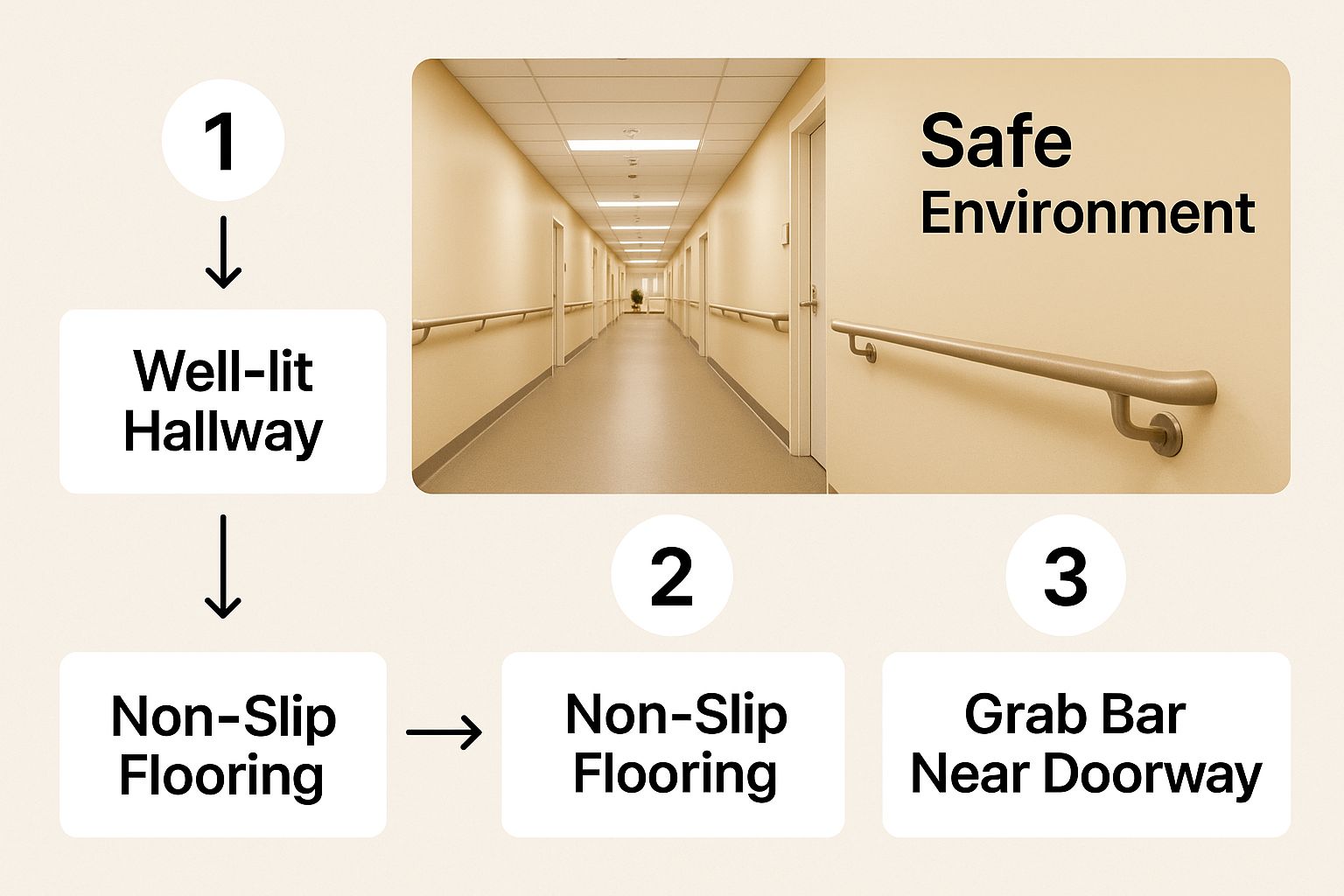
It’s a great reminder that things like good lighting and sturdy grab bars are just as important as the direct care we provide.
Turning Assessments into Action
The whole point of these in-depth assessments is to build a care plan that can change and adapt. Preventing falls is never a "set it and forget it" task; it's a constant cycle of observing and adjusting. The numbers are stark: nursing homes see an average of 1.5 falls per bed annually.
This is where the real work begins. One of the most powerful tools we have is effective near miss incident reporting. These reports are gold because they give you early warnings and hard data, letting you fix a potential problem before it causes an actual fall.
When a caregiver catches a resident as they stumble or notices a newly unsteady gait, that's a near miss. Documenting it immediately gives the team the information needed to reassess. Instead of waiting for an injury, you can act now—maybe that means bringing in physical therapy, taking another look at their medications, or adding a new assistive device. It’s about being proactive, not reactive.
Designing a Safer Living Environment
A resident's physical surroundings can either be their greatest ally in staying independent or a minefield of hidden hazards. When it comes to preventing falls in nursing homes, transforming a facility into a safer space is one of the most practical things we can do. It's about looking at every corner through a resident's eyes and engineering safety right into the structure of their daily lives.
This isn't about one big, expensive overhaul. It starts by tackling the most common environmental risks. Small changes and consistent good habits, when applied across the entire facility, really do add up. The goal is to create a living space that is as free of accident hazards as possible—a fundamental part of our duty of care.
Optimizing Lighting and Flooring
You can’t avoid what you can’t see. It sounds obvious, but poor visibility is a direct cause of so many falls. Many older adults are dealing with age-related vision changes, making it tough to spot a stray cord or judge the height of a step in a dimly lit hallway.
Start by boosting the ambient lighting, especially in high-traffic zones like corridors and common rooms. Then, make sure the task lighting in resident rooms is bright and easy to access, particularly by the bed and in chairs where they read or work on hobbies. And nightlights? They're non-negotiable. A simple, illuminated path from the bed to the bathroom at 2 a.m. is a powerful fall prevention tool.
Flooring is the other half of this equation. While a soft carpet might seem like a good idea to cushion a fall, it can be a real problem if it's worn, buckled, or frayed. On the other hand, hard surfaces need to be non-glare and have a non-slip finish. This is especially true in bathrooms and dining areas where spills are just a part of daily life.
A simple environmental audit can reveal dozens of overlooked risks. Schedule a weekly walk-through with a multidisciplinary team—get nursing, maintenance, and therapy staff involved. This lets you proactively spot and fix hazards before they cause an incident.
Creating Clear and Supportive Pathways
Clutter is the enemy of safe mobility. Every pathway, whether in a resident's room, a main hallway, or a lounge, needs to be wide and completely unobstructed. Free of unnecessary furniture, equipment, or personal items. This is absolutely critical for residents who rely on walkers or wheelchairs to get around.
Just as important is the strategic placement of support structures. Handrails should be installed on both sides of all hallways and stairwells. They need to be sturdy, easy to grip, and continuous, giving residents an uninterrupted source of support.
Here are a few room-specific modifications that should be at the top of your list:
- Bathrooms: Install grab bars next to the toilet and inside the shower. Raised toilet seats can make a huge difference, as can non-slip mats in tubs and on shower floors.
- Bedrooms: Adjust the bed height. When a resident sits on the edge of the bed, their feet should be able to rest flat on the floor. Also, make sure essential items like glasses, water, or the call bell are always within easy reach.
- Common Areas: Arrange the furniture to create clear, direct routes from one area to another. Steer clear of low-lying coffee tables or decorative items that are easy to miss and even easier to trip over.
Focusing on Personal Safety Elements
Environmental safety doesn't stop at the walls and floors; it extends to the items a resident interacts with every single day. One of the most common culprits in a stumble is ill-fitting shoes or slippers. Footwear needs to be supportive, have a non-slip sole, and fit securely. Say goodbye to backless slippers.
By the same token, assistive devices like canes and walkers must be properly sized for each resident. A walker that's set too high or too low can completely throw off someone's balance, actually increasing their fall risk. Regular checks by physical therapy staff are the best way to ensure this equipment remains a help, not a hindrance. It's also vital to understand the legal standards surrounding these modifications; you can find more information about general nursing home safety on our resource pages.
Building a Proactive Care and Training Culture
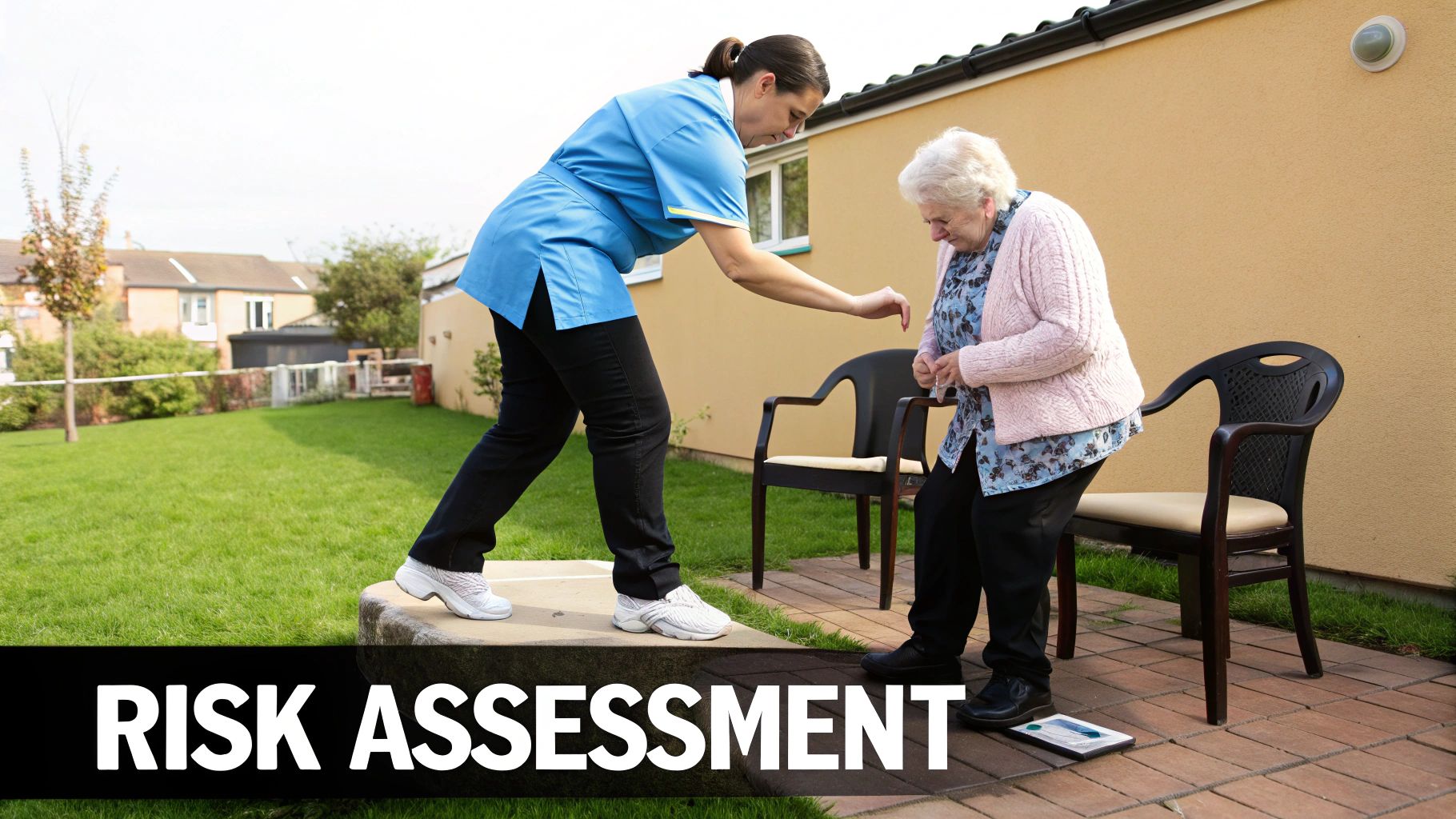
You can make the physical environment as safe as possible, but that’s only half the battle. When it comes to preventing falls in nursing homes, your most powerful asset is a well-trained, observant, and empowered team. Every single person on staff—from the CNAs and nurses to the housekeeping and dietary teams—has a direct hand in keeping residents safe.
This all starts with shifting away from a reactive mindset. A true culture of safety isn't just about documenting what happened after a fall. It's about creating an atmosphere where potential risks are spotted and communicated long before an incident can even occur. Everyone needs to feel both responsible for and confident in their ability to flag a potential hazard.
Essential Training for Proactive Care
Consistent, high-quality training is the engine that drives this culture. This can't be a once-a-year, check-the-box exercise. It has to be ongoing, practical, and laser-focused on real-world skills your staff can use every single day.
Your training curriculum absolutely must cover:
- Recognizing Subtle Changes: Teach staff to spot the earliest red flags. This might be a new unsteadiness in a resident's walk, a slight dip in their cognitive function, or more frequent complaints of dizziness. These are often the first signs of an increased fall risk.
- Mastering Safe Transfers: Proper techniques for moving residents—from a bed to a chair, or a chair to the toilet—are non-negotiable. This training needs to be hands-on and refreshed regularly to prevent injuries to both residents and staff.
- Understanding Medication Side Effects: All care staff should have a working knowledge of high-risk medications, often called FRIDs (Falls Risk-Inducing Drugs). They need to know the potential side effects, like drowsiness or orthostatic hypotension, that can dramatically increase a resident's risk of falling.
Empowering Staff Through Clear Communication
Great training falls apart without even better communication. When information flows freely and efficiently between shifts and across departments, the entire team is better equipped to protect high-risk residents. A structured, detailed handoff process is absolutely vital.
Instead of a generic "Mrs. Smith is a fall risk," a high-impact handoff sounds like this: "Mrs. Smith was unsteady on her feet this afternoon after her new medication. Please ensure she uses her call light and assist with all transfers for the next 24 hours."
This level of specificity turns a vague warning into a concrete, actionable care instruction. To ensure everyone follows the same playbook, it's smart to formalize your procedures. You might find a useful resource in this Standard Operating Procedure template to help you get started.
Personalized care is the final piece of this proactive puzzle. For a resident with incontinence and mobility issues, for example, implementing a scheduled toileting program can dramatically reduce the number of risky, unassisted trips to the bathroom. It’s a simple, consistent intervention that perfectly illustrates proactive, individualized care.
High-Impact Staff Actions vs Low-Impact Habits
It's crucial to distinguish between actions that truly move the needle on fall prevention and those that are merely performative. Proactive, specific communication and personalized interventions are where the real impact is made. This table breaks down the difference.
| High-Impact Action | Low-Impact Habit | Why It Matters |
|---|---|---|
| Documenting specifics: "Resident dizzy after new BP med at 2 PM." | Vague charting: "Resident is a fall risk." | Specific details give the next shift actionable information to work with. |
| Personalized interventions: "Initiate hourly checks for Mr. Jones." | General warnings: "Watch Mr. Jones." | A formal plan ensures consistent care and accountability across the team. |
| Proactive room scans: Checking for clutter or poor lighting during every entry. | Reactive clean-up: Tidying a room only after a fall has occurred. | Identifying and removing hazards before they cause a problem is the core of prevention. |
| Clear shift handoffs: "Mrs. Davis refused assistance to the toilet on my shift." | Silent handoffs: Assuming the next shift will read all the charts. | Critical behavioral information must be communicated verbally to ensure it's not missed. |
Focusing on these high-impact behaviors fosters a culture of true vigilance. When every team member understands their role in this protective network, the facility becomes a genuinely safer home for every resident.
The True Cost of Ignoring Fall Prevention
It’s easy to think of fall prevention as just another line item in the budget, another operational task to manage. That’s a massive mistake. A resident fall isn't just a personal tragedy; it sets off financial shockwaves that can cripple a facility.
When we fail to invest in prevention, we’re not saving money. We’re simply choosing to pay a much higher price later—a price that comes in the form of staggering direct costs and hidden liabilities that can strain resources to the absolute breaking point.
The Financial Toll of a Single Fall
The most obvious hit comes from direct medical bills. A fall that leads to a serious injury like a hip fracture or head trauma is the start of a very expensive journey. We're talking emergency room visits, hospital stays, complex surgeries, and long, grueling rehabilitation. These aren't just minor invoices; they're huge financial blows.
Let’s break down what that really looks like:
- Hospitalization and Surgery: A hip fracture alone can rack up bills in the tens of thousands for the hospital stay, not to mention the surgeon’s fees and all the post-op care.
- Rehabilitation Services: Getting a resident back on their feet requires intensive physical and occupational therapy. This is a long, expensive process that adds thousands more to the final tally.
- Increased Care Needs: Once they return, the resident almost always needs a higher level of care. This means more staff hours and specialized equipment, further driving up operational costs.
The numbers are genuinely eye-watering. As of 2020, healthcare spending on non-fatal falls in the U.S. hit roughly $80 billion a year. The flip side is that prevention pays off, big time. One study found that effective programs resulted in net savings of about $14,600 per 1,000 patient days. You can dig into these cost-saving findings on fall prevention programs yourself.
Hidden Costs and Long-Term Liabilities
The financial bleeding doesn’t stop with the medical bills. The indirect costs can be just as devastating for a nursing home's reputation and bottom line. One of the biggest drains is on your staff.
Think about it. Every fall requires an investigation, extensive documentation, calls with anxious family members, and managing follow-up appointments. All of that pulls your team away from caring for every other resident.
A robust fall prevention program is not a cost center; it is a critical investment in risk management. Each fall that is prevented saves a facility not only from direct medical costs but also from the immense potential costs of litigation and reputational harm.
A pattern of falls will inevitably attract the attention of regulators, which means fines and intense oversight. And then there’s the worst-case scenario: litigation. A fall that’s seen as a result of neglect can easily turn into a lawsuit, bringing a storm of legal fees, potential settlements, and damage to your reputation that can be impossible to repair.
It's crucial for families to understand their options, which is why resources on how to report nursing home neglect are so important. In the end, the true cost of ignoring fall prevention is one that no facility can afford to pay.
Common Questions About Fall Prevention
Even with a great fall prevention plan on paper, families and even dedicated staff often have questions. Getting clear, straightforward answers is crucial for building trust and making sure everyone is working together. Let's tackle some of the most common things people ask.
What Is the Family's Role in Preventing Falls?
Families are absolutely essential partners in keeping a resident safe. While you aren't expected to handle clinical care, you hold a piece of the puzzle no one else has: a deep, personal understanding of your loved one. You know their history, their personality, and their little habits in a way a chart never could.
For example, you’re the one who knows your mom is fiercely independent and will probably try to get up by herself, even if she’s been told not to. You're also the first to notice the subtle shifts. If you visit and she seems more confused, unusually tired, or just a bit wobbly on her feet, tell the nursing staff right away. That small observation could prevent a serious injury.
Here are a few practical ways you can make a huge difference:
- Check their footwear. Make sure your loved one has sturdy, non-slip shoes that fit properly. Get rid of those old, stretched-out slippers that offer no support.
- Declutter their space. When you visit, take a moment to tidy up personal belongings. A clear path from the bed to the chair and to the bathroom is non-negotiable.
- Join the care plan meetings. Your insights can help shape a fall prevention strategy that actually works for your loved one's personality and respects their routines.
Can Technology Really Help Prevent Falls?
It absolutely can, but it’s not a magic wand. Think of technology as a powerful assistant for an alert and caring staff, not a replacement. The real goal of these tools is to give staff a heads-up before a resident is in a dangerous situation.
Today's sensor technology is light-years ahead of the jarring, noisy bed alarms of the past. Many modern systems use silent sensors or even AI-powered video monitoring to discreetly alert a nurse's phone when a high-risk resident is trying to get out of bed alone. This gives a caregiver time to get to the room and help, stopping a fall before it even starts.
The best technology fits right into the daily workflow, giving staff useful alerts without creating "alarm fatigue." It’s all about empowering human caregivers, not replacing them.
These systems truly shine when they're part of a bigger, more comprehensive safety strategy. They gather data that can reveal patterns in a resident's behavior, helping the team fine-tune the care plan and make it even more effective.
What Should Happen Immediately After a Fall?
When a fall does happen, the response in those first few moments is critical, both for the resident's immediate health and for preventing the next one. The number one priority is, and always will be, the resident's well-being. Staff must immediately assess for any injuries with a careful head-to-toe check and administer first aid.
Once the resident is safe and stable, the investigative work begins. This isn't about finding someone to blame; it’s about figuring out why the fall happened so it doesn't happen again.
Staff should document everything: the time of day, the exact location, what the resident was trying to do, and any environmental factors like a wet floor or poor lighting. This information is the foundation of a "root cause analysis," which is just a structured way of getting to the heart of the problem. A fall is a loud and clear signal that the current care plan isn't working perfectly and needs to be revisited right away.
If you are worried about a loved one's safety and suspect that falls are the result of negligence, it's vital to know your options. AskLegally offers families the information and resources to understand their rights and take action. Learn the warning signs of neglect and connect with experienced attorneys who can help protect your family member.