When a nursing home’s carelessness or neglect harms a resident, a nursing home malpractice attorney is the person you call. These are not just general-purpose lawyers; they are specialists who focus on representing victims of abuse, negligence, and dangerously low standards of care in long-term facilities.
Think of them as your family's champion. They step in to fight for your loved one, holding negligent nursing homes accountable when the trust you placed in them has been shattered. Navigating the maze of elder care laws is incredibly complex, and having an expert on your side is essential to securing justice.
Why You Need a Specialized Attorney for Nursing Home Malpractice
Handing over the care of a family member to a nursing home is a massive leap of faith. You trust that they will be treated with compassion, dignity, and professionalism. When you discover that they've been neglected or abused instead, that trust is broken, leaving you feeling angry, betrayed, and completely overwhelmed.
This is precisely when a nursing home malpractice attorney becomes your most important ally. They are more than just a legal representative; they are a protector of your loved one’s rights.
It helps to think of them as a combination of a skilled architect and a fierce advocate. They know the intricate blueprints of healthcare regulations, federal staffing mandates, and the specific standards of care that every nursing home is legally required to follow. So, when a facility's "structure" fails and a resident gets hurt, they know exactly where to look for the cracks in the foundation.
An Advocate for Our Most Vulnerable
These attorneys have dedicated their careers to the field of elder abuse and neglect. This isn't a side practice for them; it's their sole focus. And unfortunately, it's a field with a constant stream of cases. Over 1 million people live in U.S. nursing homes, but the system designed to protect them is often broken.
The numbers are genuinely shocking. Studies show that as many as 1 in 10 adults over the age of 60 have experienced some form of elder abuse. The problem is so widespread that one survey found two-thirds of nursing home staff members admitted to committing some form of abuse in the past year. You can dig deeper into these nursing home abuse statistics to see the full, heartbreaking scope of the problem.
This is where a nursing home malpractice attorney’s expertise becomes critical. Here’s a quick look at the most common types of malpractice they handle.
Common Types of Nursing Home Malpractice
| Type of Malpractice | What It Looks Like | Why It's a Legal Issue |
|---|---|---|
| Neglect | Unexplained weight loss, severe dehydration, untreated bedsores, poor hygiene, or frequent falls. | The facility failed in its basic duty to provide for the resident's fundamental needs for safety, food, and shelter. |
| Medical Malpractice | Medication errors (wrong dose, wrong drug), failing to treat infections, or using physical restraints improperly. | This is a breach of the medical standard of care, where a healthcare professional's actions (or inaction) directly caused harm. |
| Physical or Emotional Abuse | Unexplained bruises, broken bones, signs of fear around a specific staff member, or sudden changes in behavior. | These are intentional acts meant to cause harm, pain, or distress, which is a clear violation of a resident's rights. |
| Financial Exploitation | Missing personal items, sudden changes to a will, or unexplained bank account withdrawals. | This involves the illegal or improper use of a vulnerable resident’s funds, property, or assets for personal gain. |
Understanding these categories can help you spot the warning signs and know when it’s time to seek legal advice.
It's About More Than Just the Money
While a lawsuit can secure vital financial compensation for medical bills, pain, and suffering, a good attorney's work goes much deeper. They investigate the root cause of the problem, often uncovering systemic failures like chronic understaffing, poor hiring practices, or a complete lack of proper training.
By holding negligent facilities accountable, a nursing home malpractice attorney not only seeks justice for one family but also drives systemic changes that protect future residents. Their work sends a powerful message that substandard care will not be tolerated.
Ultimately, hiring a specialized lawyer gives your family a powerful ally who gets it. They understand the legal complexities and the emotional toll this takes on everyone involved. They bring the expertise, resources, and unwavering commitment you need to fight for the safety and dignity your loved one has always deserved.
Recognizing the Warning Signs of Abuse and Neglect
Trusting your gut is often the first, and most important, step. When something just feels off about your loved one's care in a nursing facility, it’s critical to pay close attention. The signs of malpractice aren't always obvious, but learning to spot them can be the key to protecting a vulnerable family member.
These red flags generally fall into four main categories: physical, emotional, financial, and environmental. Knowing what to look for in each area helps you document what you see, which becomes the foundation for building a strong case with a nursing home malpractice attorney.
Physical Indicators of Harm
The most visible signs of neglect or abuse often show up on a resident’s body. While a minor, isolated injury might be an accident, a pattern of unexplained physical problems is a huge red flag that demands immediate action.
Keep a close watch for these common physical signs:
- Unexplained Bruises or Welts: Pay special attention to bruises on the wrists, arms, or ankles. These can be tell-tale signs of improper handling or even the use of physical restraints.
- Bedsores (Pressure Ulcers): These painful, dangerous sores are almost always a clear sign of neglect. They develop when a resident is left in one position for far too long. To understand just how serious this is, you can learn more about the legal implications of a stage 3 pressure ulcer.
- Sudden and Significant Weight Loss: This is a classic sign of malnutrition or dehydration. It suggests the resident isn't getting the right food, enough fluids, or the help they need to eat and drink.
- Persistent Poor Hygiene: When you notice unkempt hair, dirty clothes, body odor, or untrimmed nails, it's a clear signal that basic, fundamental care needs are being ignored.
These physical symptoms aren't just unfortunate side effects of aging. More often than not, they are the direct result of a facility failing in its duty of care.
Emotional and Behavioral Changes
Not all abuse leaves a physical mark. Emotional and psychological neglect can be just as devastating, causing profound changes in a resident’s personality and overall mental state.
Be alert to any sudden shifts in your loved one’s behavior. For instance, if a once-social and vibrant person becomes withdrawn and quiet, they may be suffering from emotional distress.
A resident who suddenly becomes fearful, anxious, or agitated, especially in the presence of a specific staff member, may be trying to communicate a problem without using words. This is a powerful signal that something is seriously wrong.
Other behavioral red flags to watch for include new signs of depression, confusion, or unusual, repetitive behaviors like rocking or mumbling. These changes should never be dismissed as just "part of getting old." They always warrant a closer look.
Financial and Environmental Red Flags
Malpractice isn't limited to physical care; it can also impact a resident's financial security and living environment. These areas are easy to overlook but can provide clear evidence of exploitation or systemic neglect.
Financial exploitation is a particularly sneaky and damaging form of abuse. It's crucial to monitor for any unusual bank account activity, missing personal items, or sudden, unexpected changes to a will or power of attorney.
The consequences are staggering. Victims of elder abuse are three times more likely to require hospitalization and face a 300% greater risk of death. Financial exploitation alone robs older Americans of an estimated $36.5 billion each year. You can discover more about these alarming nursing home abuse statistics to grasp the full scope of this crisis.
At the same time, use your visits to assess the facility's environment:
- Unsanitary Conditions: Dirty rooms, soiled bedding, pest infestations, or strong, unpleasant odors are all signs of a poorly maintained and unsafe facility.
- Staffing Issues: Are call lights consistently going unanswered? Do the caregivers seem overwhelmed and stressed? High staff turnover is another indicator of understaffing—a common root cause of neglect.
- Hazardous Environments: Look for potential dangers like wet floors without warning signs, poor lighting in hallways, or broken equipment that could lead to falls or other preventable injuries.
Documenting any of these signs with photos, notes, and dates can provide invaluable evidence. Your careful observations are the first step toward getting justice.
Understanding the Systemic Causes of Nursing Home Neglect

When you learn a loved one has been hurt in a nursing home, your focus is naturally on the specific incident. But to build a strong legal case, it’s crucial to understand that these awful events are rarely isolated mistakes. They’re usually symptoms of much deeper, systemic problems within the facility's operations.
Think of it this way: a single bedsore is like a wilting leaf on a tree. The problem isn’t just that one leaf. It’s a clear sign that the tree’s roots—the very foundation of the facility—are sick. A good nursing home malpractice attorney is an expert at looking past the surface to uncover those rotten roots.
One of the most common and destructive issues is chronic understaffing. To cut costs and boost profits, many homes run on a skeleton crew. This leaves a handful of caregivers overwhelmed and unable to meet the needs of every resident, creating a chaotic environment where even the best employees are set up to fail.
The Domino Effect of Understaffing
Once a nursing home is understaffed, a dangerous chain reaction starts. The staff becomes overworked, exhausted, and simply cannot provide the careful, patient attention every resident needs and deserves. This directly leads to more falls, more infections, and more preventable harm.
This isn't a guess; it's a documented crisis. In 2022, nearly 30% of nursing homes reported being understaffed at least once. With 84% of facilities admitting to staffing shortages, the problem has become an industry standard, even forcing some homes to turn away new patients.
This immense pressure causes predictable and devastating failures:
- More Falls: Staff are stretched too thin to help residents move safely, answer call lights in time, or keep hallways clear of hazards.
- Medication Mistakes: A rushed, distracted nurse is far more likely to grab the wrong pill, give the wrong dose, or miss a medication time altogether.
- Widespread Neglect: Basic human needs—like help with hygiene, getting enough water, or being turned in bed to prevent sores—get pushed aside.
A skilled attorney will dig into the facility's staffing records. The goal is to prove that the administration knew they were operating with dangerously low staff levels, which made injury not just possible, but practically inevitable.
Inadequate Training and Corporate Negligence
It's not just about having enough people; it's about having the right people with the right skills. Caring for elderly adults, especially those with dementia or significant mobility challenges, requires specialized training. Unfortunately, many facilities refuse to invest in proper, ongoing education for their teams.
When caregivers aren't trained to manage difficult behaviors or handle specific medical equipment, the risk of injury and emotional trauma for residents goes through the roof. This failure to prepare staff is a clear form of negligence.
Often, the buck stops with the corporation that owns the nursing home. When a parent company puts profits ahead of people, they implement policies that create unsafe conditions across all their facilities. This includes freezing wages, slashing supply budgets, and enforcing dangerously low staffing ratios.
This is what we call corporate negligence. The cold decisions made in a boardroom have a direct, painful impact on the people living in those rooms.
A top-tier nursing home lawyer won't stop at the local facility. They will investigate the parent company to expose a pattern of prioritizing profits over patient safety. Families looking for quality nursing home care need to be aware of these red flags. By recognizing these larger forces at play, you can see that your loved one's suffering is often part of a disturbing pattern—one that an experienced attorney knows exactly how to fight.
Your Attorney's Game Plan: From First Call to Final Resolution
Filing a nursing home malpractice claim can feel overwhelming, like being asked to navigate a complex legal maze blindfolded. But when you partner with an experienced nursing home malpractice attorney, you're not going it alone. They become your guide, your strategist, and your champion, turning that confusing maze into a clear path forward.
Think of them as the general contractor for your case. They know how to build a rock-solid claim from the ground up, starting with that very first conversation.
The First Step: The Consultation and Case Review
It all starts with a simple, no-cost consultation. This is your chance to sit down with an attorney and just talk about what happened. You'll share your story, and they'll listen. Bring anything you have—photos, your own notes, names of staff members you remember. Every little bit helps.
An experienced lawyer will listen for key details. They’re assessing the severity of the injury, the strength of the evidence pointing to neglect, and whether the incident happened within the legal time limits. If you're concerned about those deadlines, our guide on the lawsuit statute of limitations can shed some light on the subject. After hearing you out, they’ll give you a straightforward, honest opinion on whether you have a strong case.
This initial meeting is the foundation for everything that comes next, as this graphic shows.
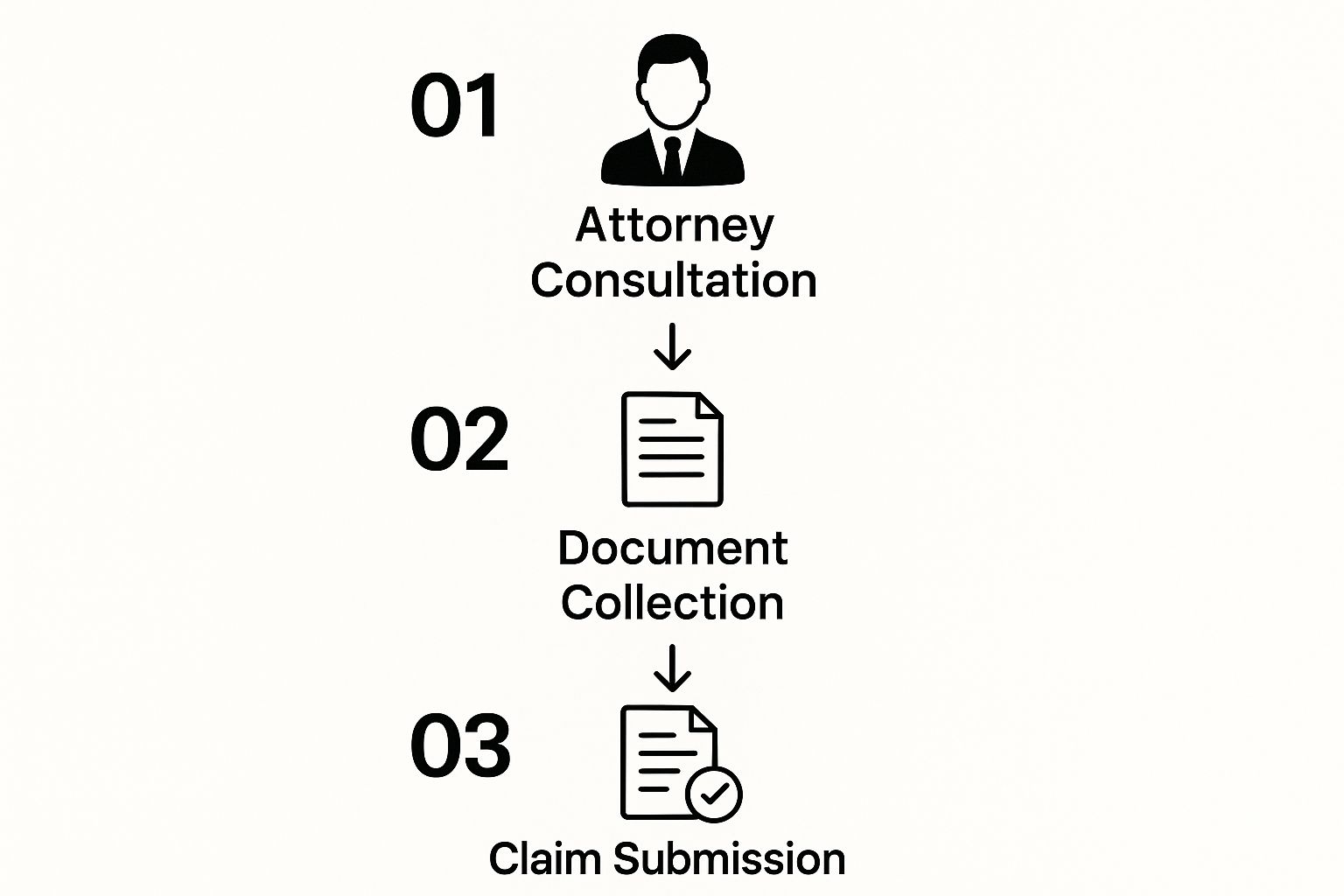
As you can see, your story kicks off a much deeper investigative process.
Digging for the Truth: The Investigation Phase
Once you decide to move forward, your attorney shifts gears from listener to investigator. This is where they roll up their sleeves and start gathering the proof needed to build your case. They will launch a full-scale investigation, leaving no stone unturned.
Here’s what that typically looks like:
- Getting the Medical Records: Your lawyer will request and comb through every single page of your loved one's medical files. They're looking for a clear timeline of their health, the injury, and the care (or lack thereof) they received.
- Bringing in the Experts: A good attorney has a network of medical experts—doctors, nurses, and other specialists—on standby. These experts will review the records and give a professional opinion on whether the nursing home failed to provide the proper standard of care.
- Talking to Witnesses: They'll track down and interview anyone who might know something. This includes family, friends, and sometimes even former employees of the facility who are willing to speak up about what they saw.
The goal here is simple: to draw a straight, undeniable line from the facility's negligence to your loved one's injury.
Making it Official: Filing the Lawsuit and Discovery
With a solid pile of evidence in hand, your attorney will officially file a lawsuit. This is the step that gets the legal ball rolling and kicks off a phase called "discovery." During discovery, the gloves come off, and both sides have to lay their cards on the table.
It’s a formal process where information is exchanged so there are no big surprises down the road. This happens in a few ways:
- Interrogatories: Basically, written questions that the nursing home's lawyers must answer in writing, under oath.
- Requests for Production: Your attorney can demand specific documents, like staffing schedules, internal incident reports, or training manuals.
- Depositions: This is where things get serious. It’s a formal, sworn interview outside of court where your lawyer can question nursing home staff, managers, or even corporate executives on the record.
The discovery process is often the turning point. It's where a pattern of understaffing or a history of cutting corners is exposed, putting tremendous pressure on the nursing home to settle the case rather than face a jury.
The End Game: Negotiation, Settlement, or Trial
Believe it or not, the vast majority of these cases—well over 90%—never actually see the inside of a courtroom. They're resolved through a settlement, which is a private agreement where the nursing home's insurance company pays compensation to end the lawsuit.
Your attorney is also your chief negotiator. They take all the powerful evidence they've uncovered and use it as leverage to fight for a fair settlement—one that covers medical expenses, pain, suffering, and the human cost of the neglect.
Of course, if the other side refuses to be reasonable, a great attorney is always ready for a courtroom battle. That willingness to go to trial is their biggest bargaining chip, ensuring the nursing home knows you mean business. It puts you in the strongest possible position to get the justice you and your family deserve.
What Compensation Can You Pursue in a Malpractice Claim?
When your loved one is harmed by a nursing home's negligence, a lawsuit is about more than just accountability. It's about securing financial compensation, legally known as damages, to help your family manage the overwhelming costs that follow. A good nursing home malpractice attorney is dedicated to making sure this compensation truly covers the full extent of the harm done.
Damages are meant to help restore what was lost—physically, emotionally, and financially. The facility's failures create very real burdens, and a settlement or award is designed to provide the resources needed for recovery and proper future care.
These damages typically fall into three main buckets.
Economic Damages: Covering Tangible Financial Losses
The easiest damages to understand are economic damages. These are the concrete, calculable financial hits your family has taken because of the malpractice. Your lawyer will act like a detective, gathering every single bill, receipt, and financial statement to paint a clear picture of these out-of-pocket costs.
This category includes things like:
- Medical Bills: Covering everything from hospital stays and surgeries to doctor's appointments and prescription drugs needed to treat the injuries.
- Rehabilitation Costs: The price of physical therapy, speech therapy, or other specialized treatments required to help your loved one get back on their feet.
- Future Medical Needs: An expert-calculated projection of the ongoing care costs that will be necessary because of the permanent harm suffered.
- Stolen Funds or Property: In cases of financial abuse, this covers the value of any money or assets that were taken from your loved one.
Simply put, if you have a receipt or an invoice for it, it probably counts as an economic damage. These figures form the financial backbone of your claim.
Non-Economic Damages: The Human Cost of Neglect
Of course, not all harm comes with a price tag. Non-economic damages are awarded to compensate for the profound, invisible suffering your loved one was forced to endure. While no check can erase pain or trauma, this compensation is a powerful acknowledgment of the human toll of the facility's negligence.
These damages are crucial because they recognize that the real impact of malpractice goes far beyond medical bills. It robs a person of their dignity, their peace of mind, and their quality of life in devastating ways.
Your attorney's job is to tell this story and show the court the extent of this suffering. Examples include:
- Pain and Suffering: For the literal physical pain the resident experienced from their injuries.
- Emotional Distress: Acknowledging the fear, anxiety, depression, and trauma resulting from the abuse or neglect.
- Loss of Enjoyment of Life: For the resident’s inability to take part in hobbies, family events, and other activities they once cherished.
- Loss of Dignity: Compensation for the humiliation and degradation they suffered, especially in cases involving poor hygiene or verbal abuse.
Understanding the full scope of nursing home abuse compensation is essential. Non-economic damages are a critical piece of the puzzle, ensuring the final settlement reflects the complete story of what was taken from your loved one.
To help clarify how these different types of compensation work, here’s a quick breakdown:
Understanding Damages in a Nursing Home Malpractice Lawsuit
| Category of Damages | What It Covers | Example Scenario |
|---|---|---|
| Economic | Direct, measurable financial costs resulting from the malpractice. | A resident falls and breaks their hip due to an understaffed facility. Economic damages would cover their $50,000 hospital bill, $20,000 in rehabilitation costs, and the projected cost of a future hip replacement. |
| Non-Economic | Intangible, non-financial harm like pain, emotional trauma, and loss of dignity. | The same resident now lives in constant pain, is afraid of walking, and feels deep depression. Non-economic damages compensate for this immense suffering and loss of quality of life. |
| Punitive | A penalty imposed on the facility for extreme misconduct, meant to punish and deter others. | It's discovered the facility knew about the fall risk for months, ignored staff warnings to save money, and tried to hide the incident. A court might award punitive damages to punish this reckless behavior. |
This table illustrates that a comprehensive claim addresses every aspect of the harm—from the hospital bills to the personal suffering that follows.
Punitive Damages: A Punishment and a Deterrent
In the most outrageous cases, a third type of compensation might come into play: punitive damages. These aren't about repaying the victim for a specific loss. Instead, their sole purpose is to punish the nursing home for its extreme, reckless, or intentional misconduct and to send a clear message to other facilities that this kind of behavior will not be tolerated.
Punitive damages are only awarded in situations where the facility's actions were truly egregious—like deliberately covering up abuse or knowingly operating with dangerously low staffing levels just to boost profits.
After a settlement is reached, using effective asset protection strategies can be a wise step to ensure the award is managed properly for your loved one's long-term care and financial security.
How to Choose the Right Nursing Home Malpractice Attorney

When you're facing a potential nursing home abuse case, the decision of who will represent you is, without a doubt, the most critical one you'll make. It’s not a time for a general practitioner; you need a legal specialist who lives and breathes the complicated world of elder care law and healthcare regulations.
Think of it this way: if you needed heart surgery, you wouldn’t go to your family doctor. You’d find the best cardiologist you could. The same principle applies here. You need a dedicated nursing home malpractice attorney, someone whose entire practice is built around fighting for families just like yours. Their focused expertise isn't just a benefit—it's a necessity.
Look for Proven Experience and Resources
A lawyer's track record is everything. As you meet with potential attorneys, you have every right to ask them about their experience with cases similar to yours. A truly experienced lawyer will be open about their past settlements and trial verdicts, giving you confidence in their ability to deliver results.
But a great attorney rarely works alone. They come backed by a powerful network of professionals ready to build your case. This team is their secret weapon and should include:
- Medical Experts: Seasoned nurses, doctors, and other specialists who can decipher medical charts and testify about where the facility failed to meet the standard of care.
- Investigators: Skilled professionals who can track down former employees, interview key witnesses, and uncover any history of neglect at the facility.
- Legal Strategists: A sharp legal team that knows the defense tactics nursing home corporations and their insurers will use to try and deny or reduce your claim.
This network isn't just for show; it's what allows an attorney to construct an ironclad, evidence-rich case that can withstand the aggressive defense you're sure to face.
Prioritize Compassion and Clear Communication
Legal prowess is vital, but so is empathy. This is a painful and often overwhelming journey for you and your family. The right attorney gets that. They act as more than just your lawyer; they become a trusted guide and a compassionate advocate.
You're looking for an ally who listens intently, understands the emotional toll this has taken on your family, and makes it a priority to keep you in the loop. Consistent, clear communication is a fundamental sign of respect and the foundation of a strong attorney-client relationship.
Finally, you need to be clear on how they get paid. Reputable nursing home malpractice attorneys work on a contingency fee basis. This is a crucial point. It means you don't pay a single dollar out of pocket. The attorney's fee is simply a percentage of the settlement or verdict they win for you. If they don't win, you owe them nothing. This arrangement levels the playing field, ensuring everyone can afford justice, and it shows the attorney is confident enough in your case to invest their own resources to win it.
Got Questions? Here Are Some Straight Answers
Deciding to take legal action against a nursing home can feel overwhelming. It's completely normal to have a ton of questions swirling in your head. Getting clear, straightforward answers is the first step toward feeling in control again. Let's tackle some of the biggest concerns families have.
How Much Time Do I Have to File a Lawsuit?
This is a critical question, and the answer is time-sensitive. Every state has a strict deadline for filing a lawsuit, which is known in the legal world as the statute of limitations. For nursing home cases, you typically have somewhere between one and three years from the date the injury happened or was discovered.
Don't wait. Evidence gets lost, records can disappear, and people's memories fade. The sooner you speak with an attorney, the stronger your potential case will be. Acting quickly is the best way to protect your family's right to seek justice.
What Will It Cost to Hire a Lawyer?
For most families, this is the elephant in the room. The good news is, you can put that worry aside. Reputable nursing home malpractice attorneys almost always work on what’s called a contingency fee basis.
What does that mean for you? You pay absolutely nothing upfront. Your attorney's payment is simply a percentage of the compensation they win for you. If they don't win your case, you owe them zero for their work.
This system levels the playing field. It ensures that anyone, regardless of their financial situation, can get expert legal help to hold a facility accountable. It means your lawyer is just as invested in a successful outcome as you are.
Will the Nursing Home Retaliate Against My Loved One?
This is a very real and understandable fear. But the law provides strong protections here. It is 100% illegal for any nursing home to retaliate against a resident or their family for making a complaint or filing a lawsuit.
If you notice any negative change in the care or attitude toward your loved one, it doesn't just hurt your case—it can actually strengthen it. Your attorney will know exactly how to document any acts of retaliation and report them to the right state agencies, making sure your family member stays safe.
At AskLegally, we connect families with the powerful legal support they deserve. If you're worried about the care a loved one is receiving, let us connect you with a skilled attorney for a free, no-obligation conversation about your situation. Find the help you need to move forward at https://asklegally.com.